Saturday, July 28, 2012

Petri Kuribayashi f3.5/35mm lens for reflected UV photography

Now this today was based on an information I got from a forum,  that the Petri Kuribayashi f3.5/35mm lens was very capable of working for reflected UV photography.

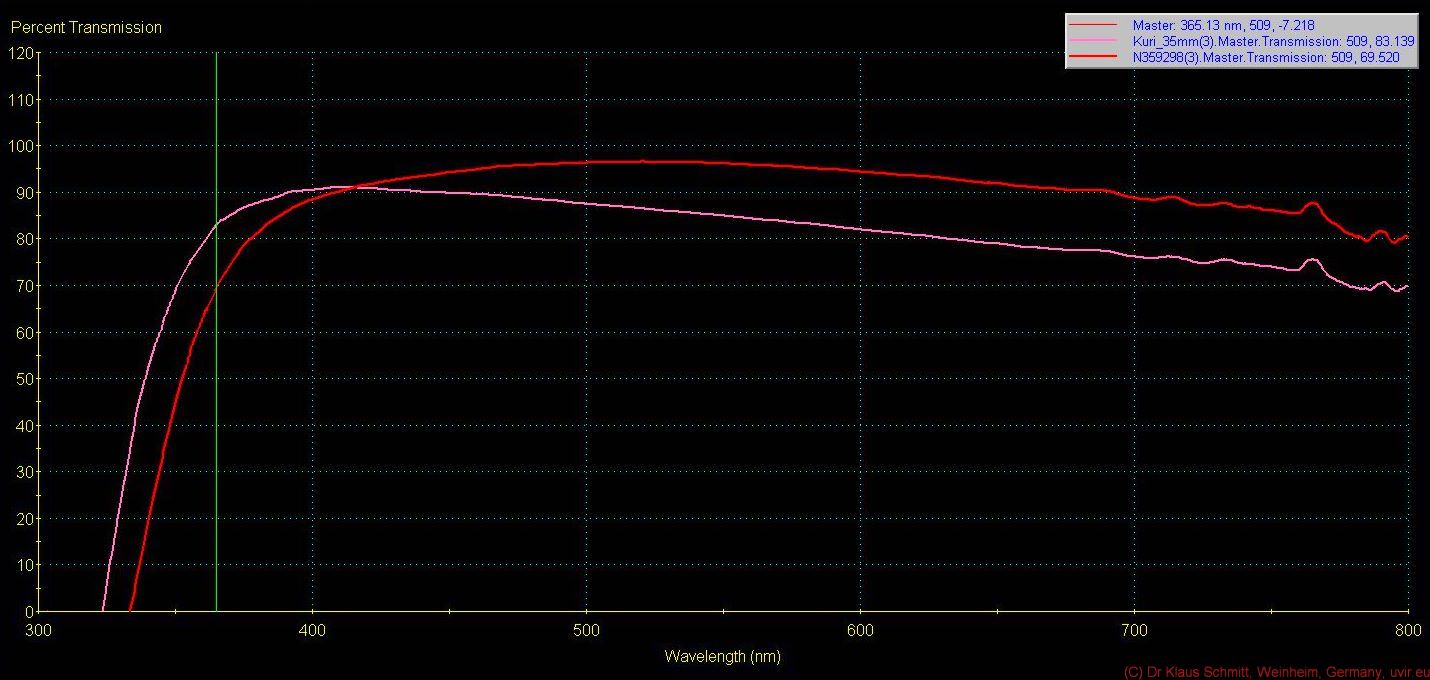
I tested that lens and it performed even better (pink line) than the well known Noflexar f3.5/35mm lens (red line), reaching down into UV to about 320nm. At 365nm it even has a 12% higher transmission (1/4 stop).

[click on image to see a larger one]


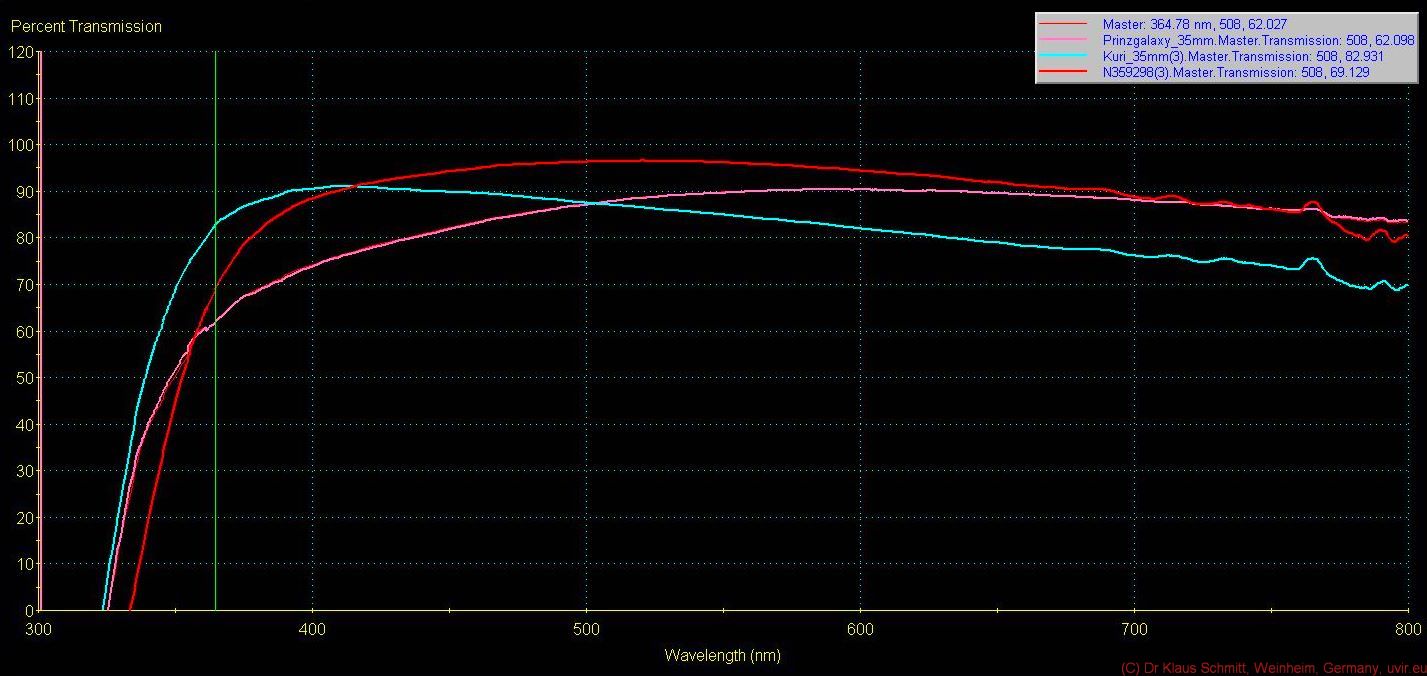
There are a few similar looking re-branded emanations of that Kuri lens, but with lesser performance, so be aware of that. These and a few other emanations of basically the same lens were not my finds, but Boon Tang and Alex Holovachov deserve the credit for those finds and bringing it to my attention. I'm not sure if later made models may have the same good transmittance, as the coating may have been changed to more modern ones that unfortunately suppress UV to pass (blue coating color is an indication for that). Here for instance the Prinzgalaxy f3.5/35mm in comparison, that shows a about 20% lower transmission at 365nm, but still useful (1/2 stop less):


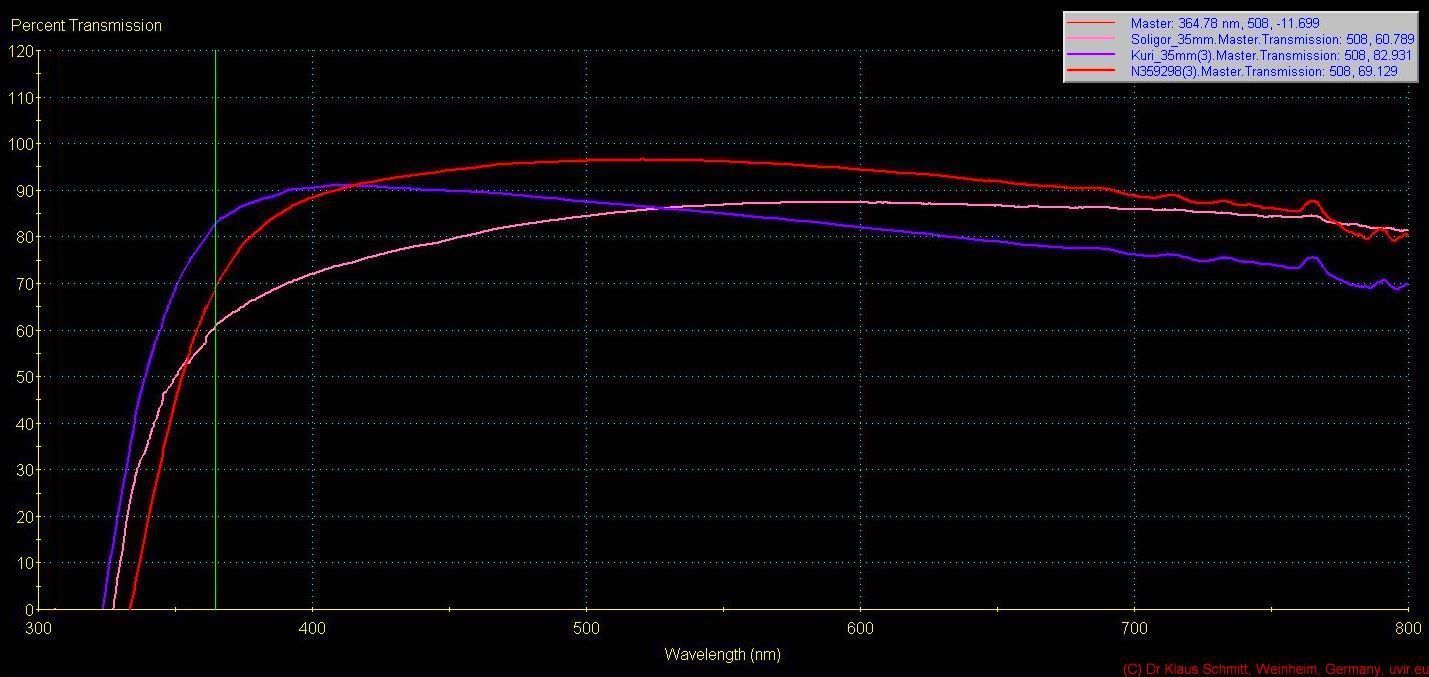
And here one of SOLIGOR brand:

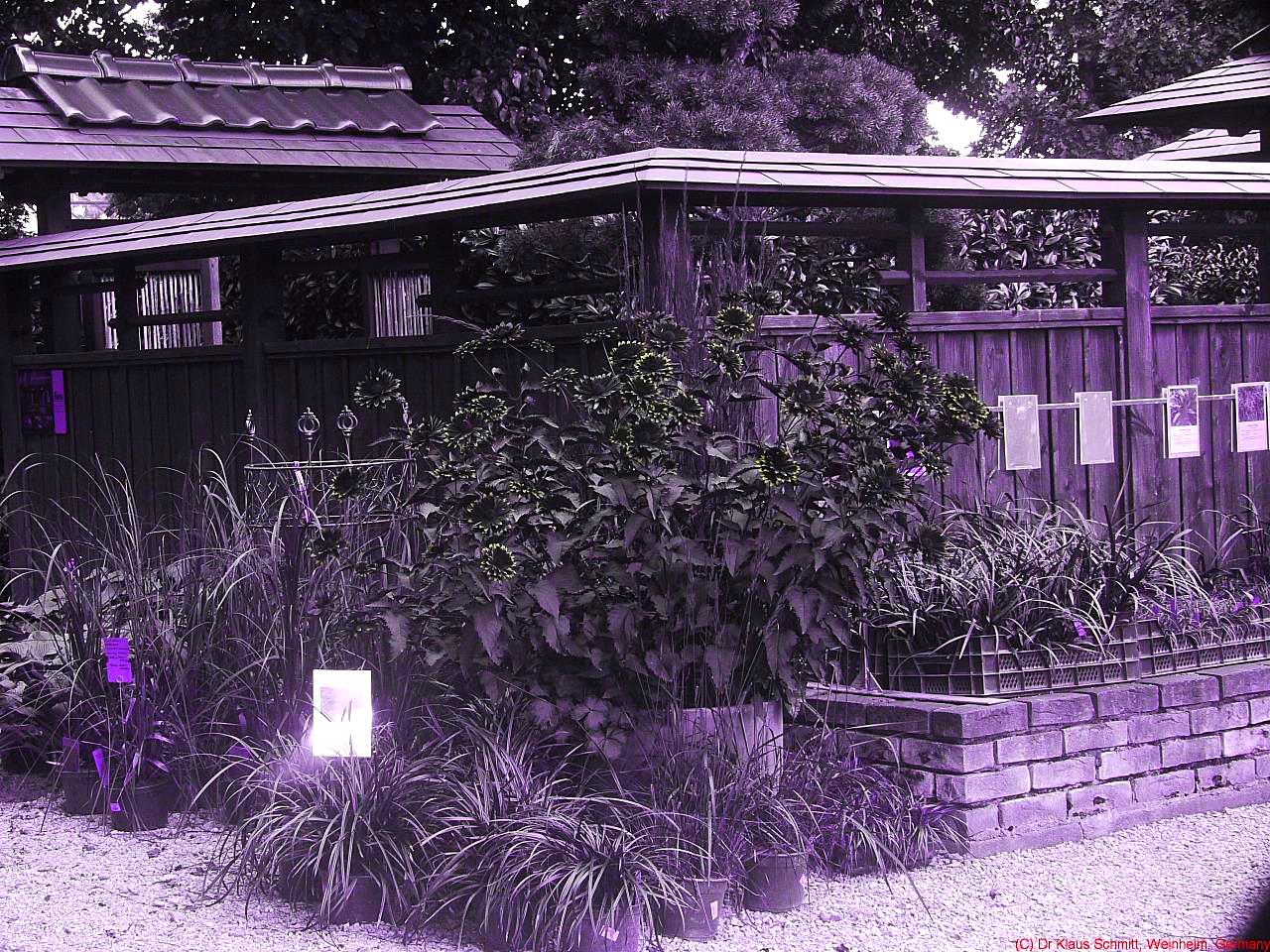
Here now a quick photographic test of that original Kuribayashi 35mm lens, which shows virtually no focus shift (1.03%), as well as very good sharpness and very good contrast in reflected UV using the Baader-U filter:


Here the visual shot for comparison:


The little downside that it only focuses to about one meter (3 ft) can be overcome by using a small helicoid or tube, if so needed. Here the Noflexar 35mm has an edge, as it has a built in close focus ability to about 1:2 (0.5x) magnification.

So this "zebra" barrel styled Kuribayashi lens from the 50ies / 60ies is a very welcomed new lens to the very few "normal" i.e. non quartz fluorite ones that does perform very well.

There is a part II about this lens HERE.

Photographic comparison between the Kuribayashi and the Soligor lens is HERE.


Stay tuned, more will follow on that fascinating subject...

More info on this very interesting field may be found on my site http://www.pbase.com/kds315/uv_photos

Friday, July 27, 2012

Rudbeckia hirta: human vision vs simulated bee vison; reflected UV ultraviolet photography IV

Today as I have shown before again R. hirta in its multispectral representation. I took some shots in normal human vision VIS, in UV using the Baader-U, the all proprietary Jupiter-U and the new Saturn-U (300-350nm) filter, as well as in simulated bee and butterfly vision using my XBV2, XBV3 and the new, stricter XBV6 filter respectively.

[click on image to see a larger one]

Visual shot - human vision:


Simulated butterfly vision using XBV3 filter:


Simulated butterfly vision using XBV2 filter:


Simulated bee vision using XBV6 filter:


UV using Baader-U filter:


UV using Jupiter-U filter:


UV using Saturn-U (300-350nm) filter:


IR (basically) as it was shot using only a ND filter:


Rudbeckia and also this R. hrsta have a very prominent, otherwise invisible "bullseye pattern" which gets nicely visible in UV (around 360nm) and BV. Since leafs (petals were leafs one) reflect from 700-750nm onwards, that pattern is also invisible in IR.

As you may have noticed, I'm still working on my bee vision (BV) filters; BV6 now is one with very intensive colors and much shorter exposure time, due to new filter glass combinations.

More about these special new filters here later in a seperate entry.


Stay tuned, more will follow on that fascinating subject...

More info on this very interesting field may be found on my site http://www.pbase.com/kds315/uv_photos

Sanvitalia procumbens (Creeping Zinnia): human vision vs simulated bee vison; reflected UV ultraviolet photography II

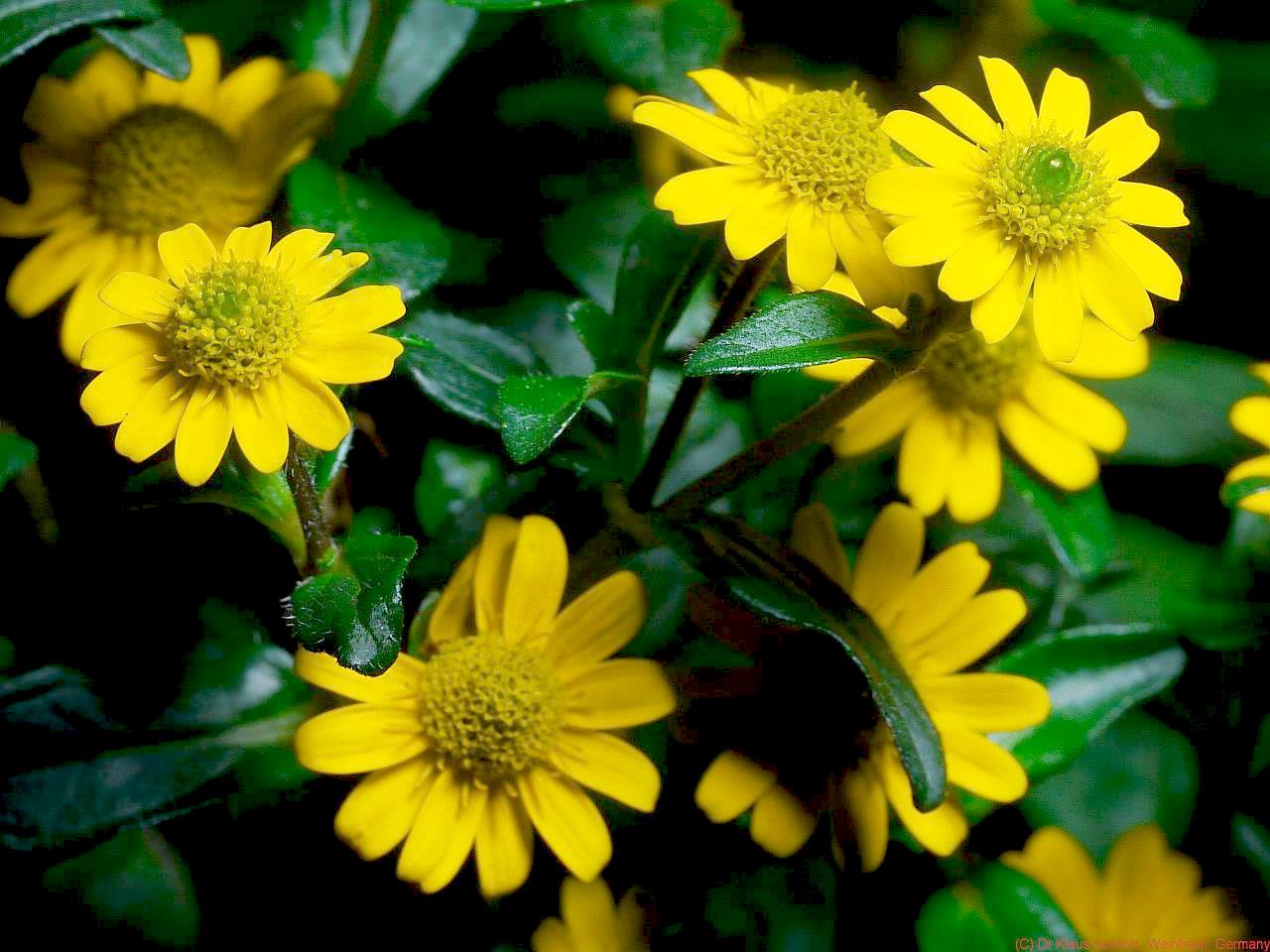
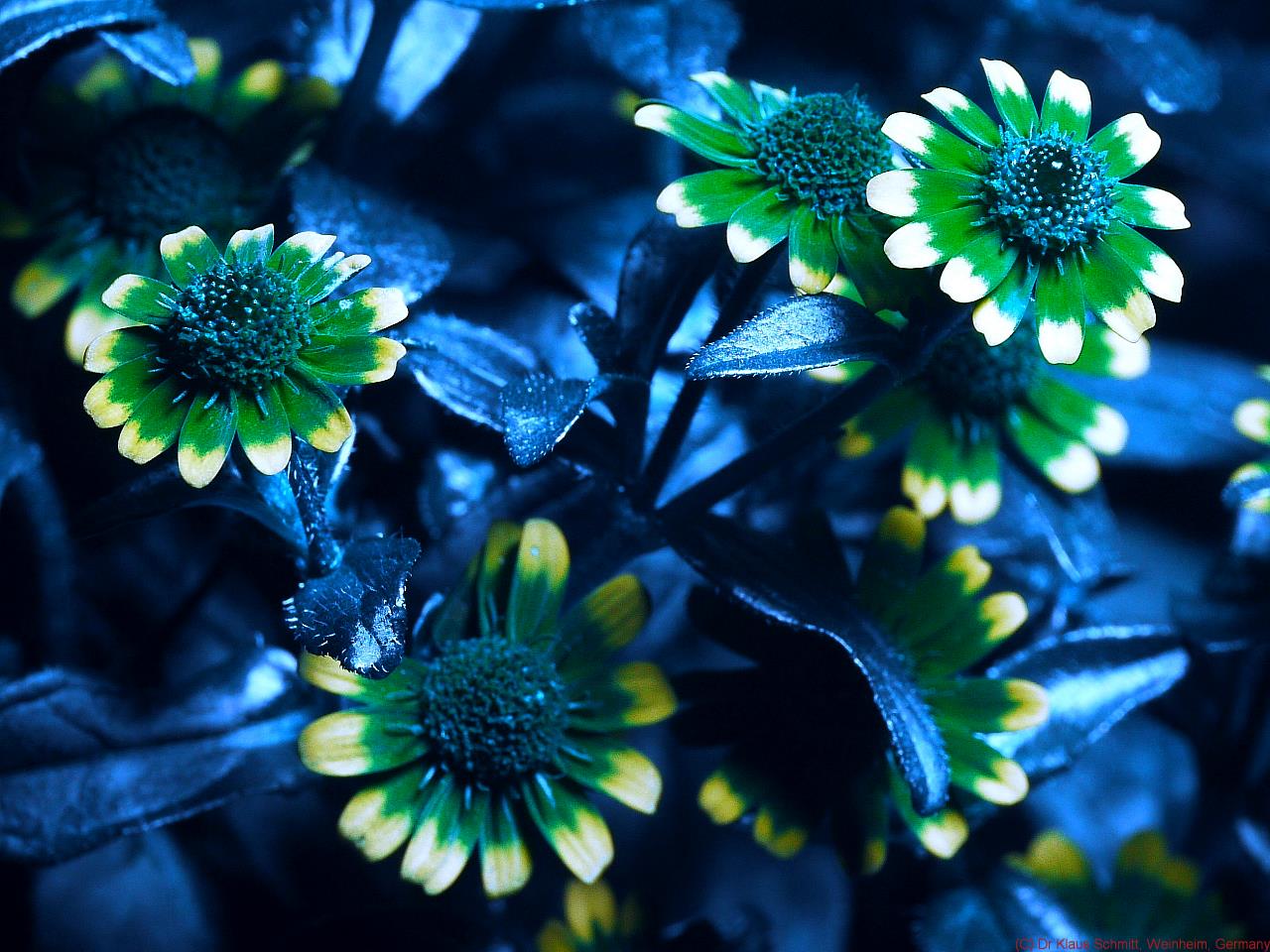
Today again about Sanvitalia procumbens ("Creeping Zinnia"). So here it is in its multispectral representation with a focus on simulated bee vision; before I had shown it with a focus on UV using the Baader-U and Jupiter U filters. I took some shots in normal human vision VIS, in UV using the Baader-U filter, as well as in simulated bee vision using my XBV2 and XBV5 filter respectively.

[click on image to see a larger one]

Visual shot:


Simulated bee vison using XBV2 filter:


Simulated bee vison using XBV5 filter:


UV using Baader-U filter:


This flower has a prominent UV reflection (around 360nm) of its petals and is one of my "standard UV targets"

As you may have noticed, I'm still working on my bee vision (BV) filters; here again it shows, how well they are able to reproduce the UV patterns together with teh visible parts a bee is able to see.

More about these special new filters here later in a seperate entry.


Stay tuned, more will follow on that fascinating subject...

More info on this very interesting field may be found on my site http://www.pbase.com/kds315/uv_photos

Friday, July 20, 2012

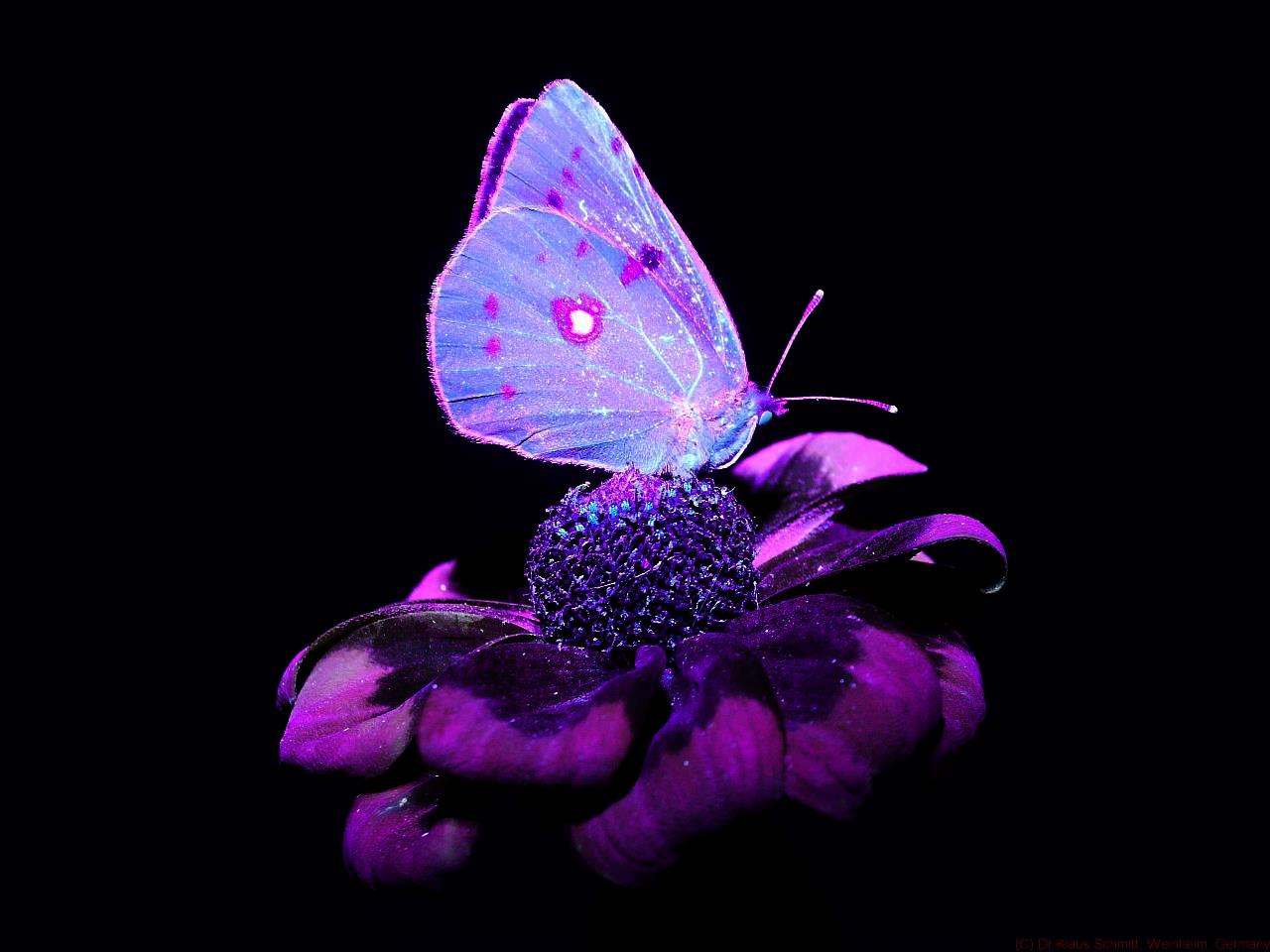
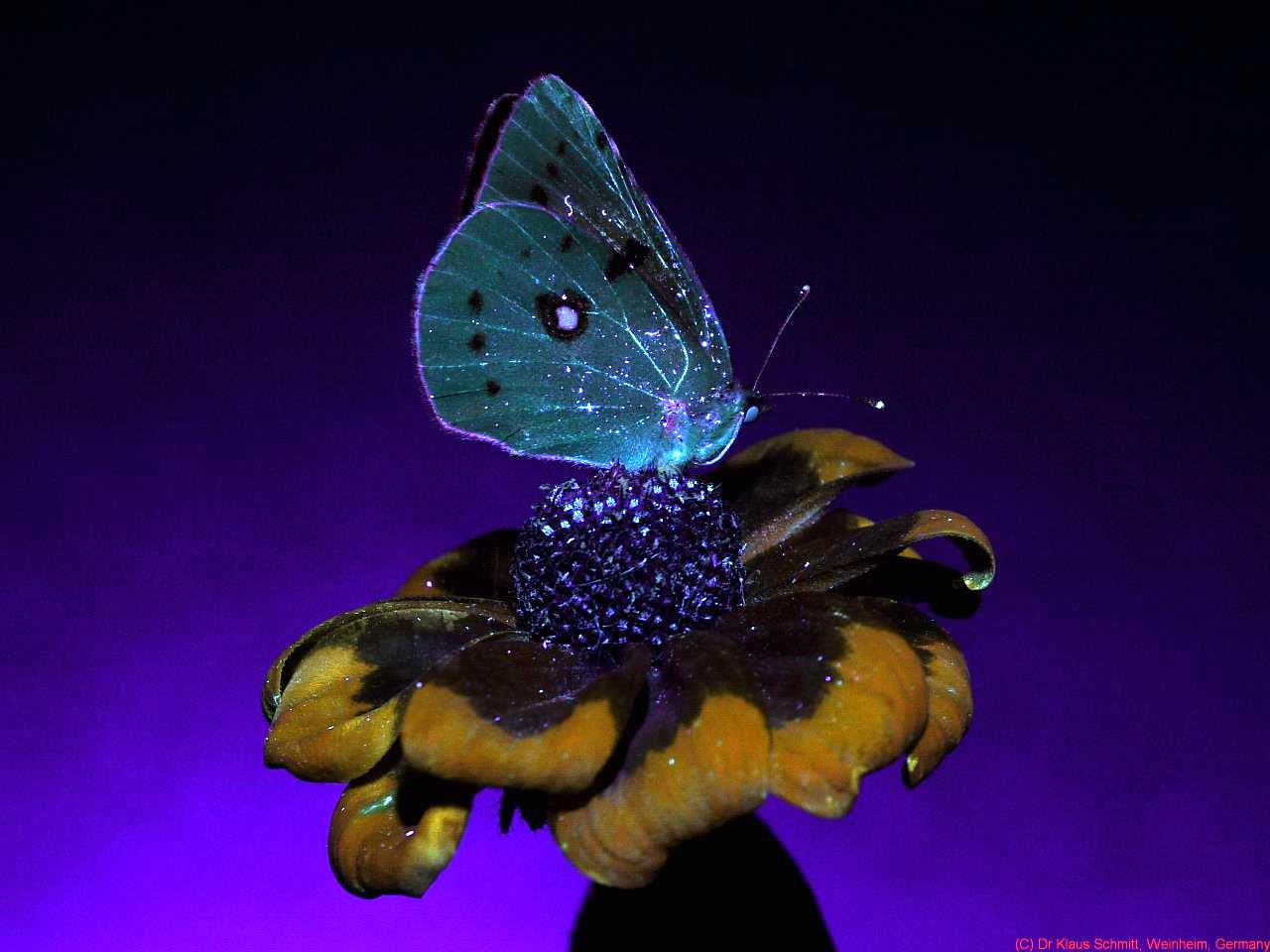
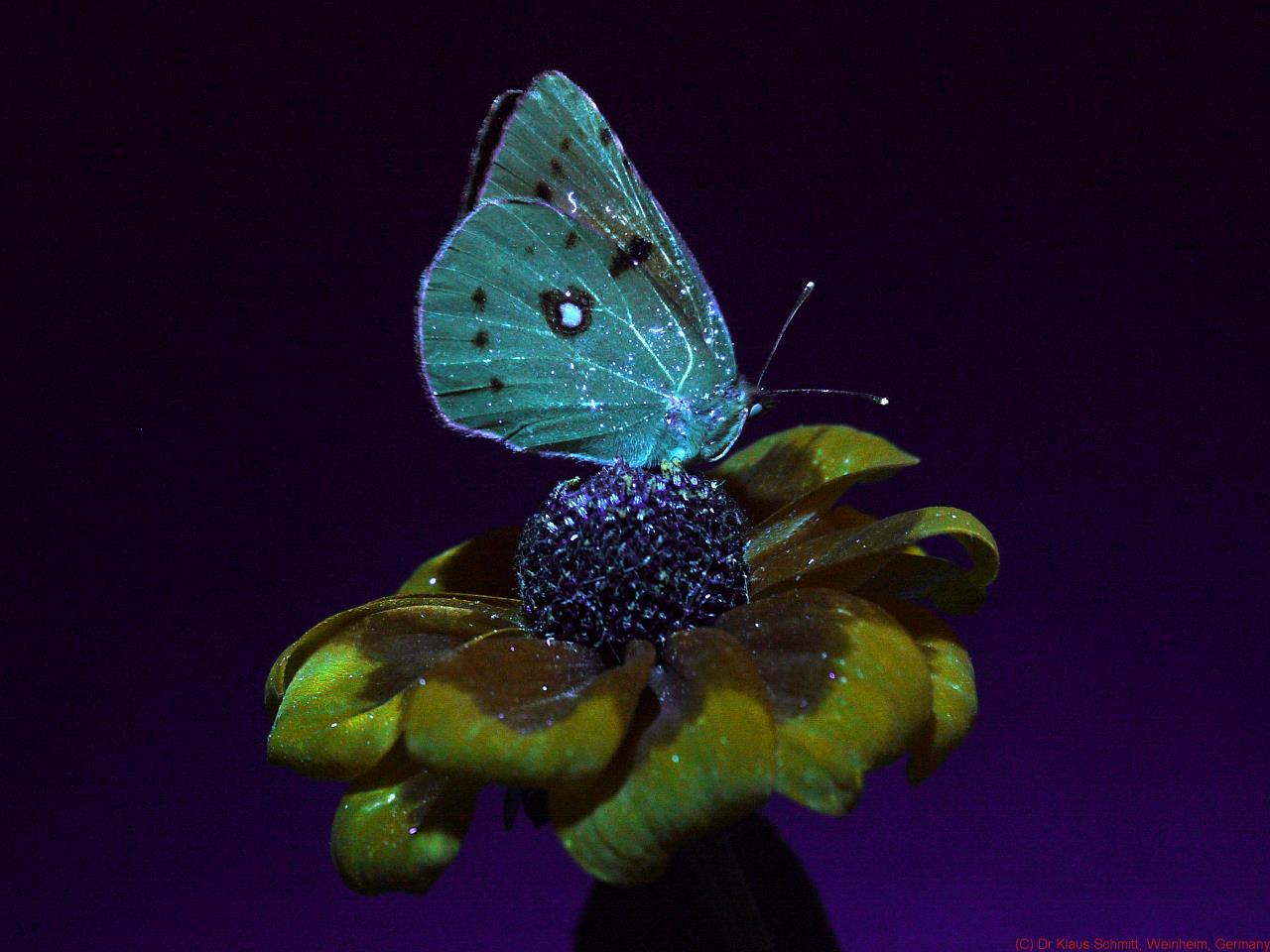
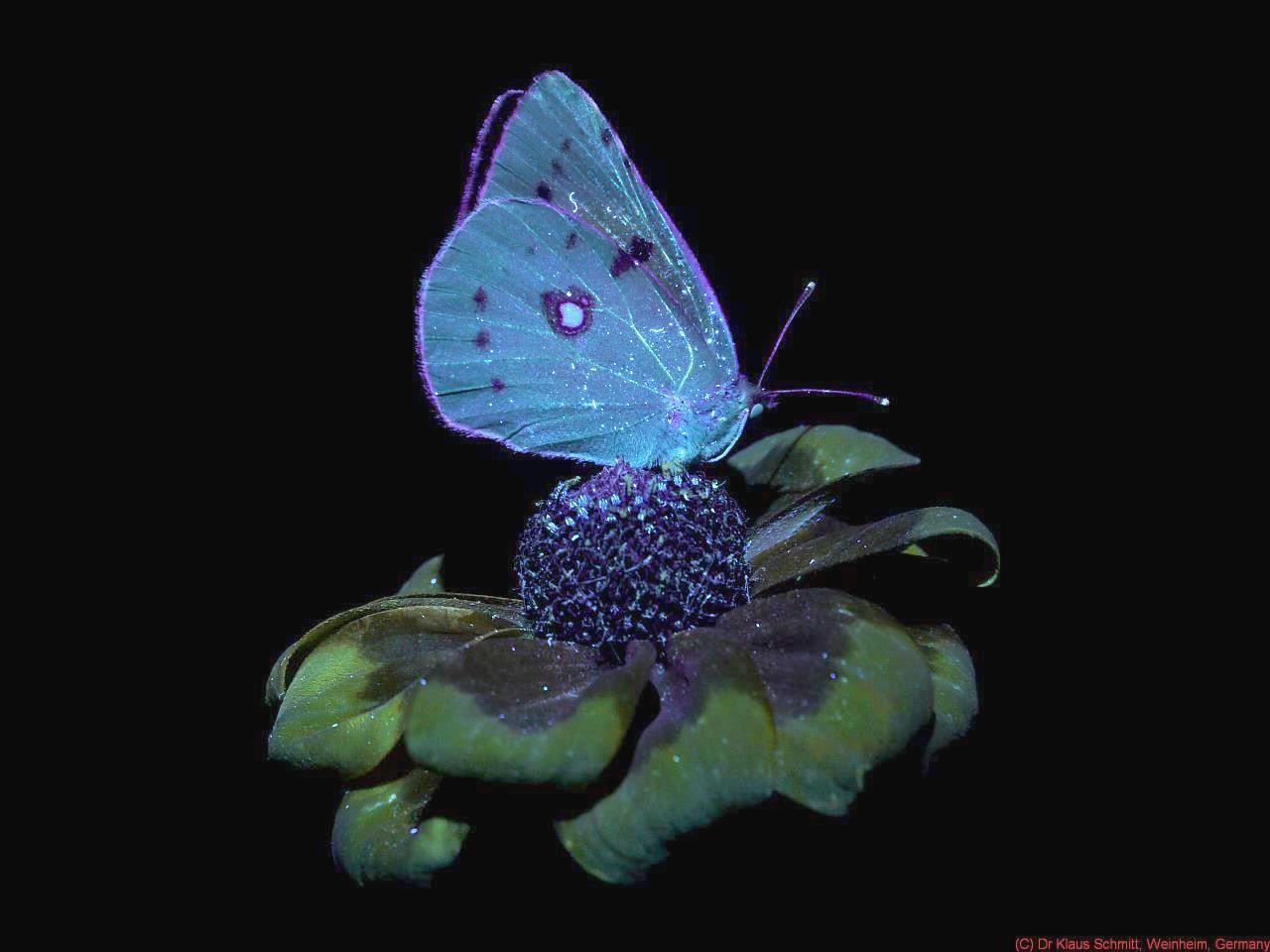
Gonepteryx cleopatra "Cleo" butterfly on Rudbeckia hirta: human vision; UV ultraviolet stimulated visible fluorescence photography

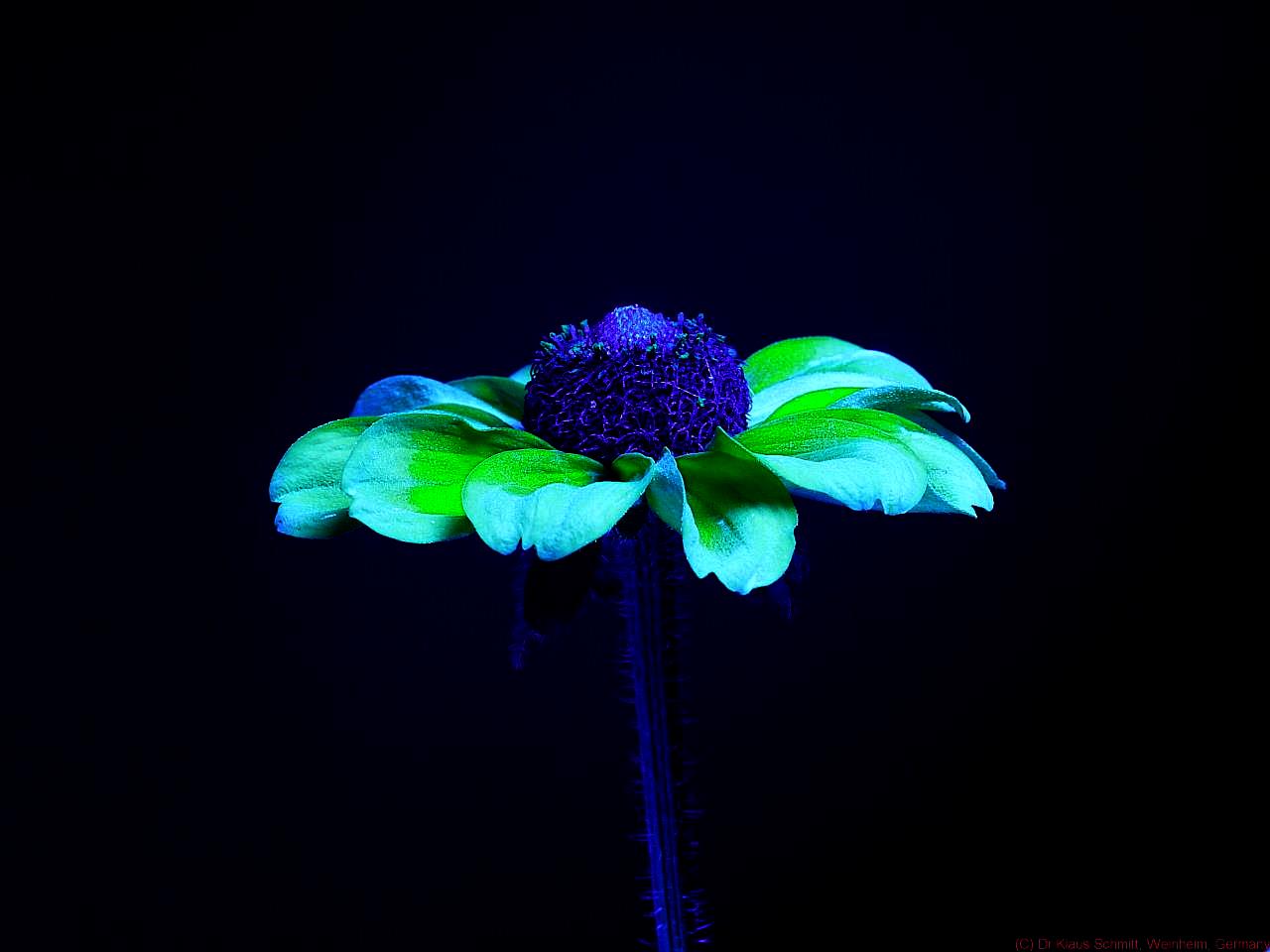
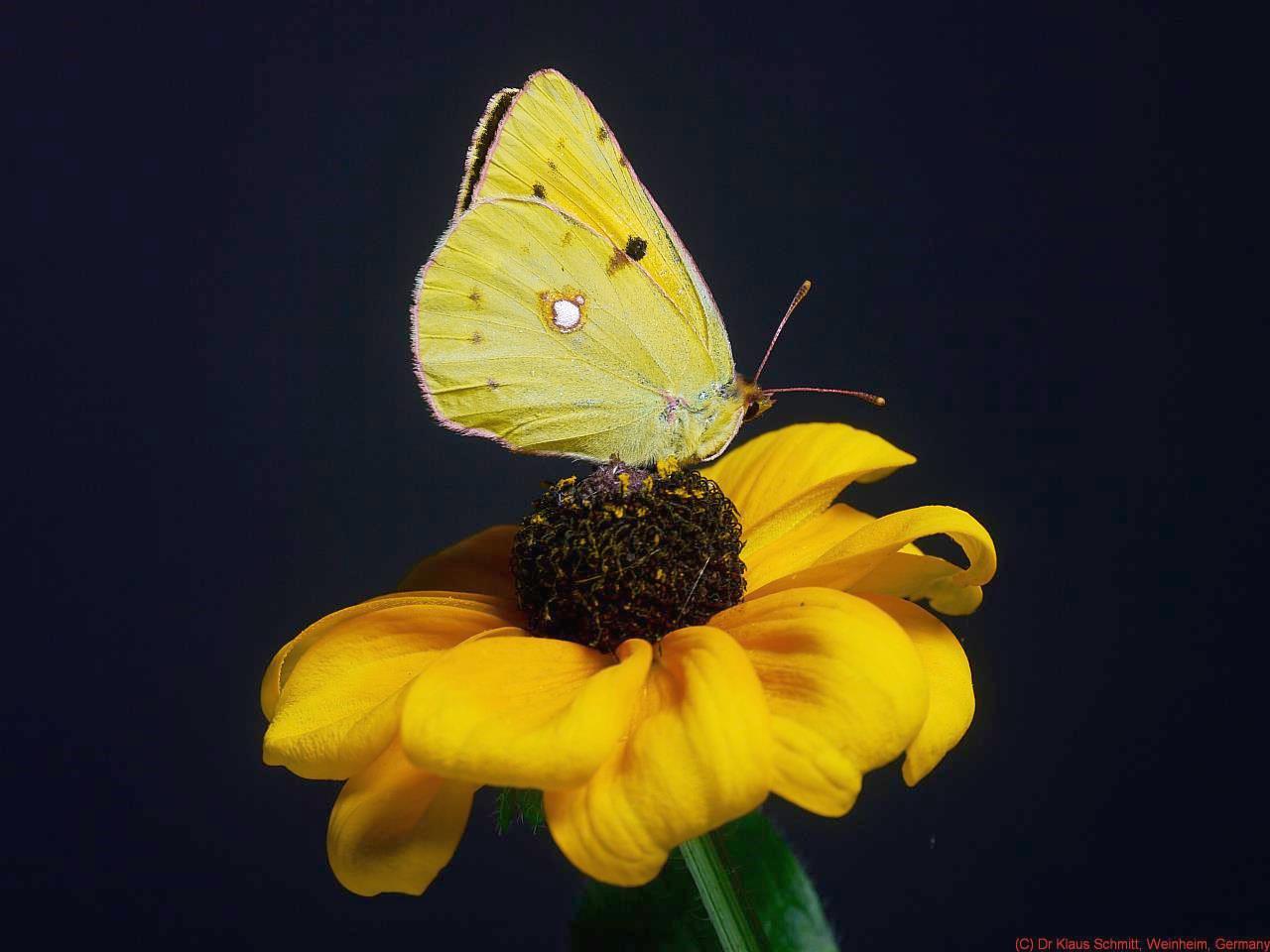
Here now after having shown it in bee vision and reflected ultraviolet photography that Cleo butterfly Gonepteryx cleopatra or Cleopatra, resting on a Rudbeckia hirta flower. Now here shown in normal visible as well as UV induced stimulated visible fluorescence, using various UV sources as well as blocking filters (BG38, Baader UV/IR CUT filter).

[click on image to see a larger one]

Visual image:


UV induced visible fluorescence using unfiltered commercial 365nm UV torch, no UV blocking:


UV induced visible fluorescence commercial 365nm UV torch, UV blocking:


UV induced visible fluorescence using Nichia 365nm UV torch, UV blocking:


UV induced visible fluorescence using UV filtered Nichia 365nm UV torch, UV blocking:


Nice results and a a lot of details on the wings gets visible using fluorescence method, yet personally I prefer reflected UV photography.


Stay tuned, more will follow on that fascinating subject...

More info on this very interesting field may be found on my site http://www.pbase.com/kds315/uv_photos

Gonepteryx cleopatra "Cleo" butterfly on Rudbeckia hirta: human vision vs simulated bee and butterfly vison; reflected UV ultraviolet photography

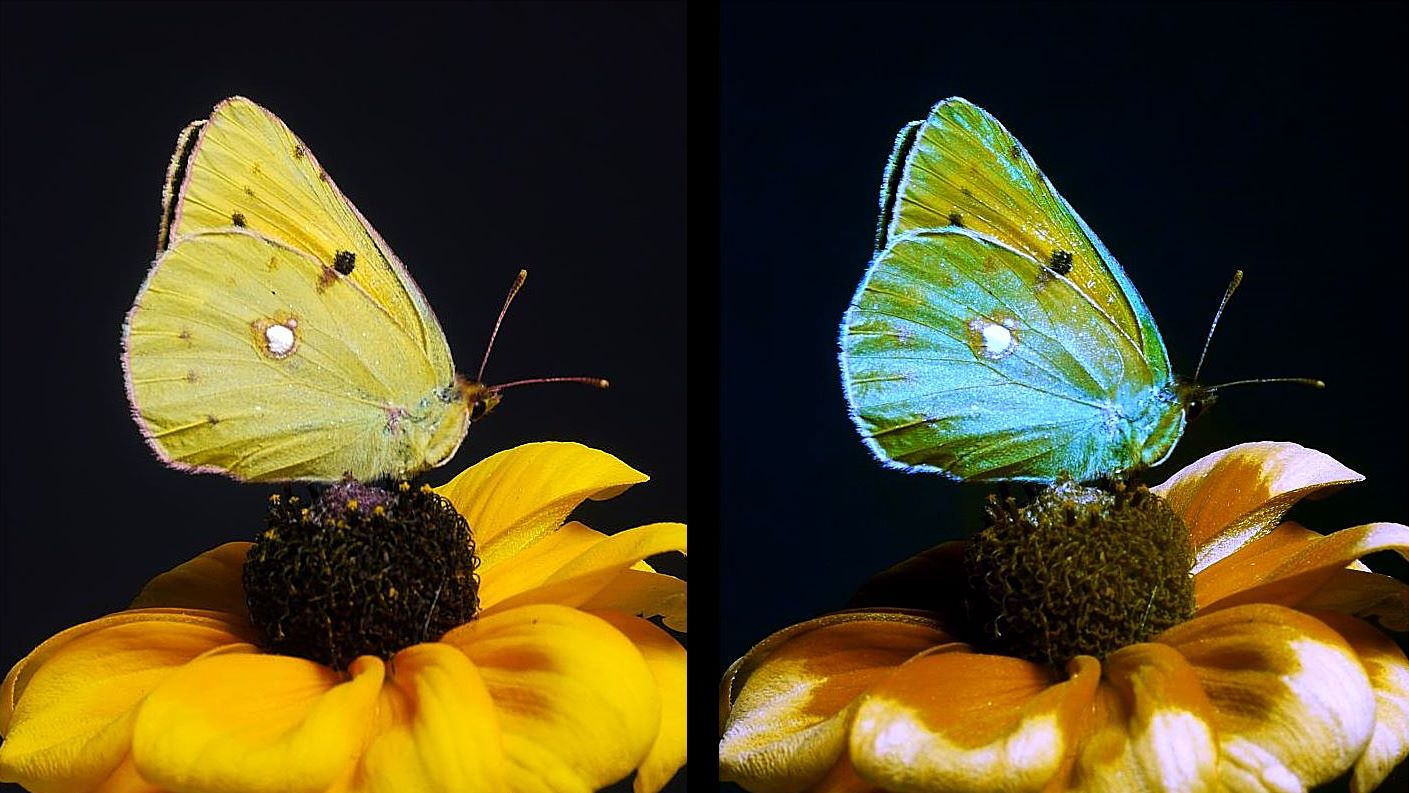
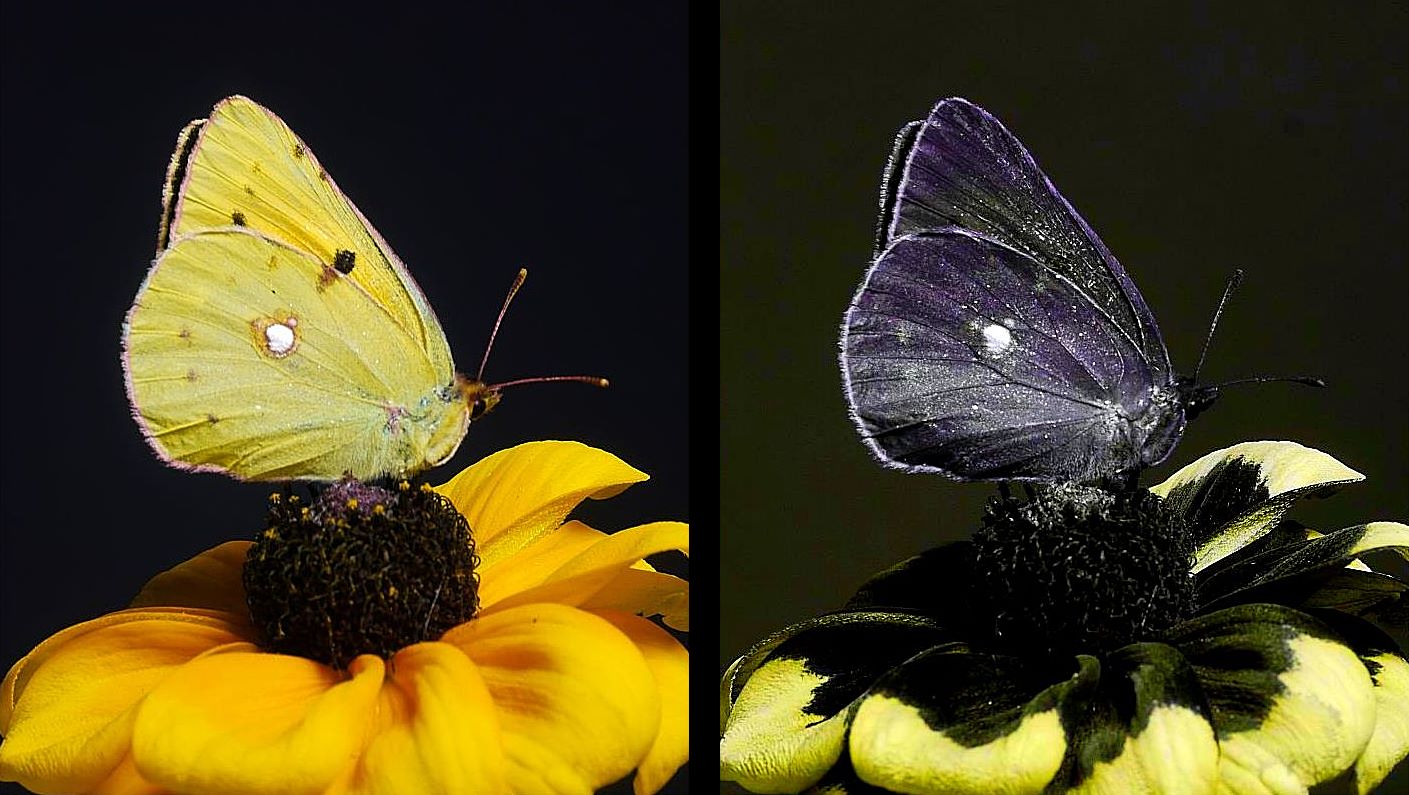
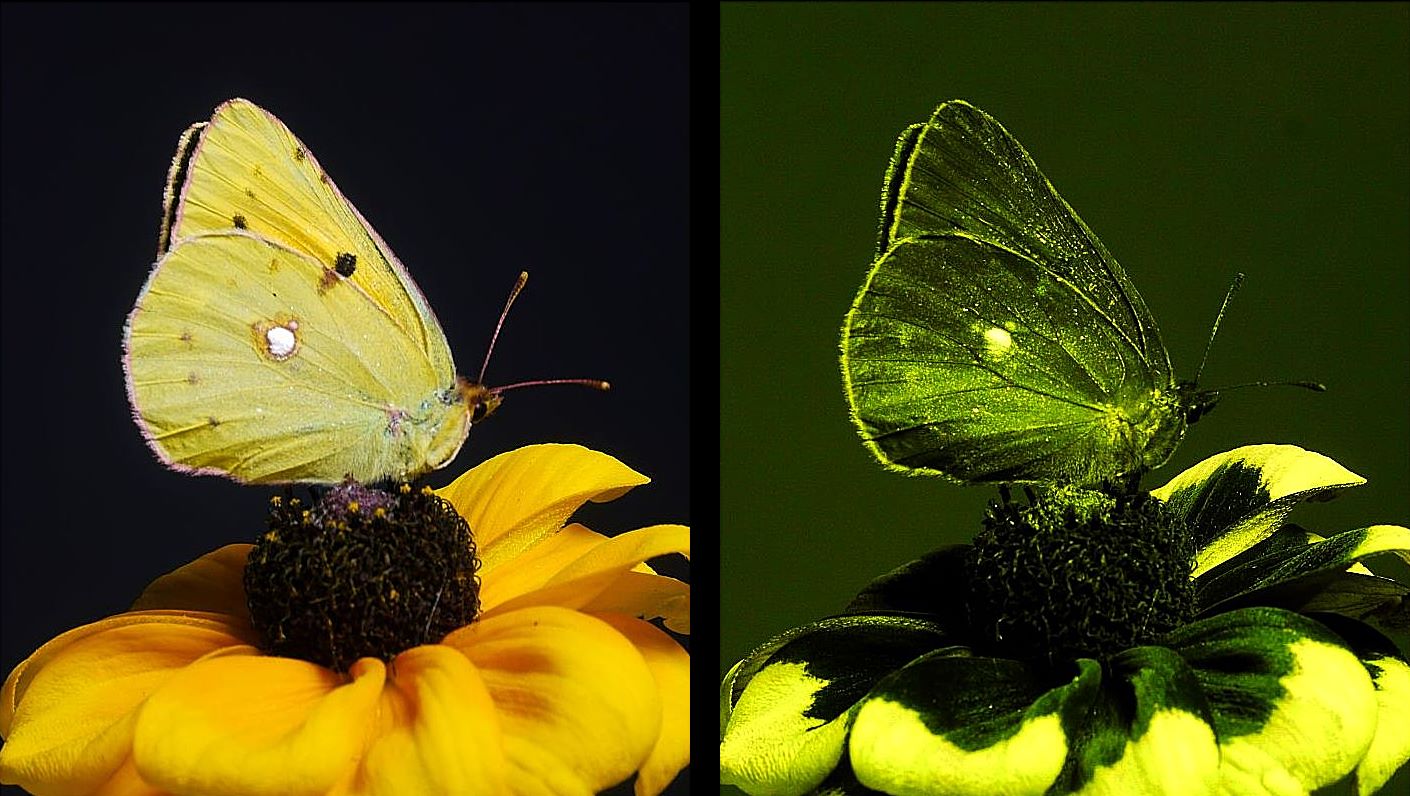
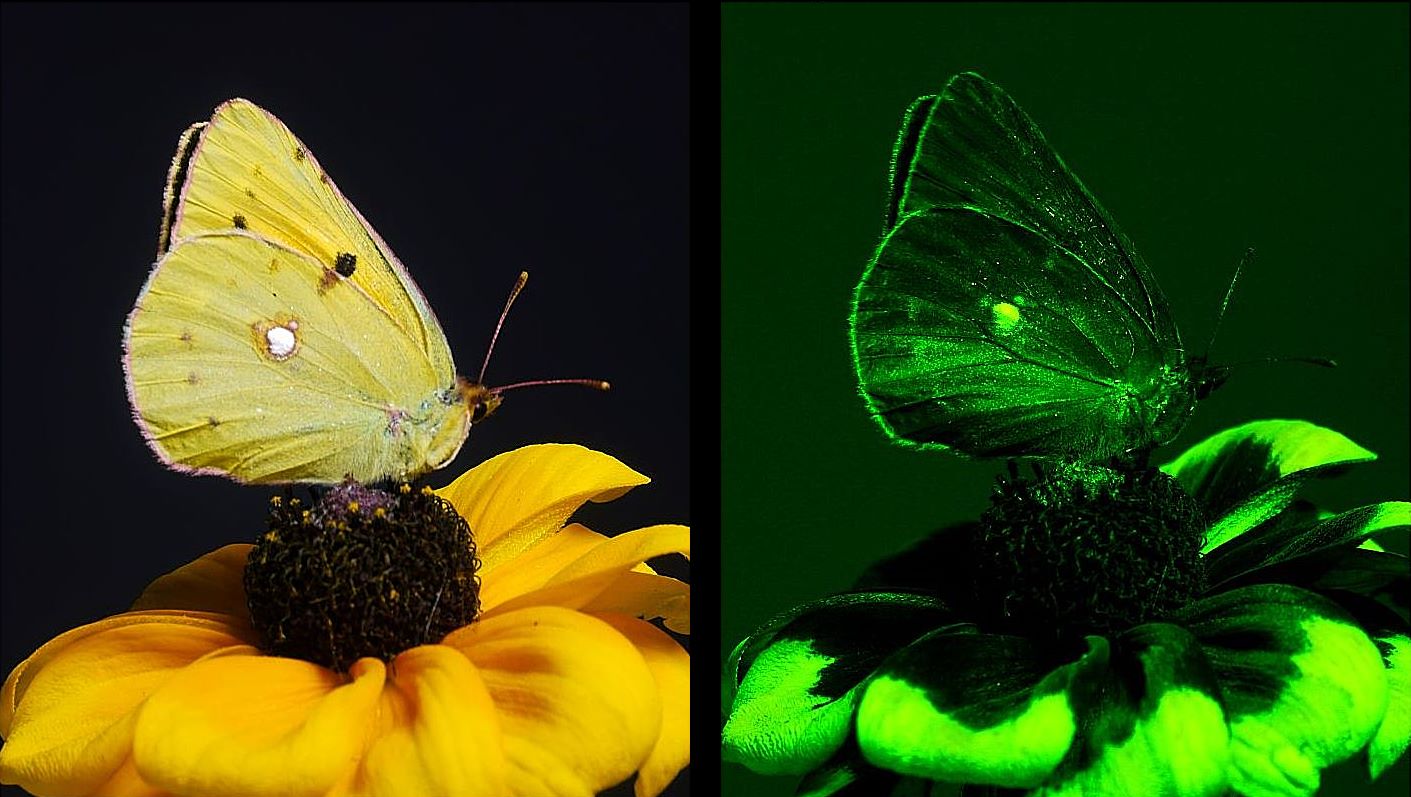
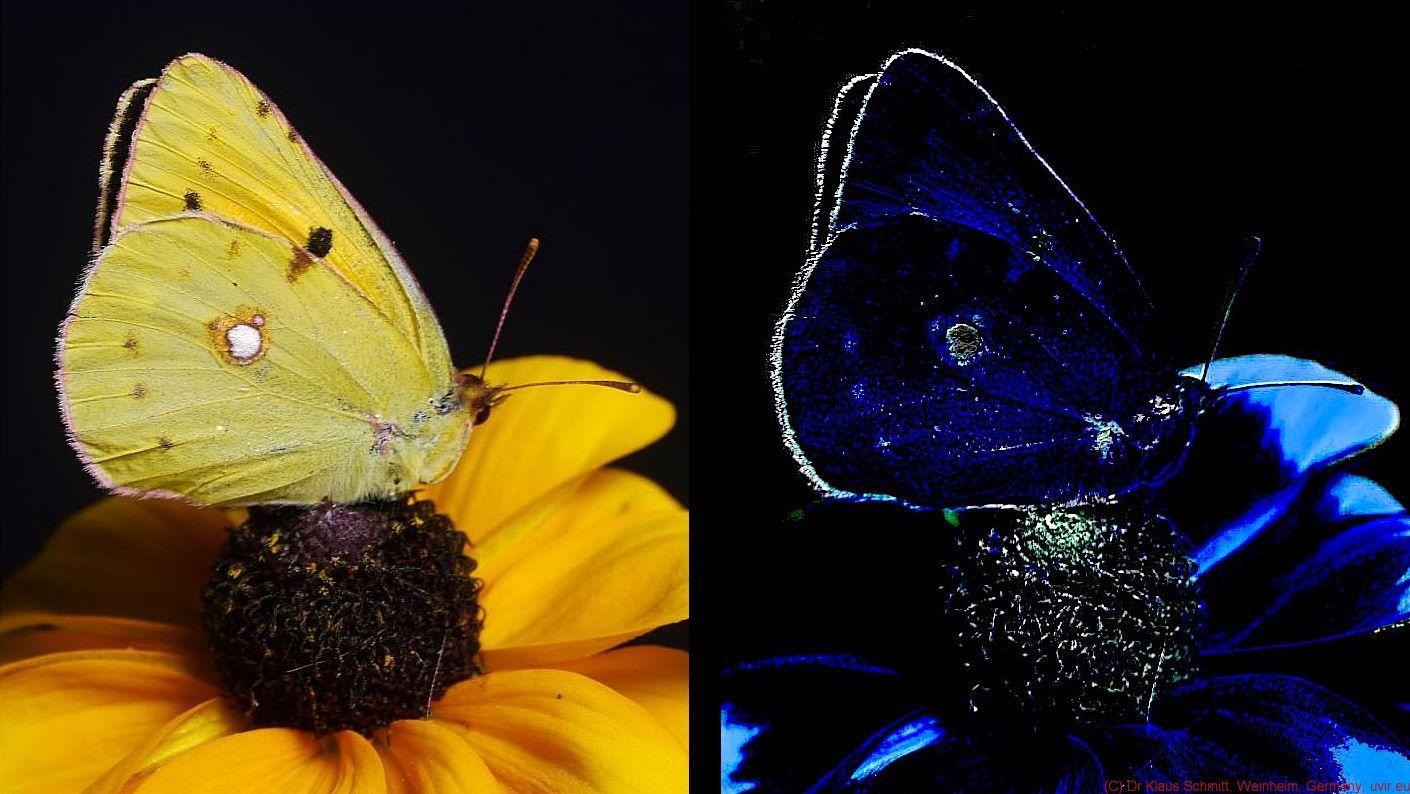
Today about a butterfly Gonepteryx cleopatra or Cleopatra, short "Cleo". So here it is in its multispectral representation, resting on a Rudbeckia hirta flower. I took some shots in normal human vision VIS, in UV using the Baader-U (eff. 375nm) and my Jupiter-U (eff. 365nm) and Saturn-U (eff. 325nm) filter, as well as in simulated bee and butterly vision using my XBV2 and XBV3 filters respectively.

I'm presenting all of them in diptych form, VIS image (left) vs filtered image (right)

[click on image to see a larger one]

VIS vs simulated insect vison using XBV2 filter:


VIS vs simulated insect vison using XBV3 filter:


VIS vs Baader-U (eff. 375nm):


VIS vs Jupiter-U (eff. 365nm):


VIS vs Saturn-U (eff. 325nm):


Quite interesting how that butterfly appears is different spectral representations. Obviously that spot as well as its UV bright rim around its wings is made to attract, which I made visible using my differential method (right):


As you may have noticed, I'm still working on my bee and butterfly vision (BV) filters. More about these special filters here later and in a seperate entry.


Stay tuned, more will follow on that fascinating subject...

More info on this very interesting field may be found on my site http://www.pbase.com/kds315/uv_photos

Wednesday, July 18, 2012

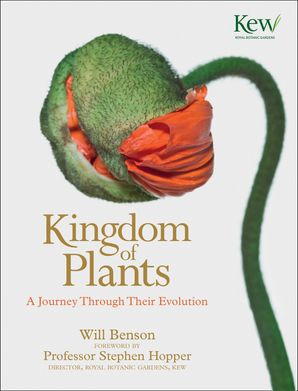
"Kingdom of Plants: A Journey Through Their Evolution" - new book by Will Benson

I have already written here a few times about that "Kingdom of Plants 3D" three episode series narrated and written by well reputed Sir David Attenborough, which mainly is about Kew Gardens in the UK and the evolution of plants. The series was produced by Atlantic Productions for SKY 3D TV and directed by Martin Williams and from what I heard will later also be shown in some IMAX theaters. Sir David Attenborough is the presenter and guide through the episodes. Now Will Benson, one of the staff members at the time of production, has written this wonderful book about it.

It is 256 pages, 3 pounds heavy (also also available in electronic form) and it includes four pages about insect and animal UV vision and two pages have some of my images in it from that 3D film. Here is one of it, showing a Rudbeckia hirta in visible and UV light:
[click on any image to see it larger]


and here for the experienced 3D crosseye viewer, the stereo version:


(quote - from amazon)
This book accompanies the landmark television series Kingdom of Plants 3D: With David Attenborough. In the last 500 million years, plants have undertaken an epic journey that has not only spanned the ages but has altered the very make-up of the planet. It was a journey that began in a dark and barren world, and has culminated in a planet that is draped in rich colours, and overflowing with a diversity of mystifying orchids, exploding seed pods and snapping carnivorous plants. But plants are far more than just beautiful and bizarre. Through the chapters of this book we uncover how plants first began to live on land, how they have become linked with a multitude of animal and fungi partners, and how ultimately they have shaped both landscapes and cultures. With an introduction by Professor Stephen Hopper, Director of the Royal Botanic Gardens at Kew, as well as contributions from leading botanists and horticulturists, this book unpicks the strands of our planet's network of botanical life. Through its pages we reveal the extraordinary ways in which plants have come to live and thrive in all habitats, and we discover how they can provide us with answers to many of the problems that face humanity in our modern age.(unquote)

Kingdom of Plants Site
Here is more about the book on the publisher site:
Kingdom of Plants at HarperCollins
Available now in printed or electronic form also from
amazon (US) or from amazon (UK) amazon (UK)

Front Page:

(c) HarperCollins

A wonderful book, not just for the coffee table. I'm sure you'll like it as much as I do!

Stay tuned, more will follow on that fascinating subject...

More info on this very interesting field may be found on my site http://www.pbase.com/kds315/uv_photos


Tuesday, July 10, 2012

Nymphaeaceae (Water Lily): human vision vs simulated bee vison; reflected UV ultraviolet photography

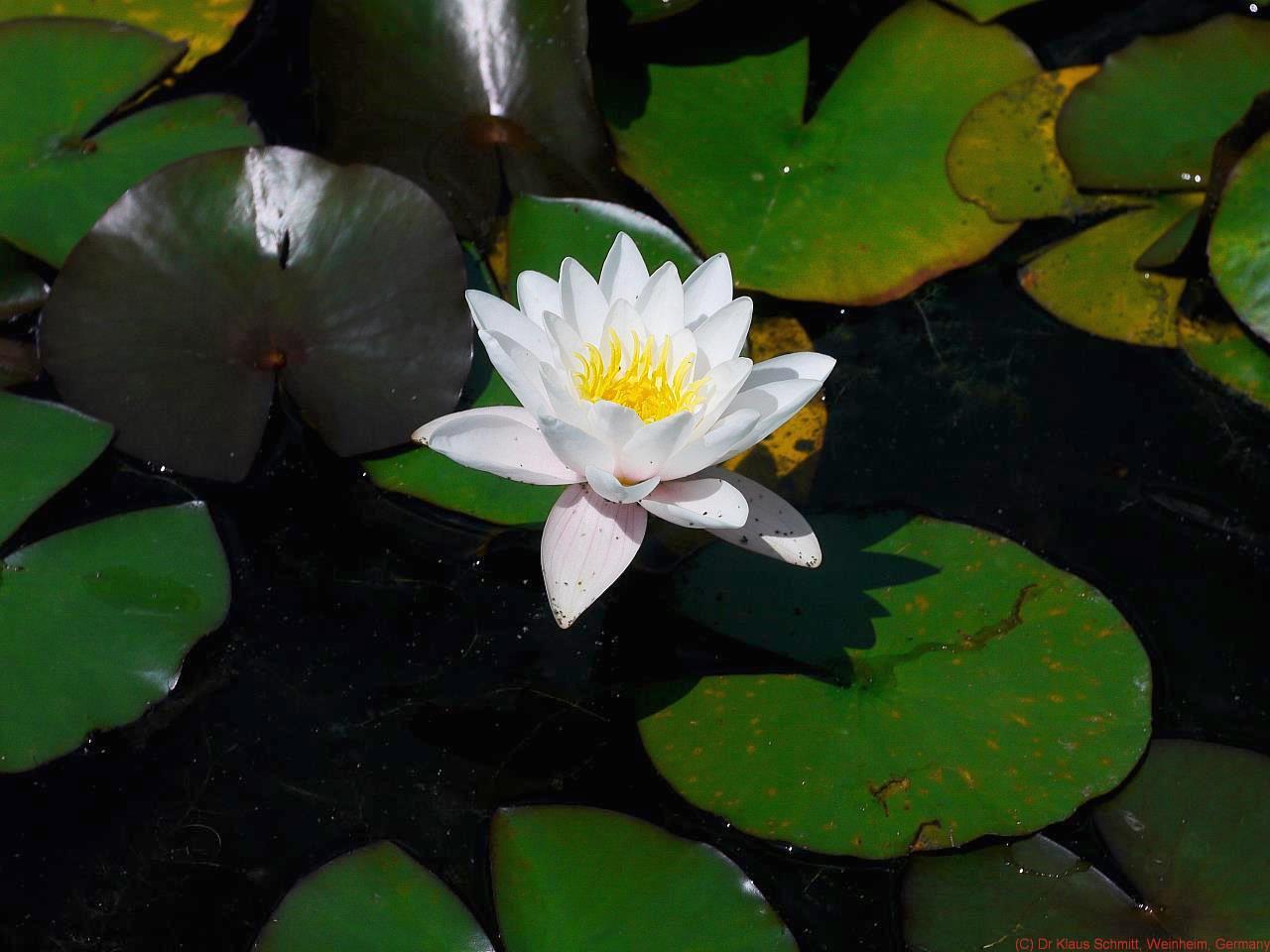
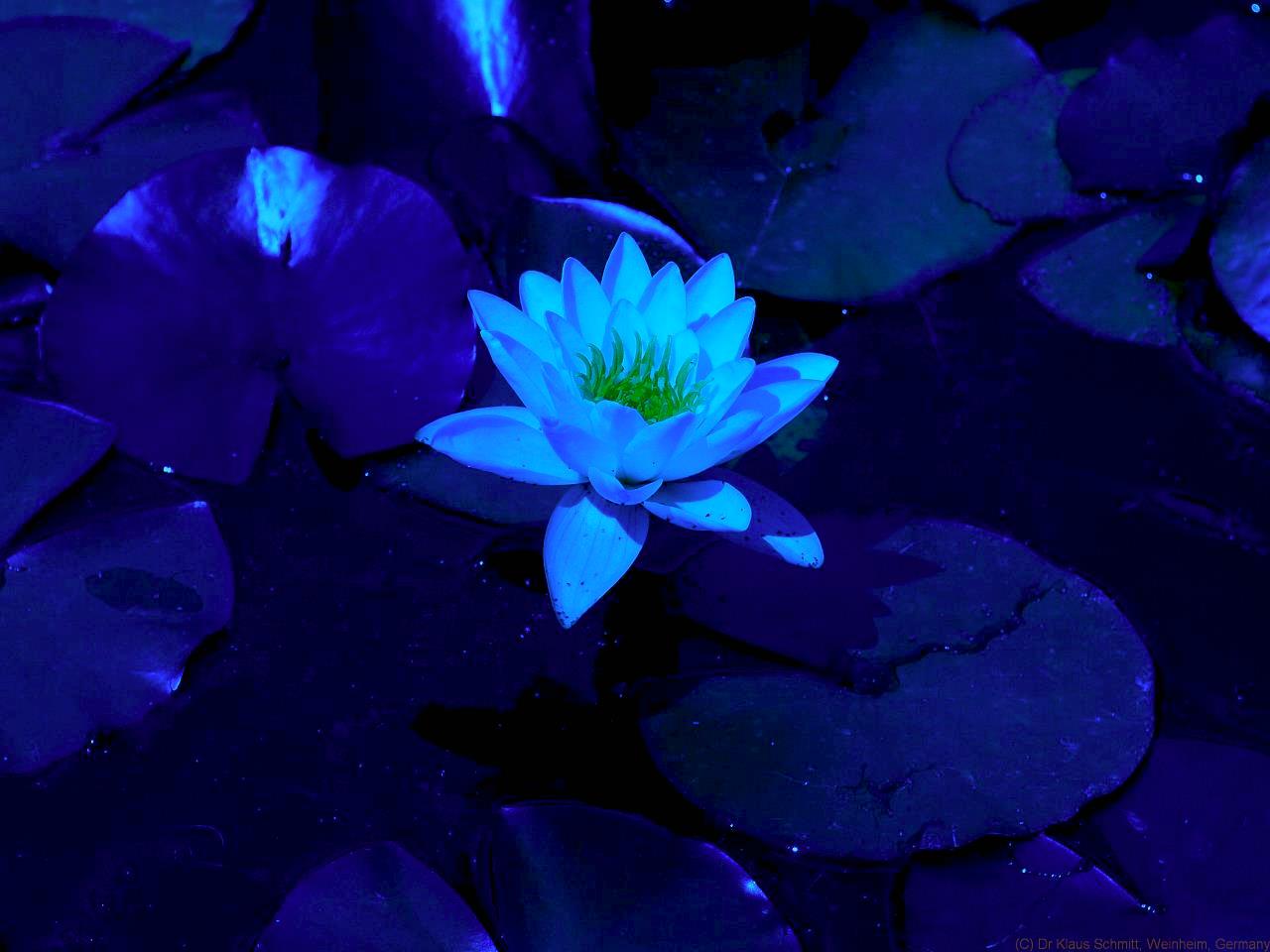
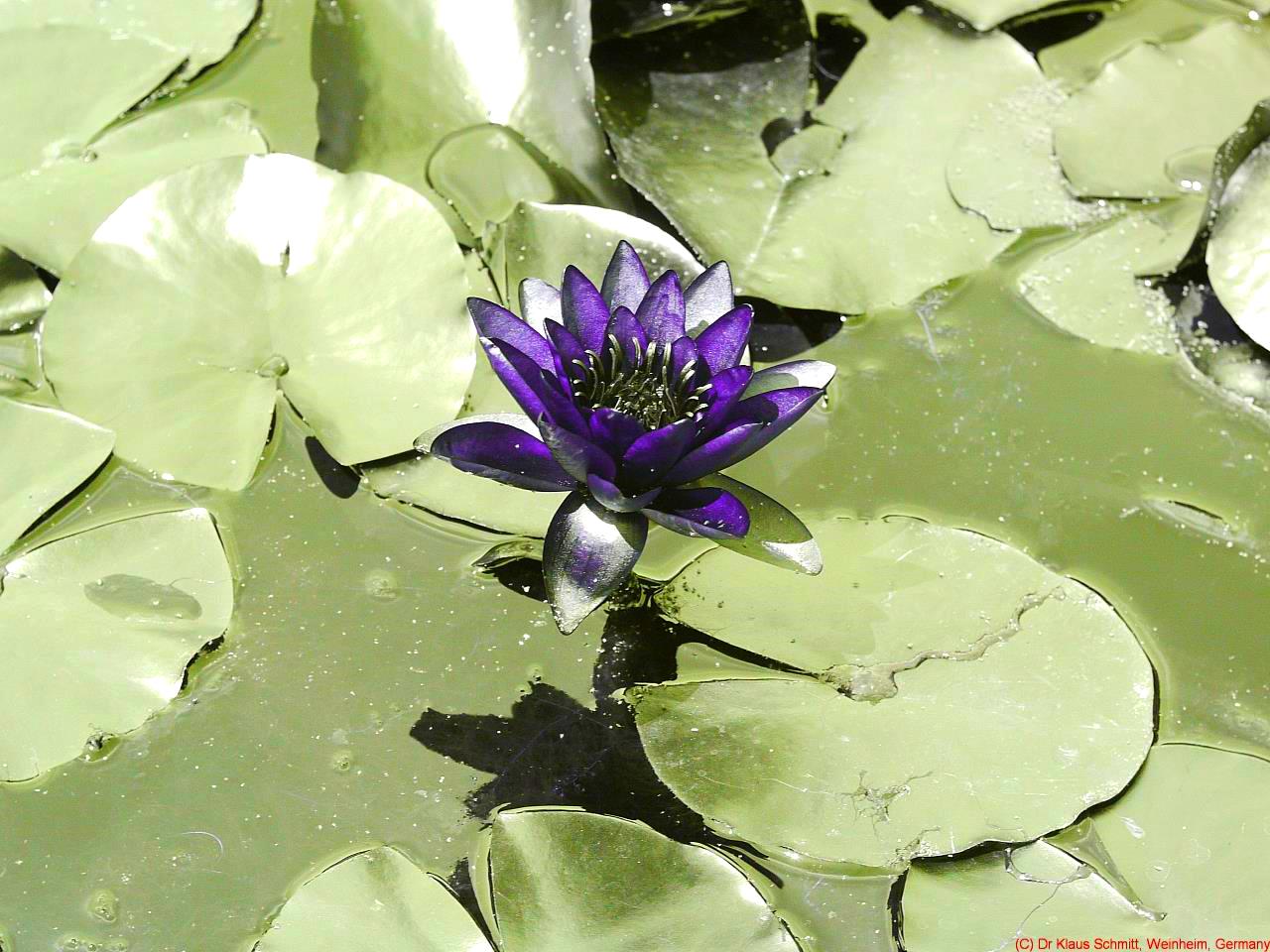
Today about a Water Lily (Nymphaeaceae). So here it is in its multispectral representation. I took some shots at Hermannshof, Weinheim, Germany in normal human vision VIS, in UV using the Baader-U filter, as well as in simulated bee vision using my XBV2 and new XBV6 filter respectively.

[click on image to see a larger one]

Visual shot:


Simulated bee vison using XBV2 filter:


Simulated bee vison using XBV6 filter:


UV using Baader-U filter:


This flower has a long wave UV reflection (around 385nm) of its petals, that provides an interesting backdrop for its bright stamen.

As you may have noticed, I'm still working on my bee vision (BV) filters; BV6 is one with very intensive colors and much shorter exposure time, due to new filter glass combinations.

More about these special new filters here later in a seperate entry.


Stay tuned, more will follow on that fascinating subject...

More info on this very interesting field may be found on my site http://www.pbase.com/kds315/uv_photos