Saturday, July 28, 2012

Petri Kuribayashi f3.5/35mm lens for reflected UV photography II

Here now a test using that previously mentioned Petri Kuribayashi f3.5/35mm lens when used with the standard UV transmission filter, the Baader-U as well as my shorter wave Jupiter-U filter, compared to the Noflexar f3.5/35mm lens.

[click on image to see a larger one]


When using the Baader-U filter, the Kuri 35mm has a peak transmission of about 58% at 362nm, wheras the Noflexar 35mm shows one of about 45% at 365nm, that is a gain of about 0.4 stops for the Kuri 35mm.

When using the Jupiter-U filter, the Kuri 35mm has a peak transmission of about 43% at 350nm, wheras the Noflexar 35mm shows one of about 30% at 358nm, that is a gain of about 0.5 stops for the Kuri 35mm, based on its deeper reach into UV.

There is a part III about this lens HERE.

Stay tuned, more will follow on that fascinating subject...

More info on this very interesting field may be found on my site http://www.pbase.com/kds315/uv_photos

Flower decay made visible using reflected UV ultraviolet photography II

While I was shooting flowers at Hermahnshof, Weinheim park, I noticed that in UV the wilting / ageing / decay of a flower can be easily detected, wheras in visible light this is not visible to us humans. I have written about that effect earlier here.

A UV sensitive camera, Cerco 94mm lens, Baader-U resp. UV/IR Cut filter was used; standardized UV palette using my ReflectionDisc

[click on image to see a larger one]

VIS (left) - UV (right):


The larger, yellow Helianthus tuberosus flower on the right side clearly shows that it has aged and will be wilting soon. In reflcted UV things get much easier to see immediately. So I'm sure pollinators (bees) knew that way before us...


Stay tuned, more will follow on that fascinating subject...

More info on this very interesting field may be found on my site http://www.pbase.com/kds315/uv_photos

Petri Kuribayashi f3.5/35mm lens for reflected UV photography

Now this today was based on an information I got from a forum,  that the Petri Kuribayashi f3.5/35mm lens was very capable of working for reflected UV photography.

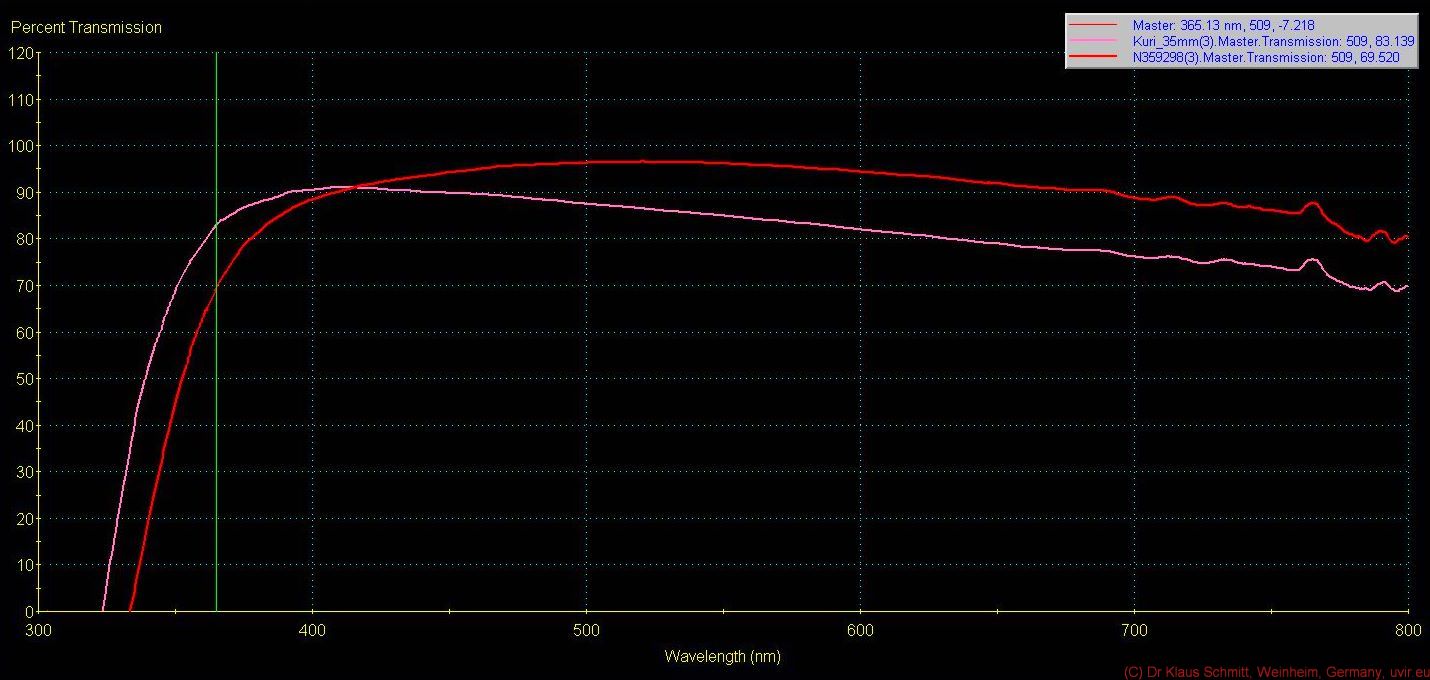
I tested that lens and it performed even better (pink line) than the well known Noflexar f3.5/35mm lens (red line), reaching down into UV to about 320nm. At 365nm it even has a 12% higher transmission (1/4 stop).

[click on image to see a larger one]


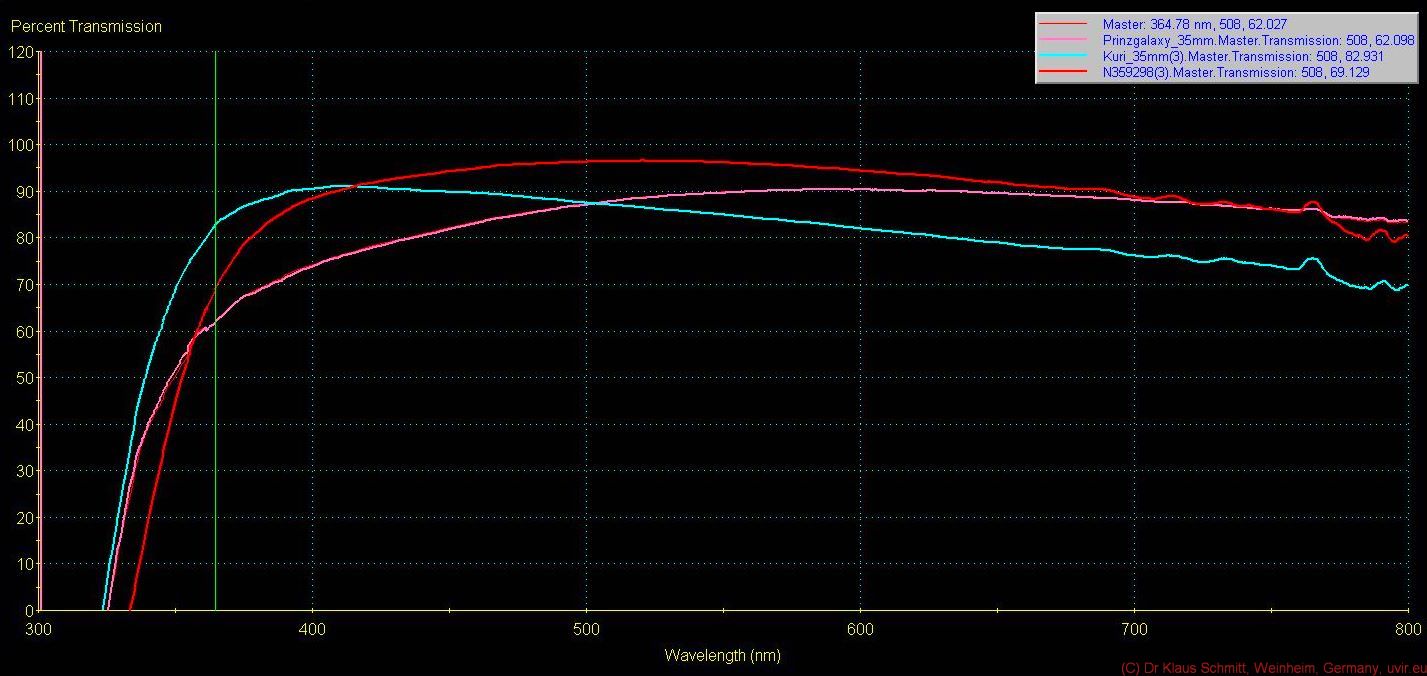
There are a few similar looking re-branded emanations of that Kuri lens, but with lesser performance, so be aware of that. These and a few other emanations of basically the same lens were not my finds, but Boon Tang and Alex Holovachov deserve the credit for those finds and bringing it to my attention. I'm not sure if later made models may have the same good transmittance, as the coating may have been changed to more modern ones that unfortunately suppress UV to pass (blue coating color is an indication for that). Here for instance the Prinzgalaxy f3.5/35mm in comparison, that shows a about 20% lower transmission at 365nm, but still useful (1/2 stop less):


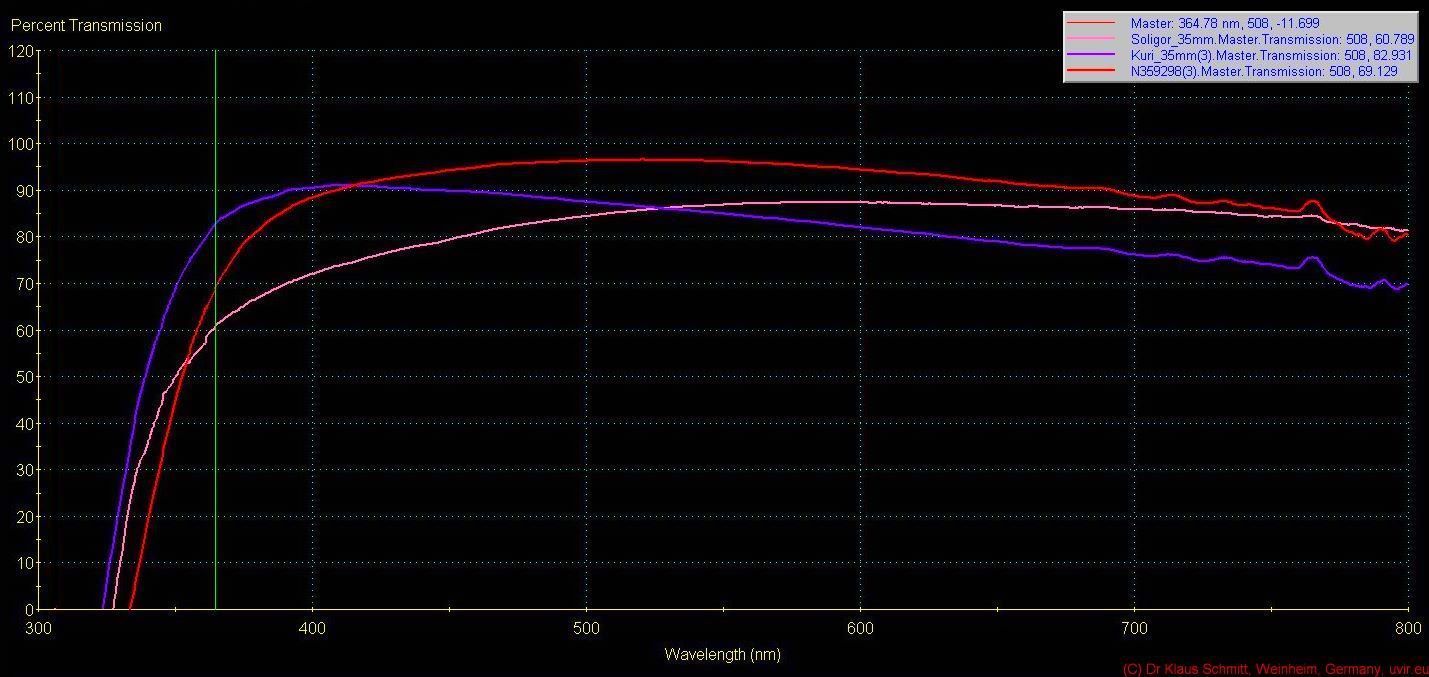
And here one of SOLIGOR brand:


Here now a quick photographic test of that original Kuribayashi 35mm lens, which shows virtually no focus shift (1.03%), as well as very good sharpness and very good contrast in reflected UV using the Baader-U filter:


Here the visual shot for comparison:


The little downside that it only focuses to about one meter (3 ft) can be overcome by using a small helicoid or tube, if so needed. Here the Noflexar 35mm has an edge, as it has a built in close focus ability to about 1:2 (0.5x) magnification.

So this "zebra" barrel styled Kuribayashi lens from the 50ies / 60ies is a very welcomed new lens to the very few "normal" i.e. non quartz fluorite ones that does perform very well.

There is a part II about this lens HERE.

Photographic comparison between the Kuribayashi and the Soligor lens is HERE.


Stay tuned, more will follow on that fascinating subject...

More info on this very interesting field may be found on my site http://www.pbase.com/kds315/uv_photos
Friday, July 27, 2012

Rudbeckia hirta: human vision vs simulated bee vison; reflected UV ultraviolet photography IV

Today as I have shown before again R. hirta in its multispectral representation. I took some shots in normal human vision VIS, in UV using the Baader-U, the all proprietary Jupiter-U and the new Saturn-U (300-350nm) filter, as well as in simulated bee and butterfly vision using my XBV2, XBV3 and the new, stricter XBV6 filter respectively.

[click on image to see a larger one]

Visual shot - human vision:


Simulated butterfly vision using XBV3 filter:


Simulated butterfly vision using XBV2 filter:


Simulated bee vision using XBV6 filter:


UV using Baader-U filter:


UV using Jupiter-U filter:


UV using Saturn-U (300-350nm) filter:


IR (basically) as it was shot using only a ND filter:


Rudbeckia and also this R. hrsta have a very prominent, otherwise invisible "bullseye pattern" which gets nicely visible in UV (around 360nm) and BV. Since leafs (petals were leafs one) reflect from 700-750nm onwards, that pattern is also invisible in IR.

As you may have noticed, I'm still working on my bee vision (BV) filters; BV6 now is one with very intensive colors and much shorter exposure time, due to new filter glass combinations.

More about these special new filters here later in a seperate entry.


Stay tuned, more will follow on that fascinating subject...

More info on this very interesting field may be found on my site http://www.pbase.com/kds315/uv_photos
Sanvitalia procumbens (Creeping Zinnia): human vision vs simulated bee vison; reflected UV ultraviolet photography II

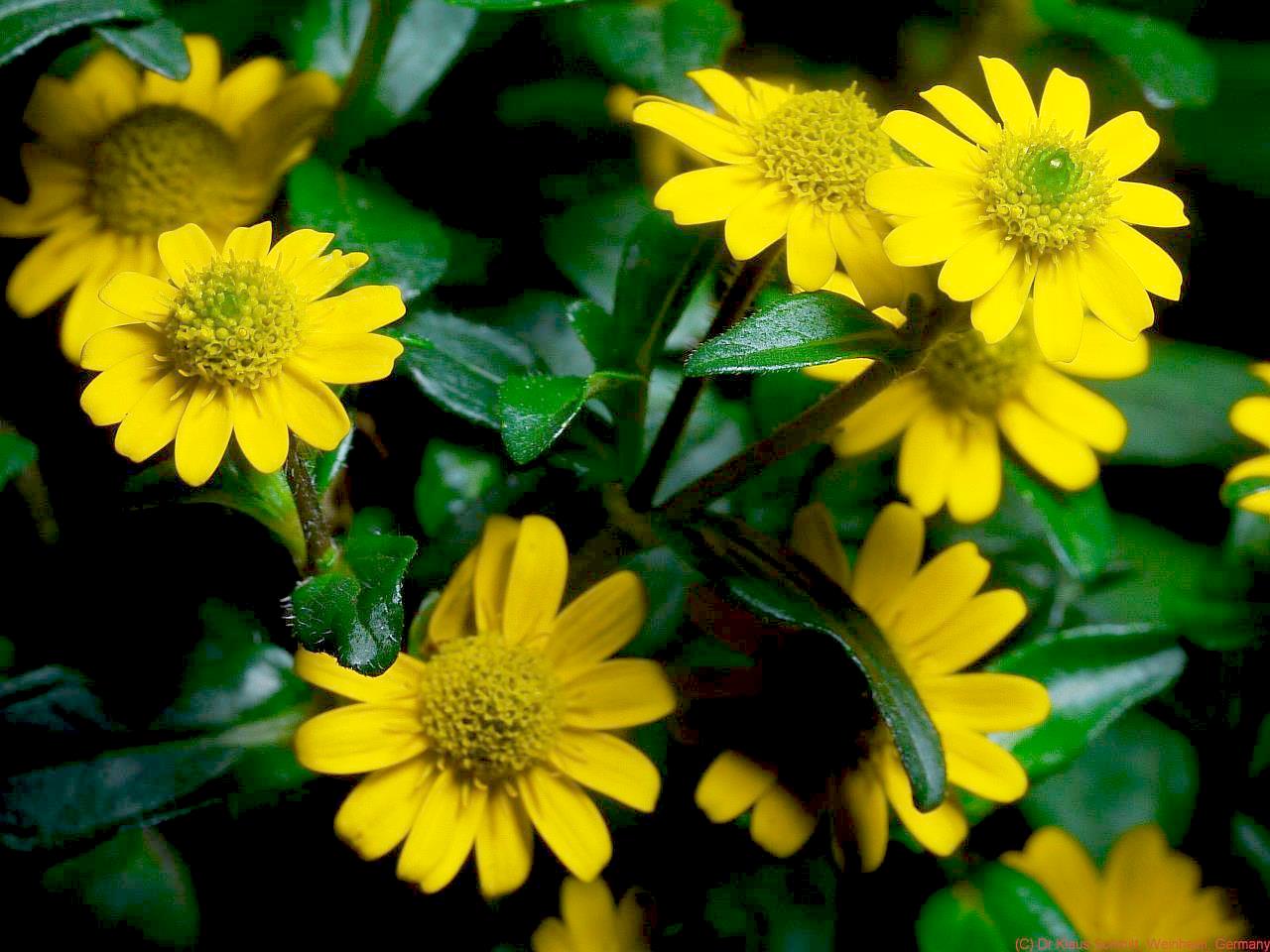
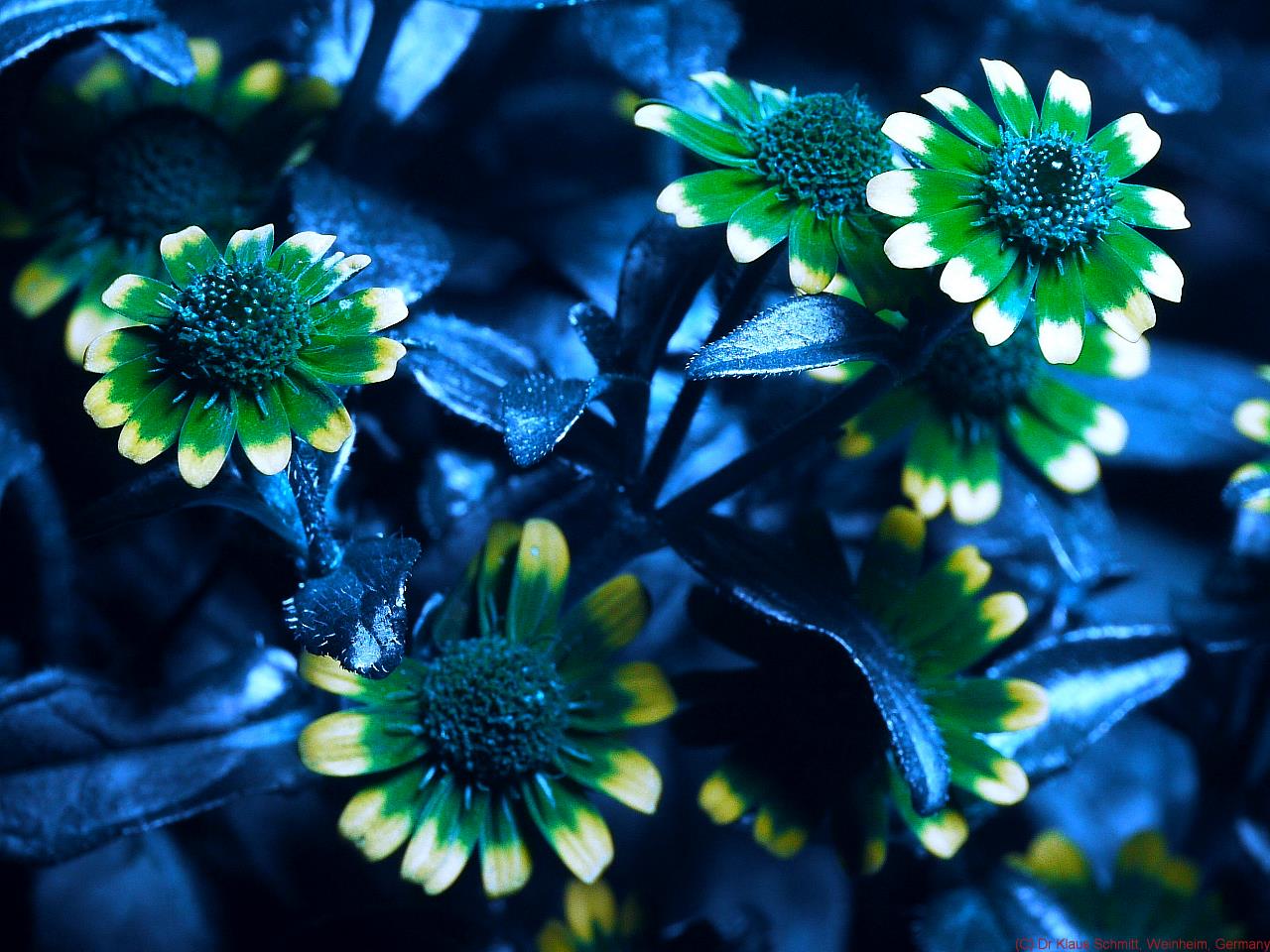
Today again about Sanvitalia procumbens ("Creeping Zinnia"). So here it is in its multispectral representation with a focus on simulated bee vision; before I had shown it with a focus on UV using the Baader-U and Jupiter U filters. I took some shots in normal human vision VIS, in UV using the Baader-U filter, as well as in simulated bee vision using my XBV2 and XBV5 filter respectively.

[click on image to see a larger one]

Visual shot:


Simulated bee vison using XBV2 filter:


Simulated bee vison using XBV5 filter:


UV using Baader-U filter:


This flower has a prominent UV reflection (around 360nm) of its petals and is one of my "standard UV targets"

As you may have noticed, I'm still working on my bee vision (BV) filters; here again it shows, how well they are able to reproduce the UV patterns together with teh visible parts a bee is able to see.

More about these special new filters here later in a seperate entry.


Stay tuned, more will follow on that fascinating subject...

More info on this very interesting field may be found on my site http://www.pbase.com/kds315/uv_photos
Friday, July 20, 2012

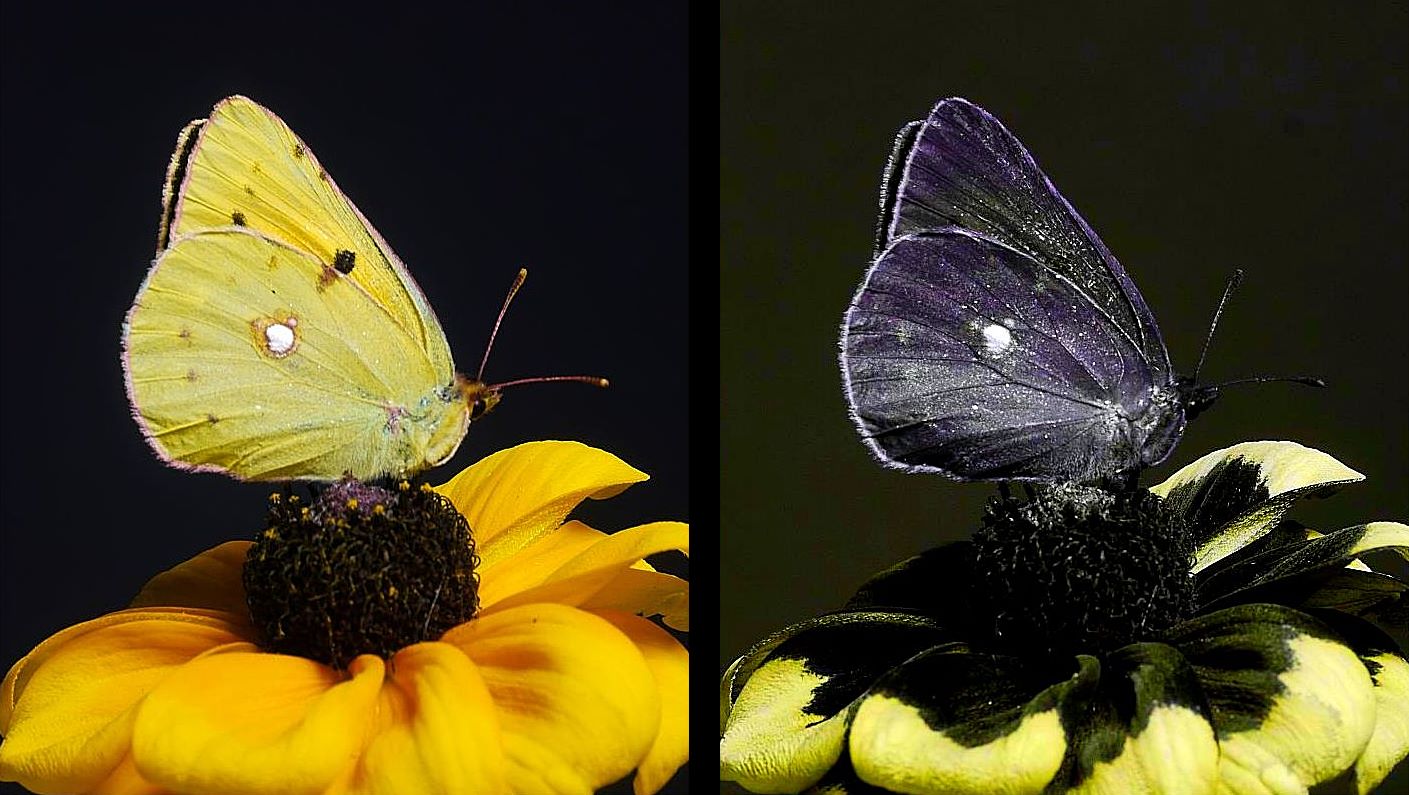
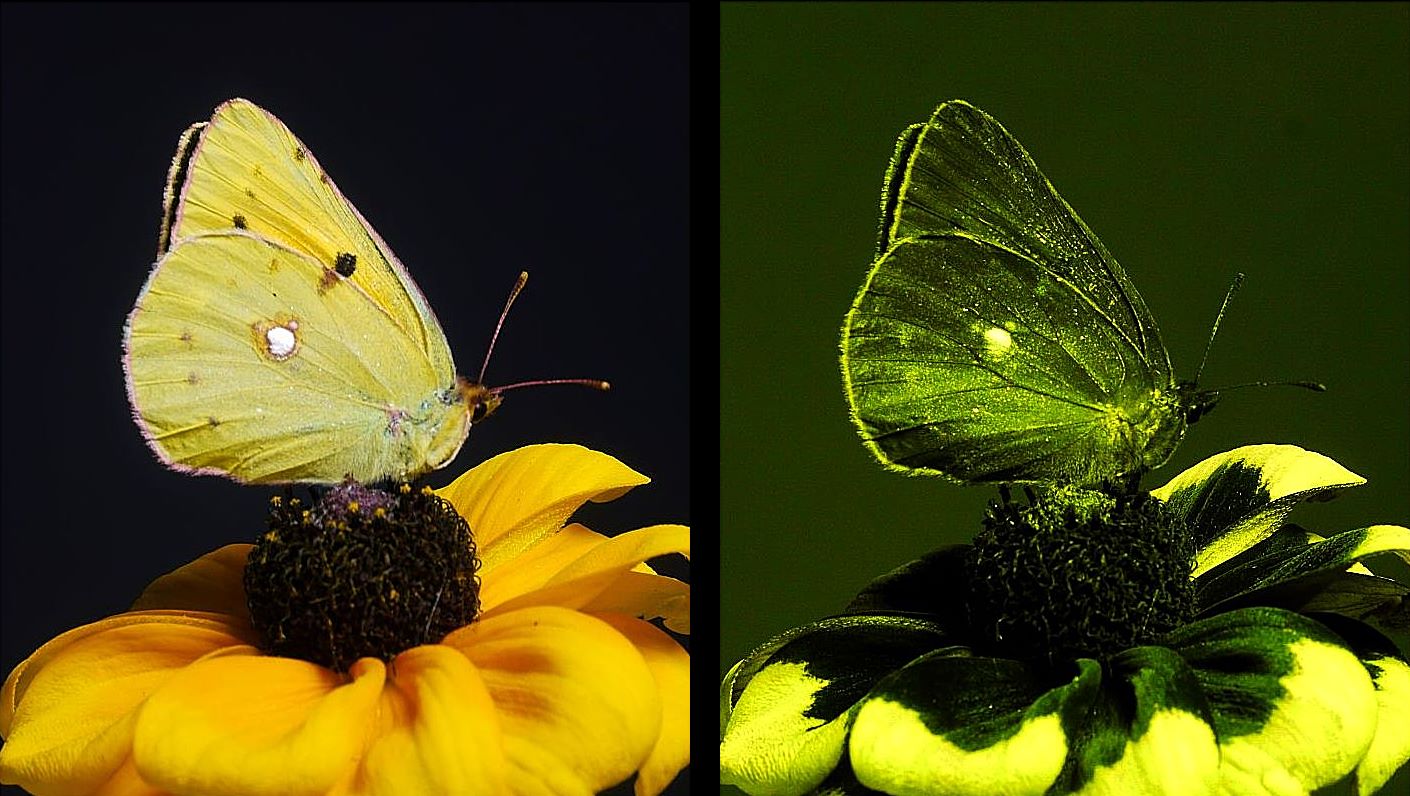
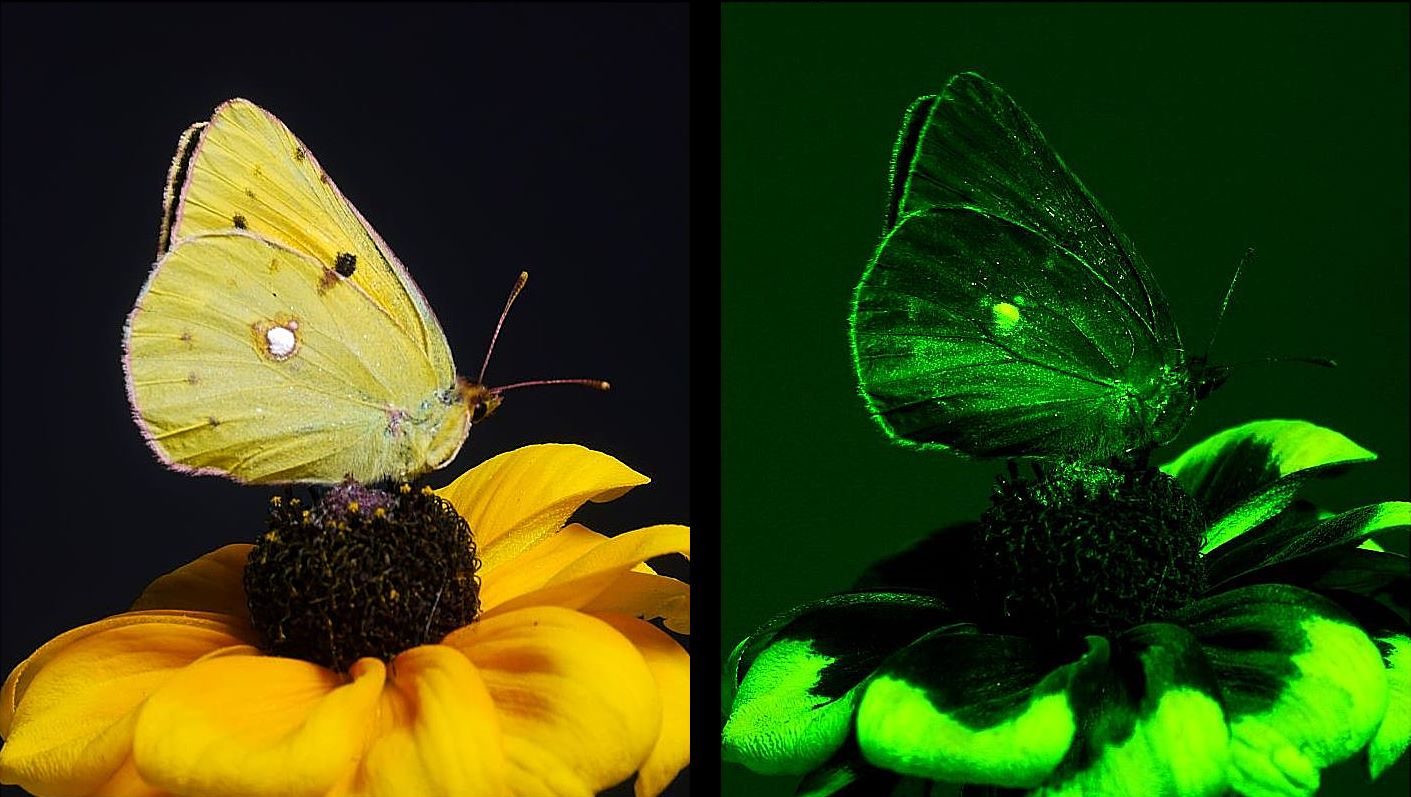
Gonepteryx cleopatra "Cleo" butterfly on Rudbeckia hirta: human vision; UV ultraviolet stimulated visible fluorescence photography

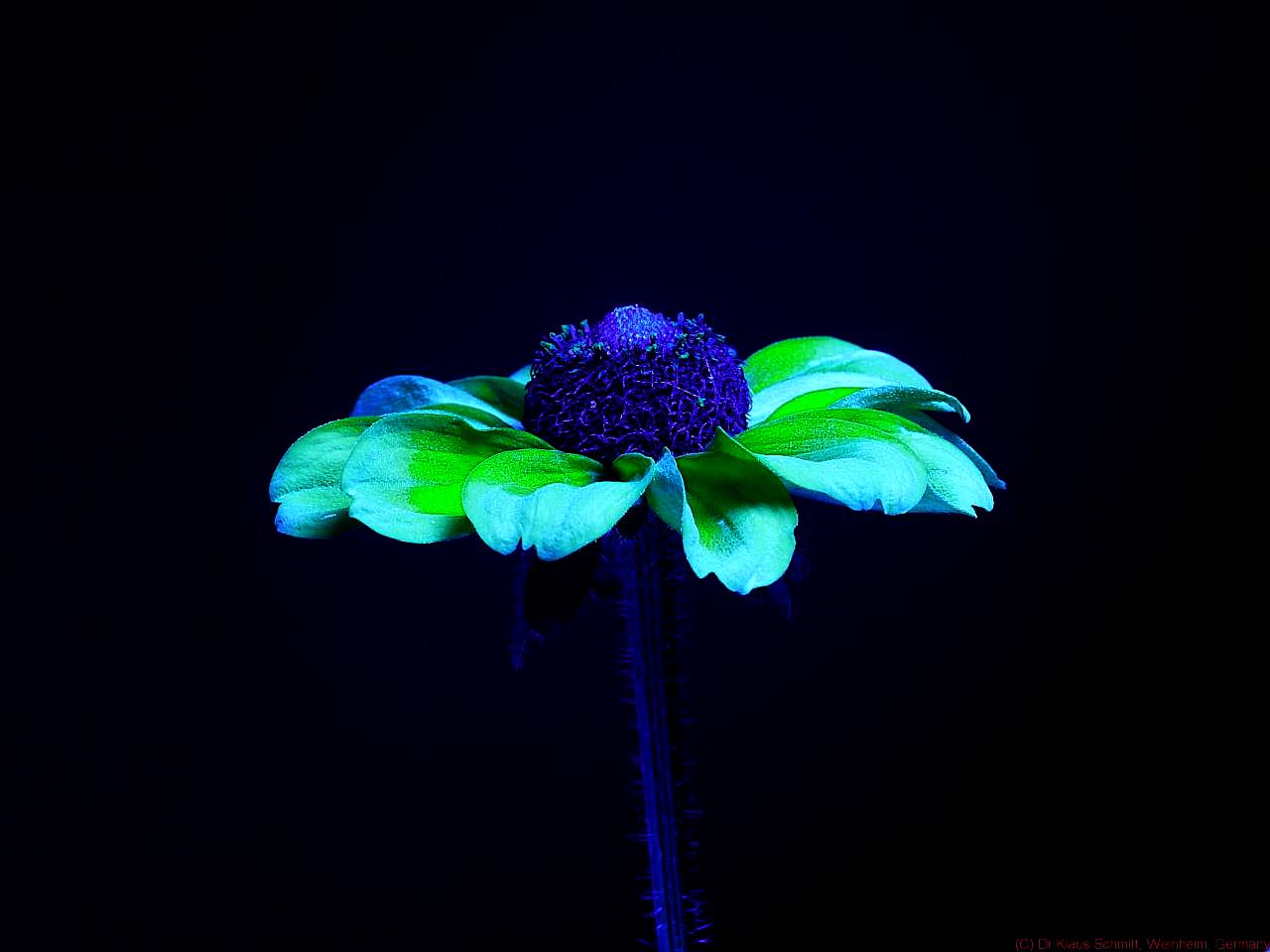
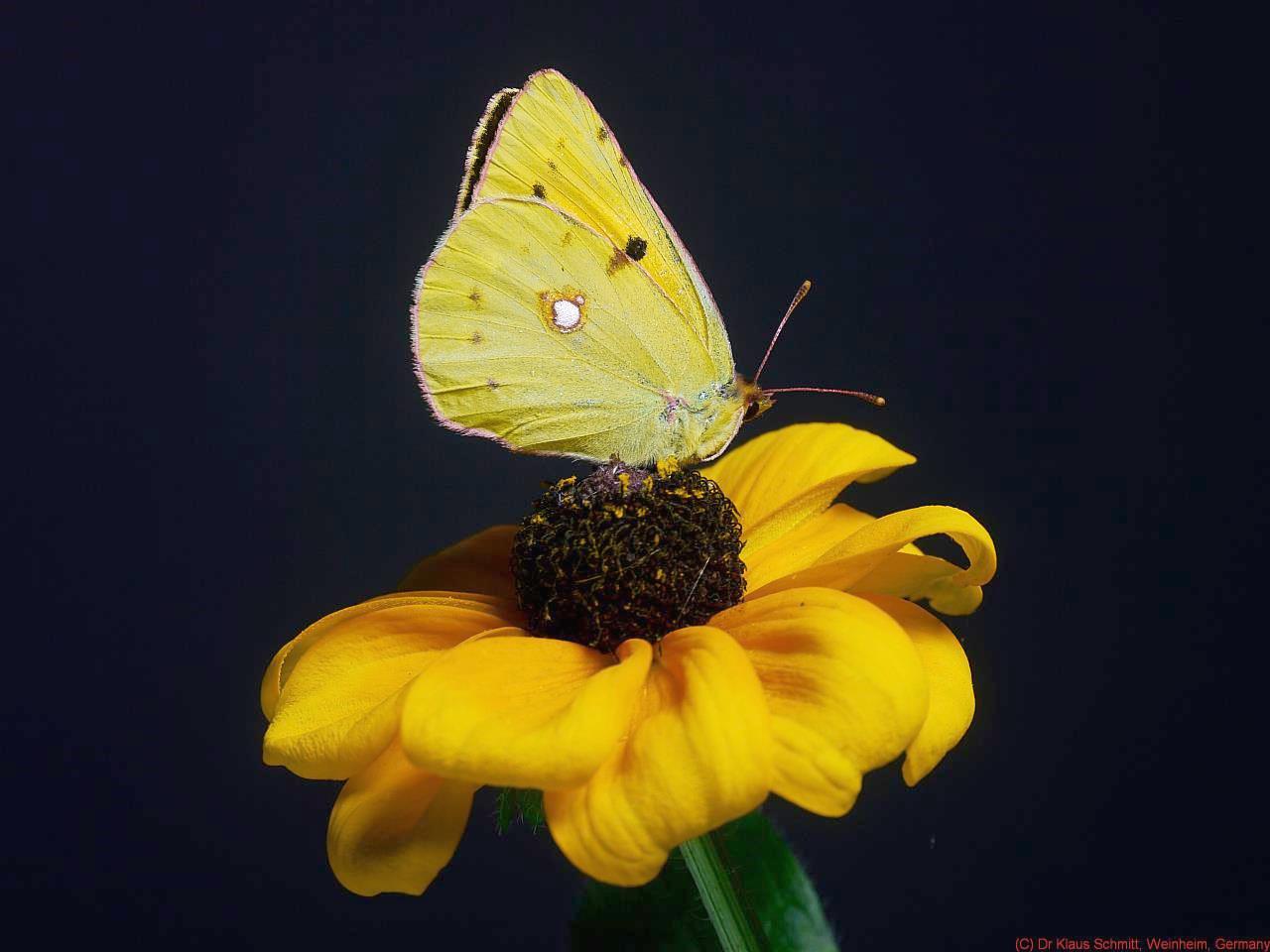
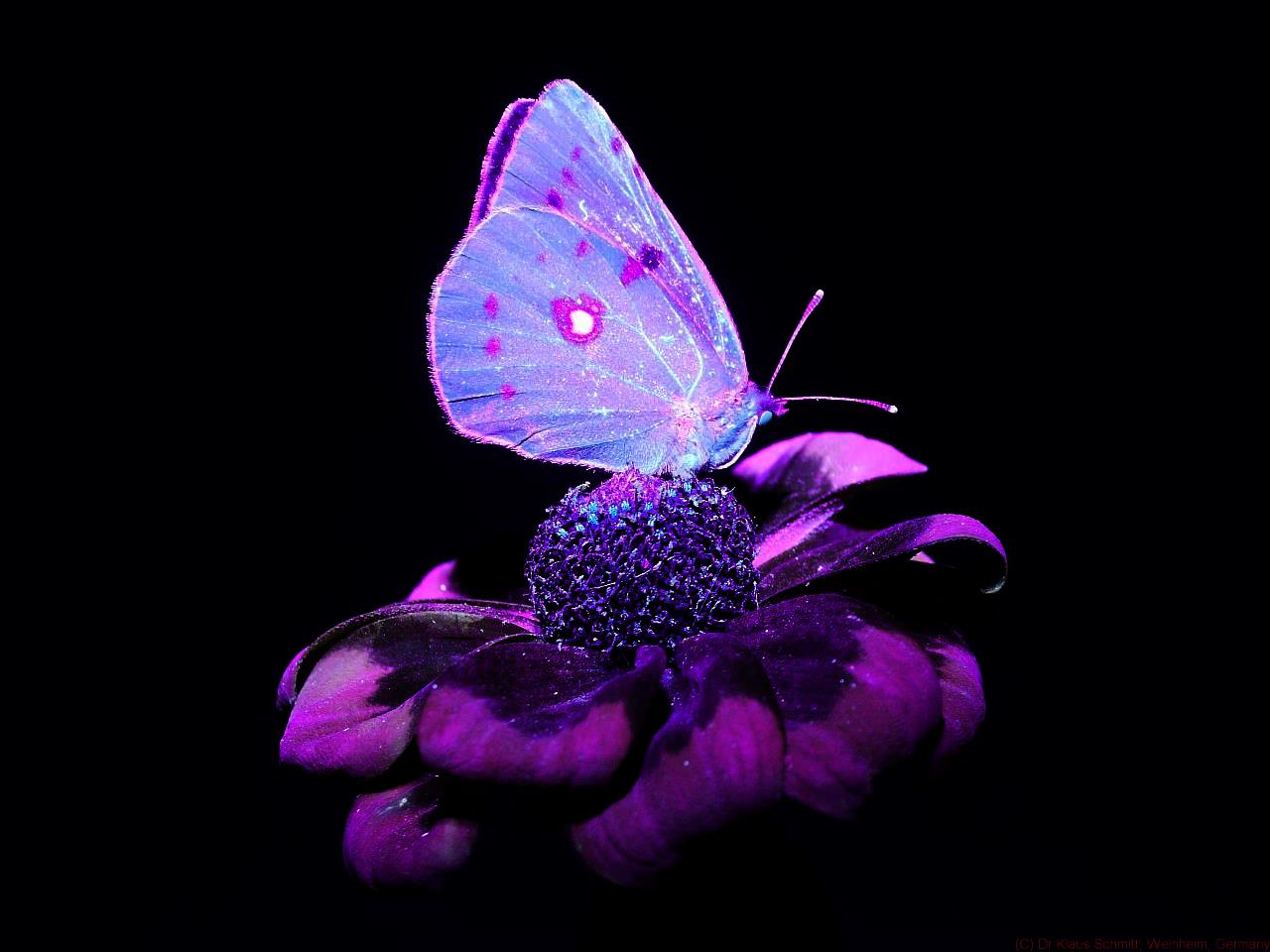
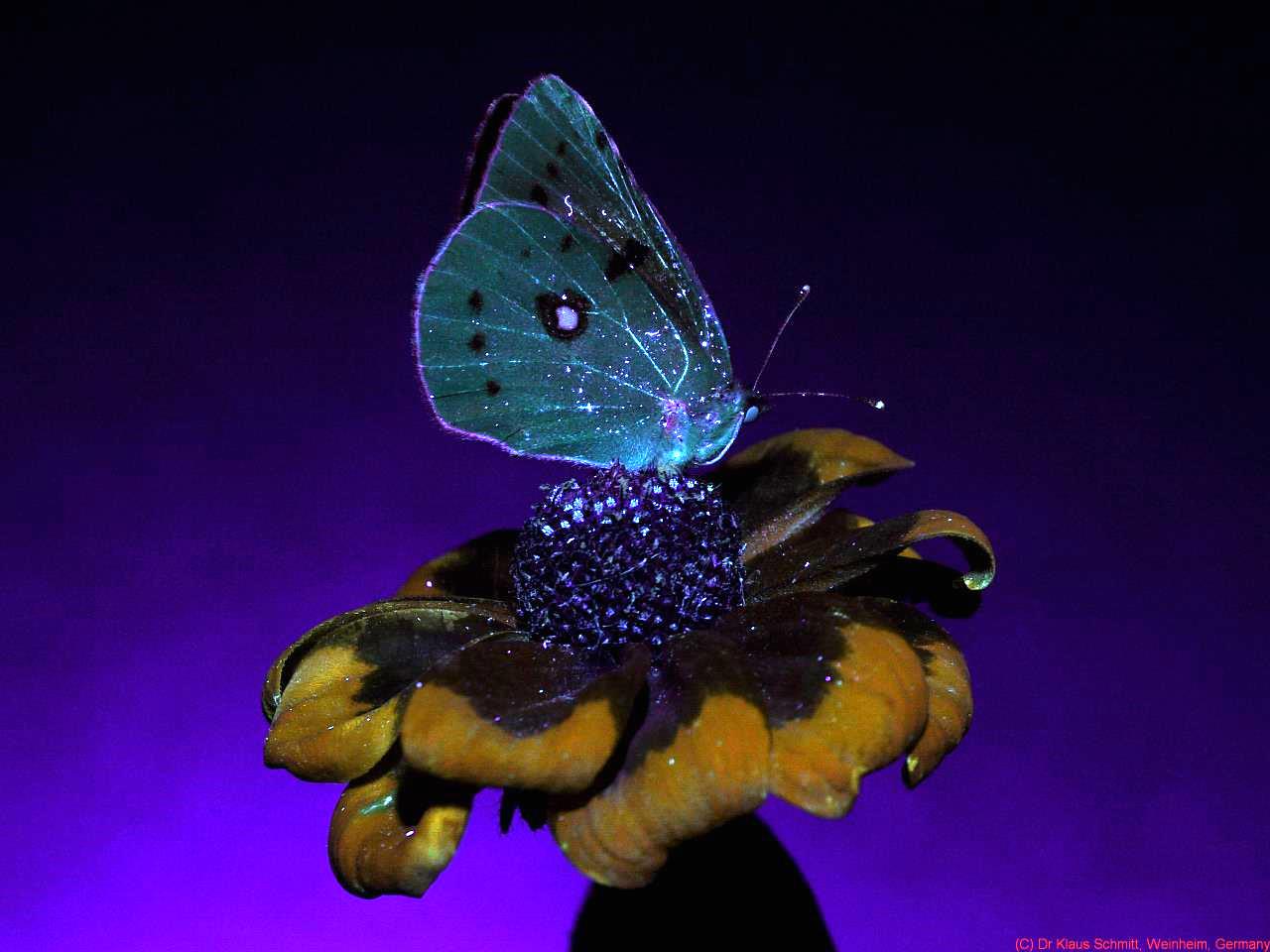
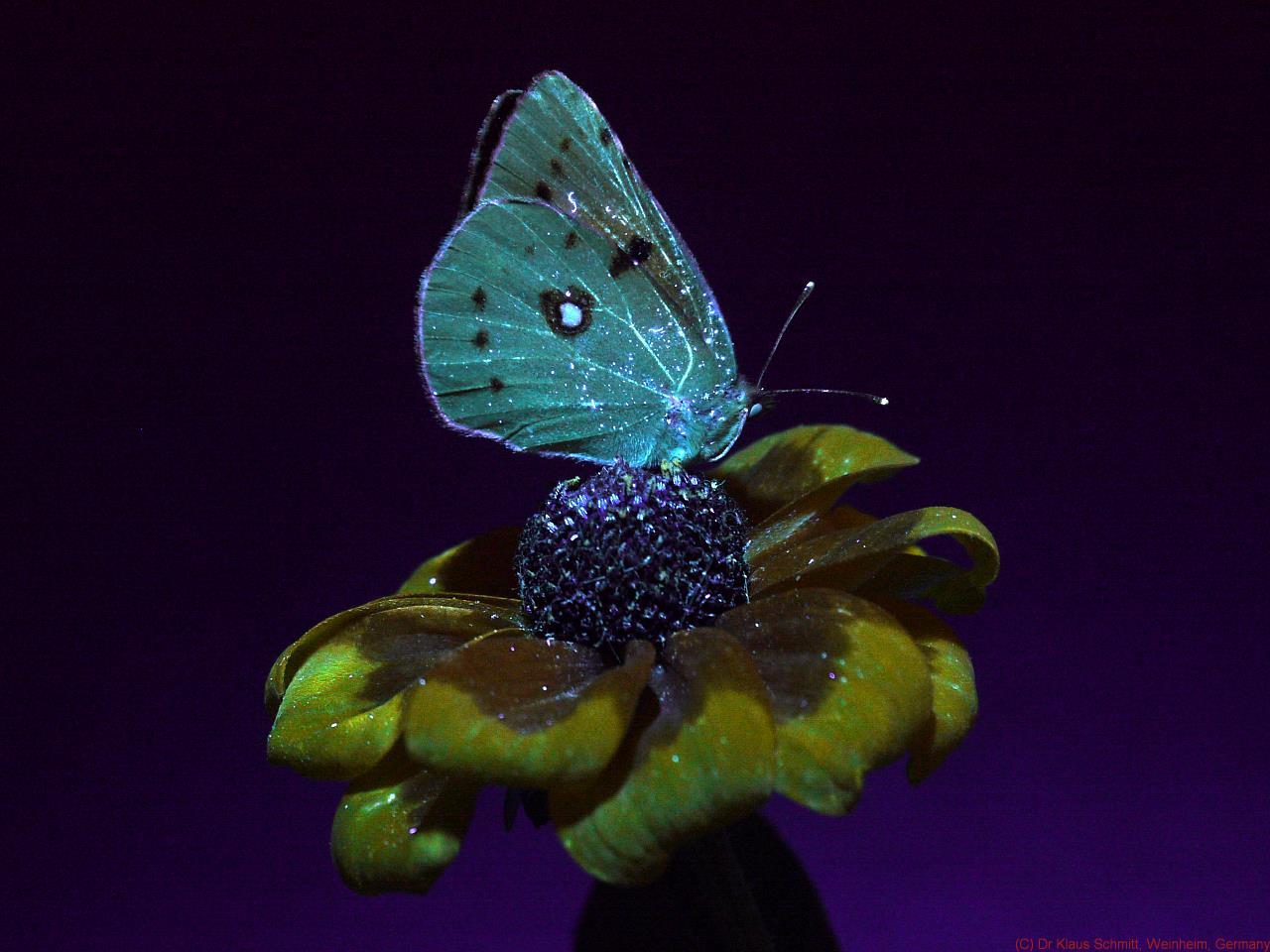
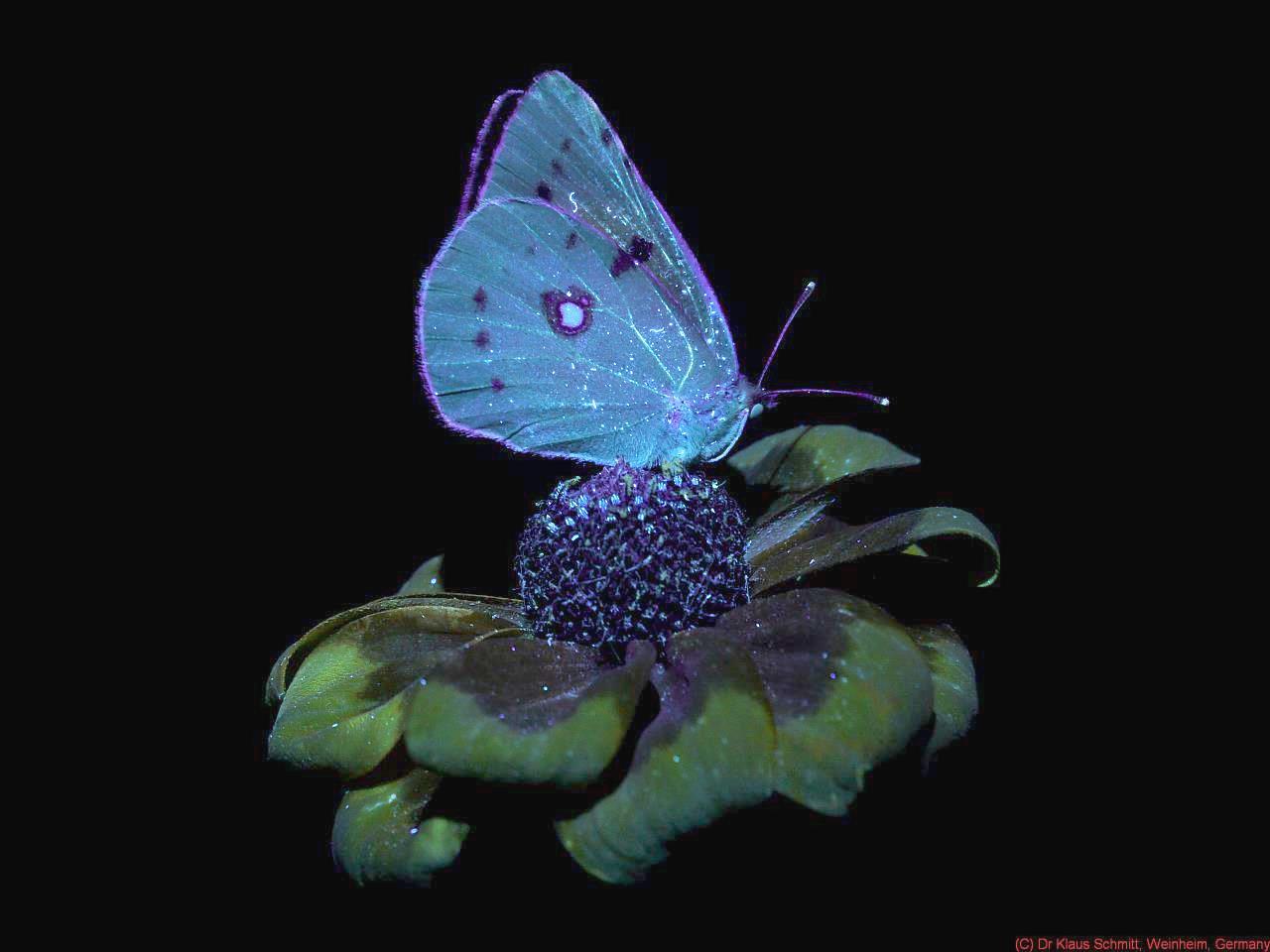
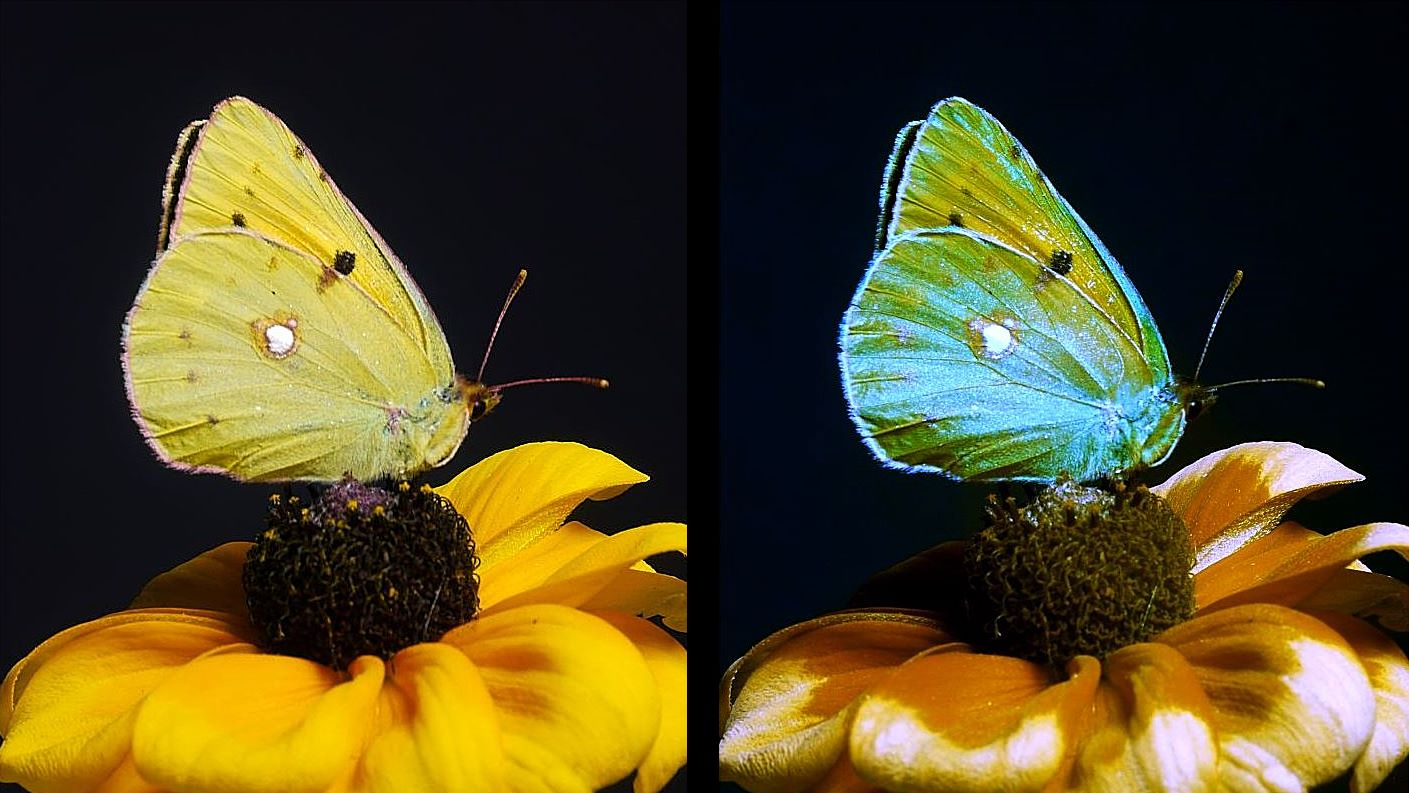
Here now after having shown it in bee vision and reflected ultraviolet photography that Cleo butterfly Gonepteryx cleopatra or Cleopatra, resting on a Rudbeckia hirta flower. Now here shown in normal visible as well as UV induced stimulated visible fluorescence, using various UV sources as well as blocking filters (BG38, Baader UV/IR CUT filter).

[click on image to see a larger one]

Visual image:


UV induced visible fluorescence using unfiltered commercial 365nm UV torch, no UV blocking:


UV induced visible fluorescence commercial 365nm UV torch, UV blocking:


UV induced visible fluorescence using Nichia 365nm UV torch, UV blocking:


UV induced visible fluorescence using UV filtered Nichia 365nm UV torch, UV blocking:


Nice results and a a lot of details on the wings gets visible using fluorescence method, yet personally I prefer reflected UV photography.


Stay tuned, more will follow on that fascinating subject...

More info on this very interesting field may be found on my site http://www.pbase.com/kds315/uv_photos
Gonepteryx cleopatra "Cleo" butterfly on Rudbeckia hirta: human vision vs simulated bee and butterfly vison; reflected UV ultraviolet photography

Today about a butterfly Gonepteryx cleopatra or Cleopatra, short "Cleo". So here it is in its multispectral representation, resting on a Rudbeckia hirta flower. I took some shots in normal human vision VIS, in UV using the Baader-U (eff. 375nm) and my Jupiter-U (eff. 365nm) and Saturn-U (eff. 325nm) filter, as well as in simulated bee and butterly vision using my XBV2 and XBV3 filters respectively.

I'm presenting all of them in diptych form, VIS image (left) vs filtered image (right)

[click on image to see a larger one]

VIS vs simulated insect vison using XBV2 filter:


VIS vs simulated insect vison using XBV3 filter:


VIS vs Baader-U (eff. 375nm):


VIS vs Jupiter-U (eff. 365nm):


VIS vs Saturn-U (eff. 325nm):


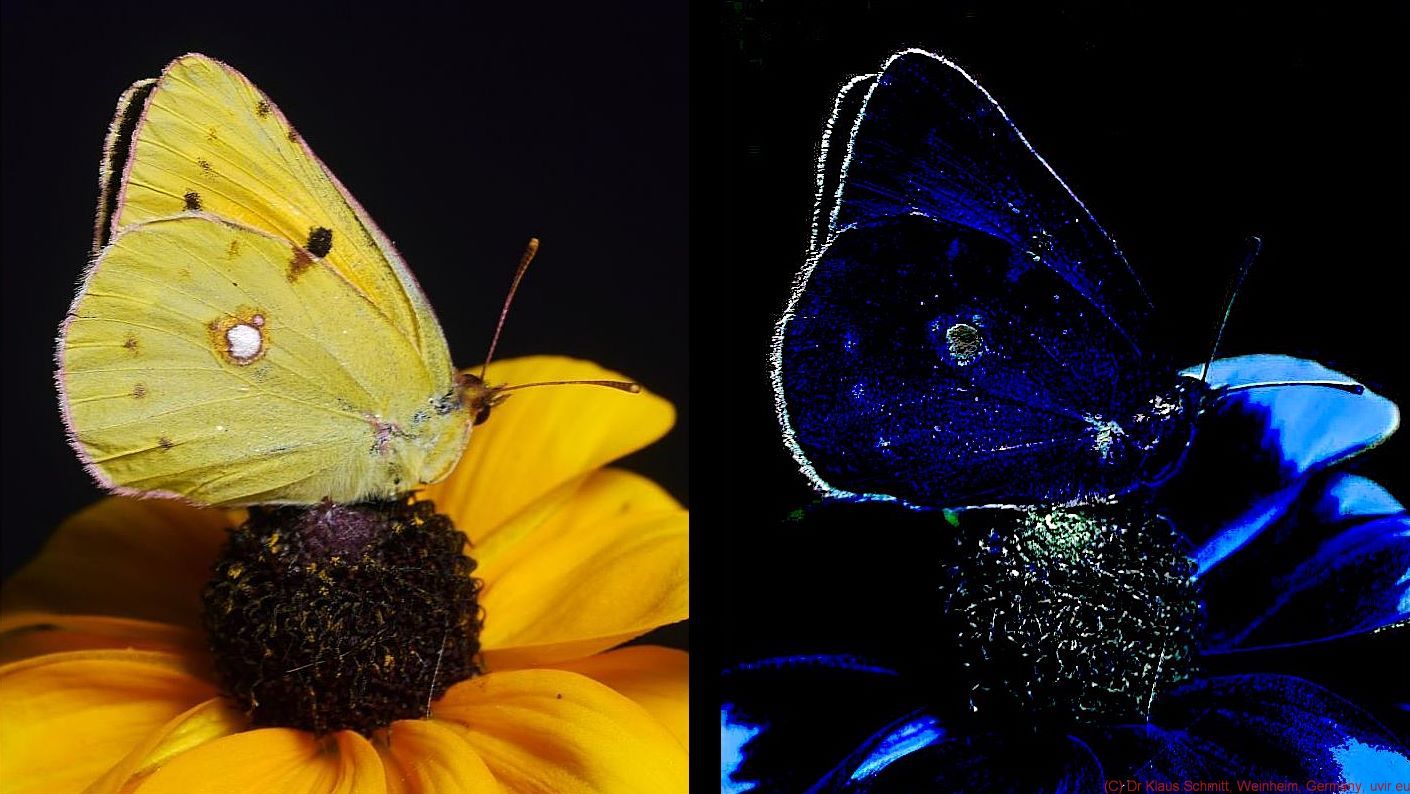
Quite interesting how that butterfly appears is different spectral representations. Obviously that spot as well as its UV bright rim around its wings is made to attract, which I made visible using my differential method (right):


As you may have noticed, I'm still working on my bee and butterfly vision (BV) filters. More about these special filters here later and in a seperate entry.


Stay tuned, more will follow on that fascinating subject...

More info on this very interesting field may be found on my site http://www.pbase.com/kds315/uv_photos