Sunday, April 21, 2013

Apache beggarticks - Bidens ferulifolia in reflected UV ultraviolet photography

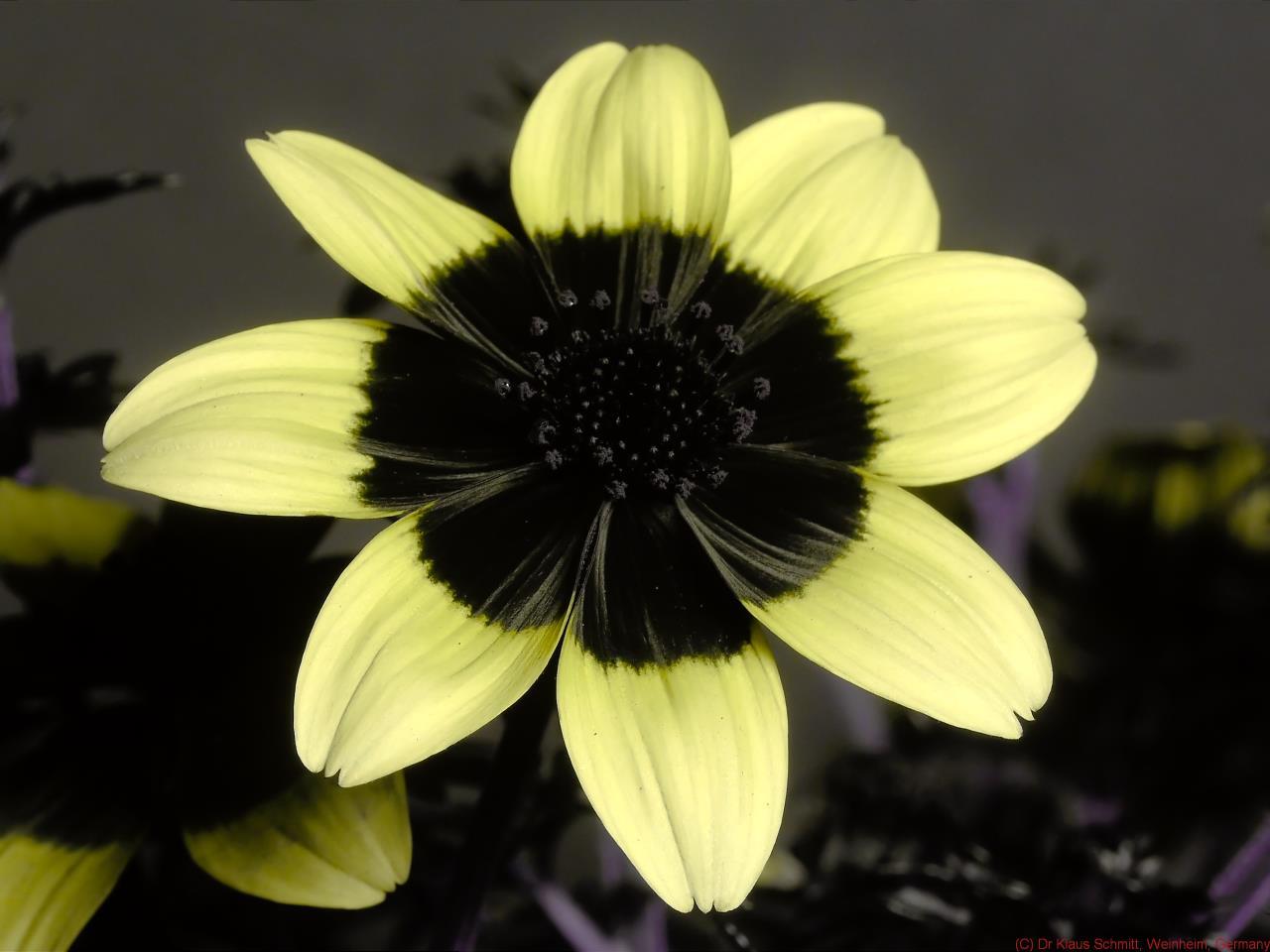
Today about a quite well known spring flower, Bidens ferulifolia or commenly named Apache beggarticks in reflected ultraviolet photography using my "work horse" UV filter, the Baader-U filter. Lens was a CERCO 94mm quartz fluorite lens. Light source was Xenon light. All shots were done at about f5.6. I have written about that flower last year and also measured its special UV reflection using my spectrophotometer as well as I have shown it in various spectral bands and simulated butterfly and bee vision.

[click on image to see a larger one]

Visible light image:
 

UV image using Baader-U filter (approx. 320-395nm, effective peak approx. 375nm):


Bidens has quite a prominent UV "bullseye" pattern that peaks around 365nm on the petal tips, buts its center is very UV dark and this gets nicely visible.


Stay tuned, more will follow on that fascinating subject...

More info on this very interesting field may be found on my site http://www.pbase.com/kds315/uv_photos

Friday, April 12, 2013

Lesser Celandine - Ranunculus ficaria in reflected ultraviolet photography and simulated bee butterfly vision

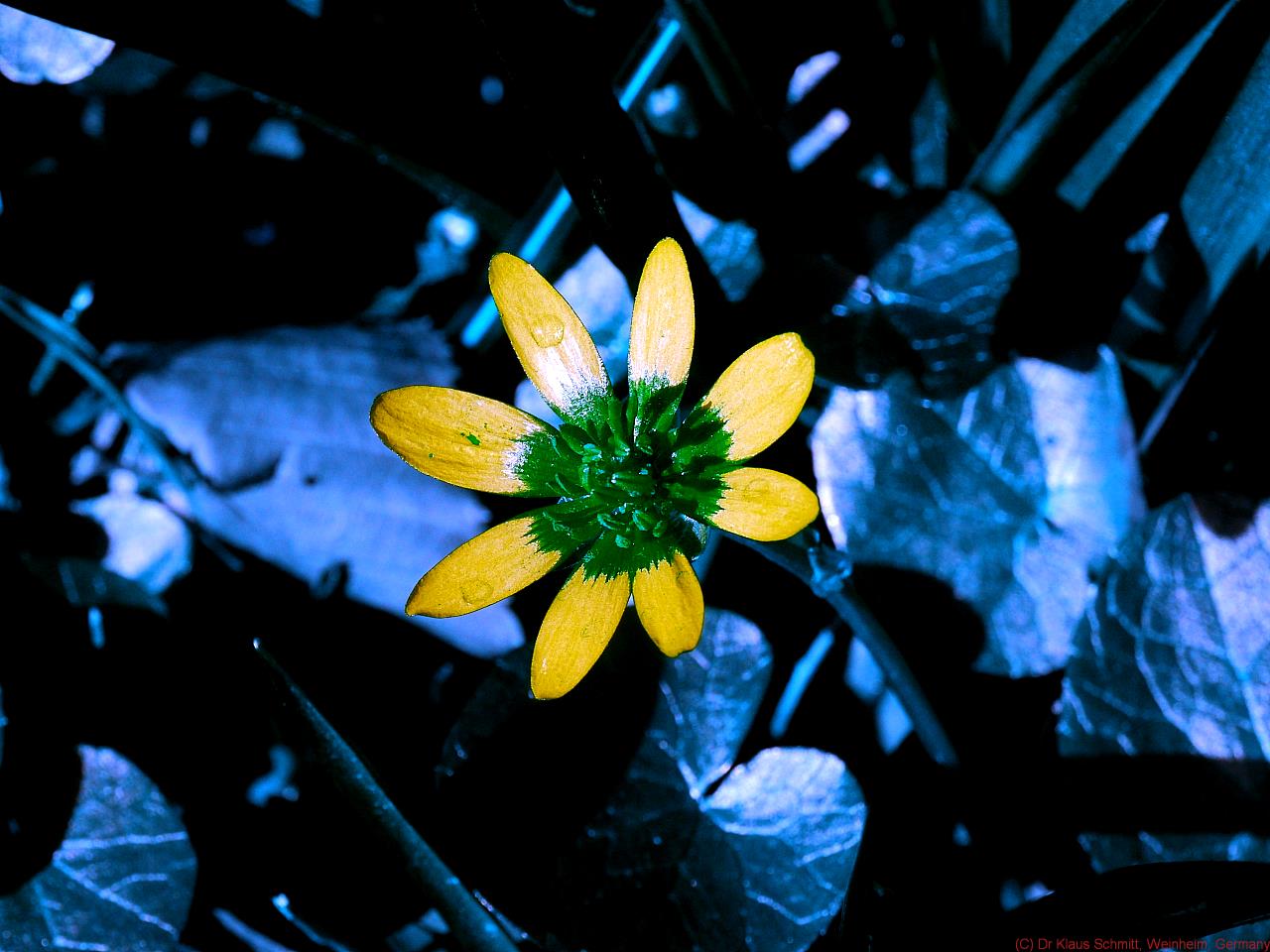
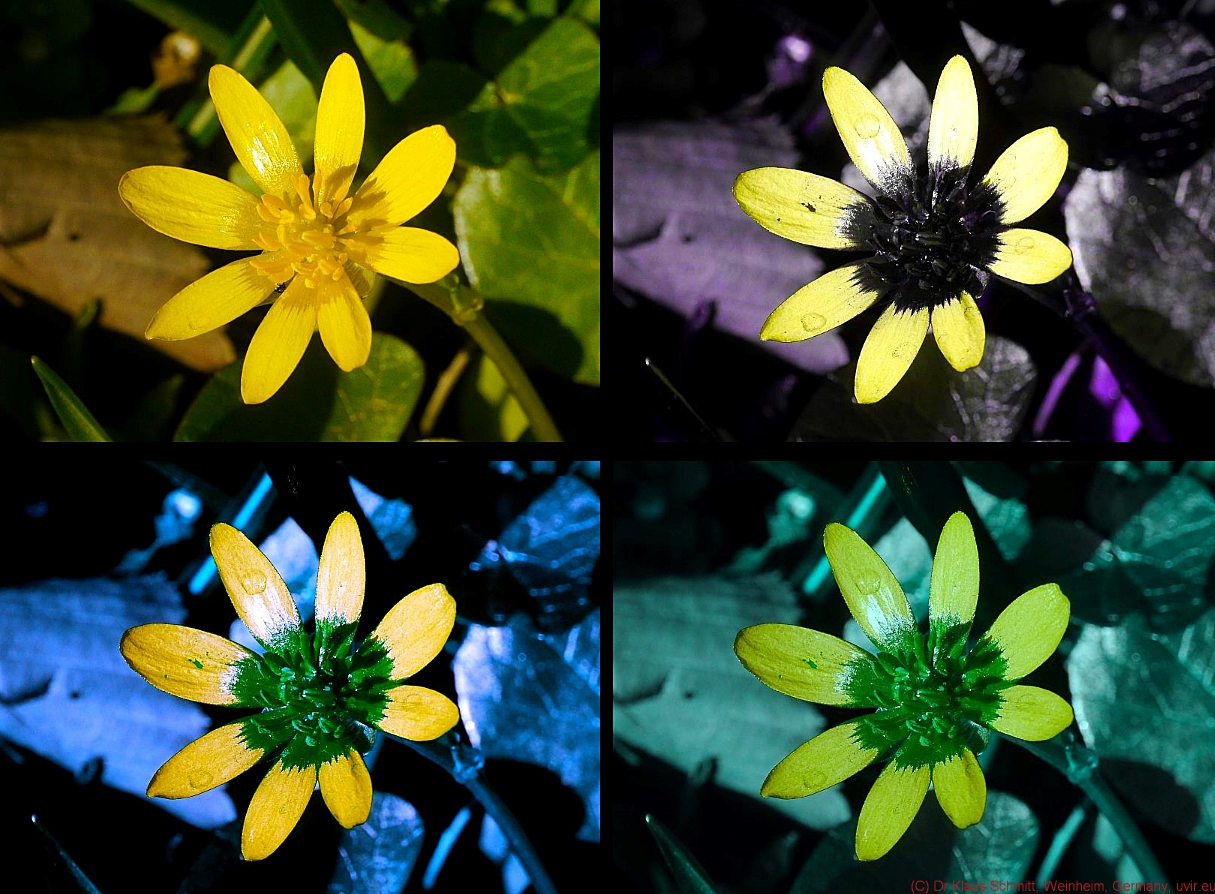
Today about an early spring flower, the famous Lesser Celandine (Ranunculus ficaria) in reflected ultraviolet photography using my "work horse" UV filter, the Baader-U filter as well as my XBV filters for simulating butterfly and bee vision. Lens was a CERCO 94mm quartz fluorite lens. Light source was sunlight. All shots were done at about f5.6.

[click on image to see a larger one]

Visible light image:
 

UV image using Baader-U filter (approx. 320-395nm, effective peak approx. 375nm):
 

Simulated butterfly vision (UV - VIS) using XBV3 filter:
 

Simulated bee vision (UV - VIS) using XBV6 filter:
 

Quadtriptych of the above:


This Lesser Celdanine has quite a prominent UV pattern, its center is UV dark and this gets quite nicely visible.


Stay tuned, more will follow on that fascinating subject...

More info on this very interesting field may be found on my site http://www.pbase.com/kds315/uv_photos

Tuesday, April 9, 2013

"Invisible Beauty" FotoTalk - Reiss Museum Mannheim

On April 7 this year, I gave a presentation about my works and insect vs human vision at Reiss-Engelhorm-Museum, Mannheim, Germany at the historical Zeughaus.

I presented some of my works as well as detailled explanations of insect vision in comparison to our human vision, also using a video presentation made for the forthcoming "Photosynthesis" exhibit at Hortus Botanicus, Amsterdam. A lively discussion followed, as to most people this topic was hardly ever heard of.

Insects (butterflies, Bees, ...) and animals (birds, fish, degus,..), at least some specialized ones, are able to see in ultraviolet (UV) light. Bees for instance can see Green and Blue and UV, but no RED, but butterflies and birds can see Red, Green and Blue and UV, so both can see what we humans cannot see - UV. To make that visible for us humans, I developed an optical mapping method, which allows to simulate, how we would see the world, if we had such special receptive eyes.


Stay tuned, more will follow on that fascinating subject...

More info on this very interesting field may be found on my site http://www.pbase.com/kds315/uv_photos

Hortus Botanicus Amsterdam exhibit - bee butterfly insect vision reflected UV photography video

In June this year, one of the oldest botanical gardens, 375 years old, the Hortus Botanicus in Amsterdam, The Netherlands will host an photographic art exhibition called "Photosynthesis", 1 June - 16 Sept 2013 of art group Tropisme. Together with curator and long time animation artist Robin Noorda I have contributed some of my works, which were made into a video presentation, named "Insecta Spectra".

Some of my works such as these were included, as well as an explanation of the background of insect vision in comparison to our human vision.

Insects (butterflies, Bees, ...) and animals (birds, fish, degus,..), at least some specialized ones, are able to see in ultraviolet (UV) light. Bees for instance can see Green and Blue and UV, but no RED, but butterflies and birds can see Red, Green and Blue and UV, so both can see what we humans cannot see - UV. To make that visible for us humans, I developed an optical mapping method, which allows to simulate, how we would see the world, if we had such special receptive eyes.

Have a look at the preview video clip [click]:
The whole Tropism Photosynthesis presentation for Hortus Botanicus may be seen here on their site.

I hope you enjoy the beauty of flowers in different visions!

Stay tuned, more will follow on that fascinating subject...

More info on this very interesting field may be found on my site http://www.pbase.com/kds315/uv_photos

Tuesday, March 26, 2013

Invisible World Photography - some best of reflected ultraviolet, bee + butterfly vision II

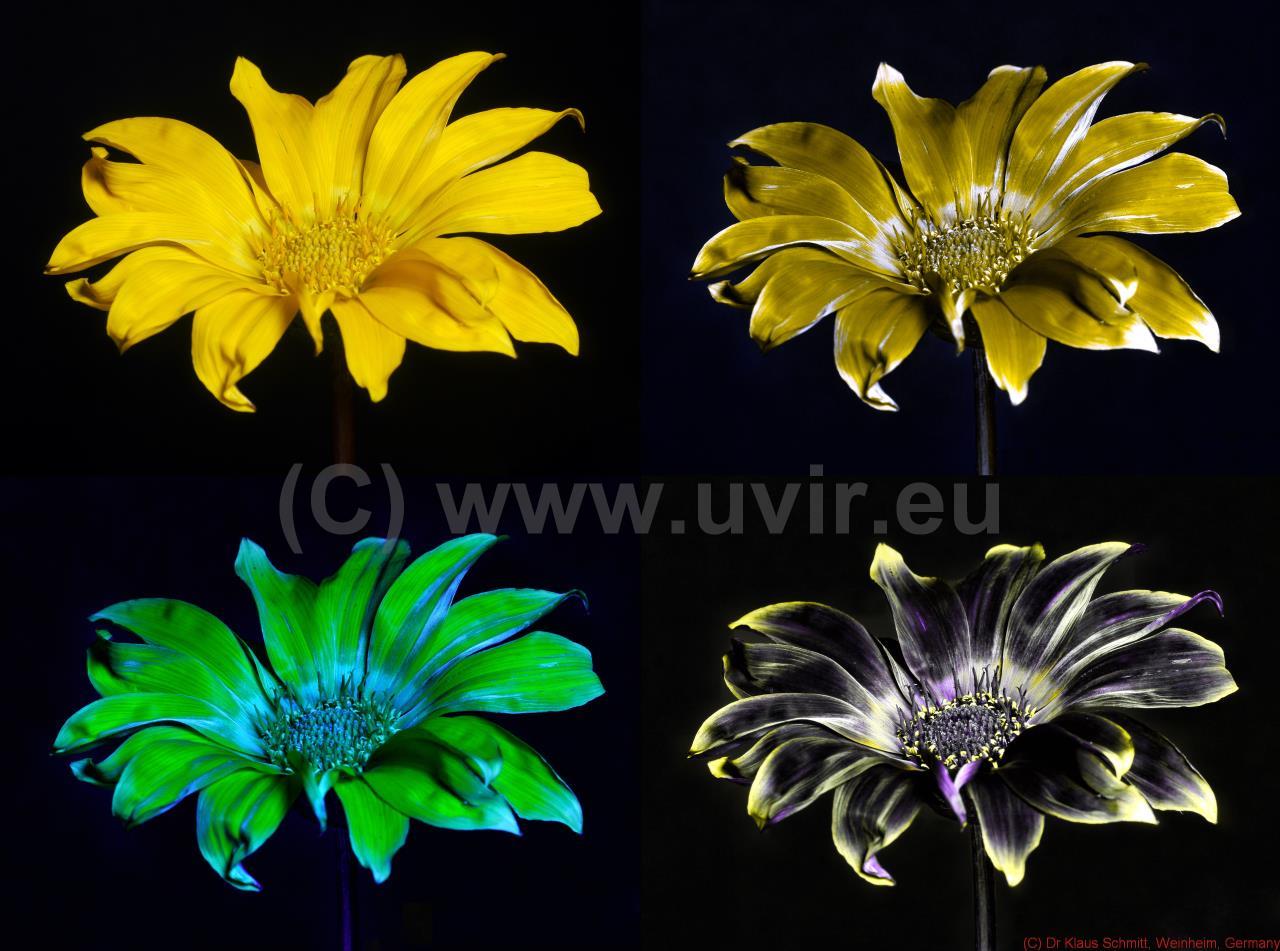
Here a few of my works as shown before, today presented in quadriptych form, which will be on exhibit, also available as large format prints, just for enjoyment for the nice readers here I thought. Please be fair, respect my work and do not download or distribute those around. I don't mind linking, if proper credit is given to me as is visible in each image, but do ask me first please.

Also those comprise some 10 years of intense work to make visible the beauty around us, even if it is invisible to our human eyes. All colors shown are real, there when I pressed the trigger, no photoshopping done except fine adjustments, using specialized cameras, special filters, special lightsources and very special lenses. The differences in colors visiblem results from the different UV reflection of those flowers, some do not reflect at all, or differently in different parts of the flower.

Some insects (butterflies, Bees, ...) and animals (birds, fish, degus,..) can see ultraviolet (UV) light, bees for instance can see Green and Blue and UV, but no RED but butterflies and birds can see Red, Green and Blue and UV, so both can see what we humans cannot see, so I developed an optical mapping method, which allows to simulate, how we would see the world, if we had such special receptive eyes.

Some of my technique is described in my BLOG uvir.eu and I also teach and lecture about that. Ask me if there is some interest, I'm happy to come by!

[click on image to see a larger one]

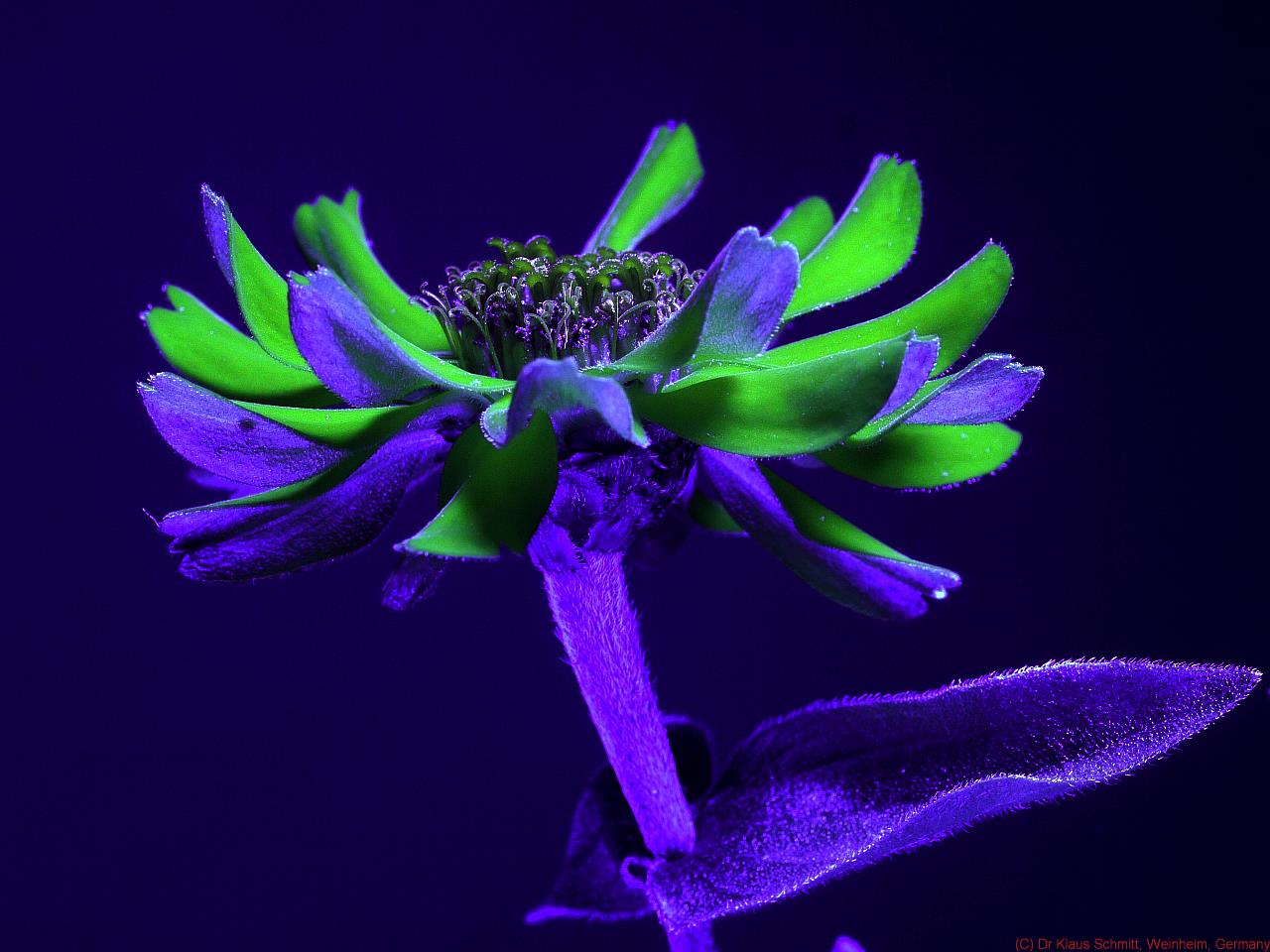
Zinnia hybride (visible, simulated butterfly, bee vision and ultraviolet UV):


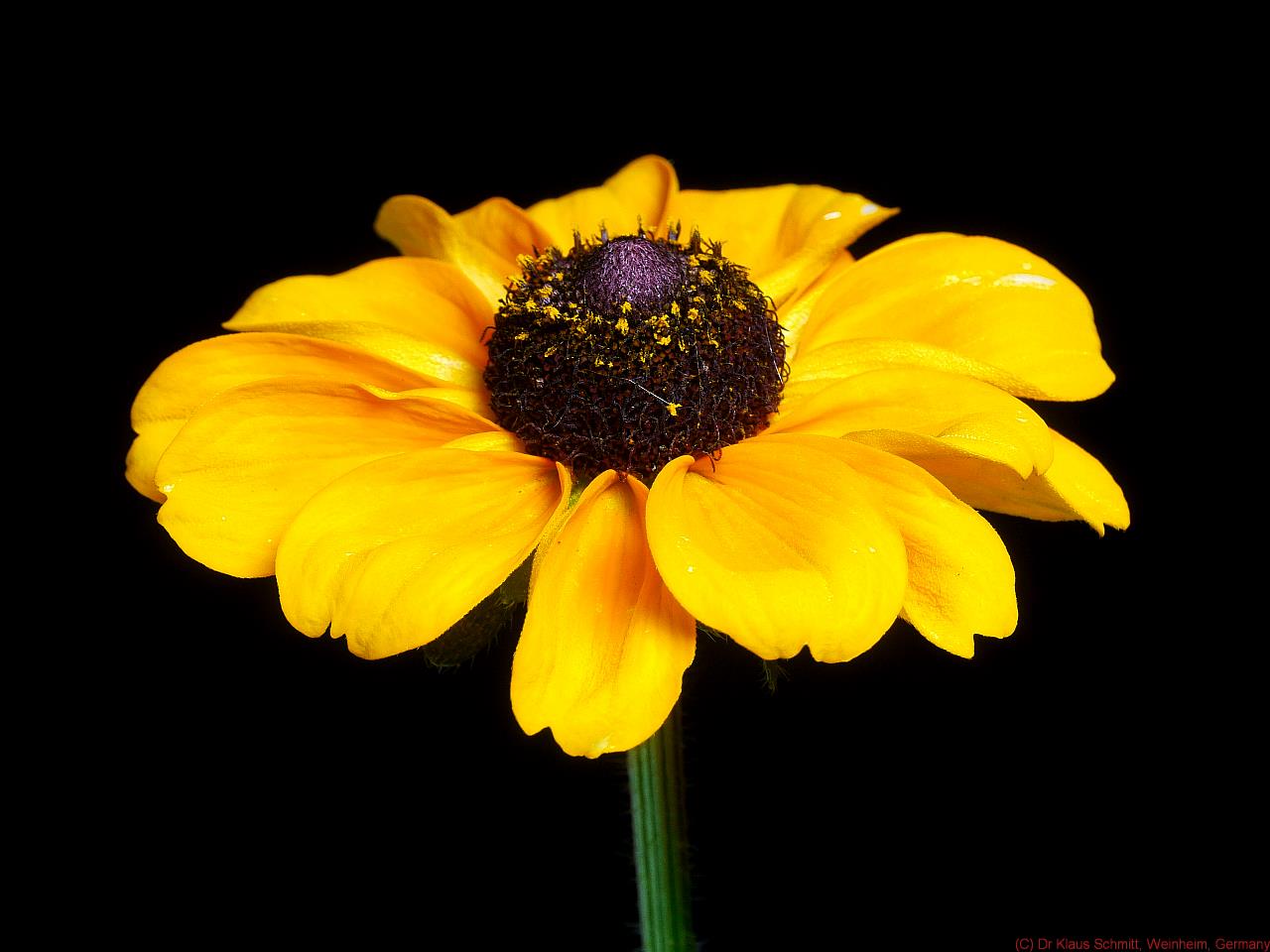
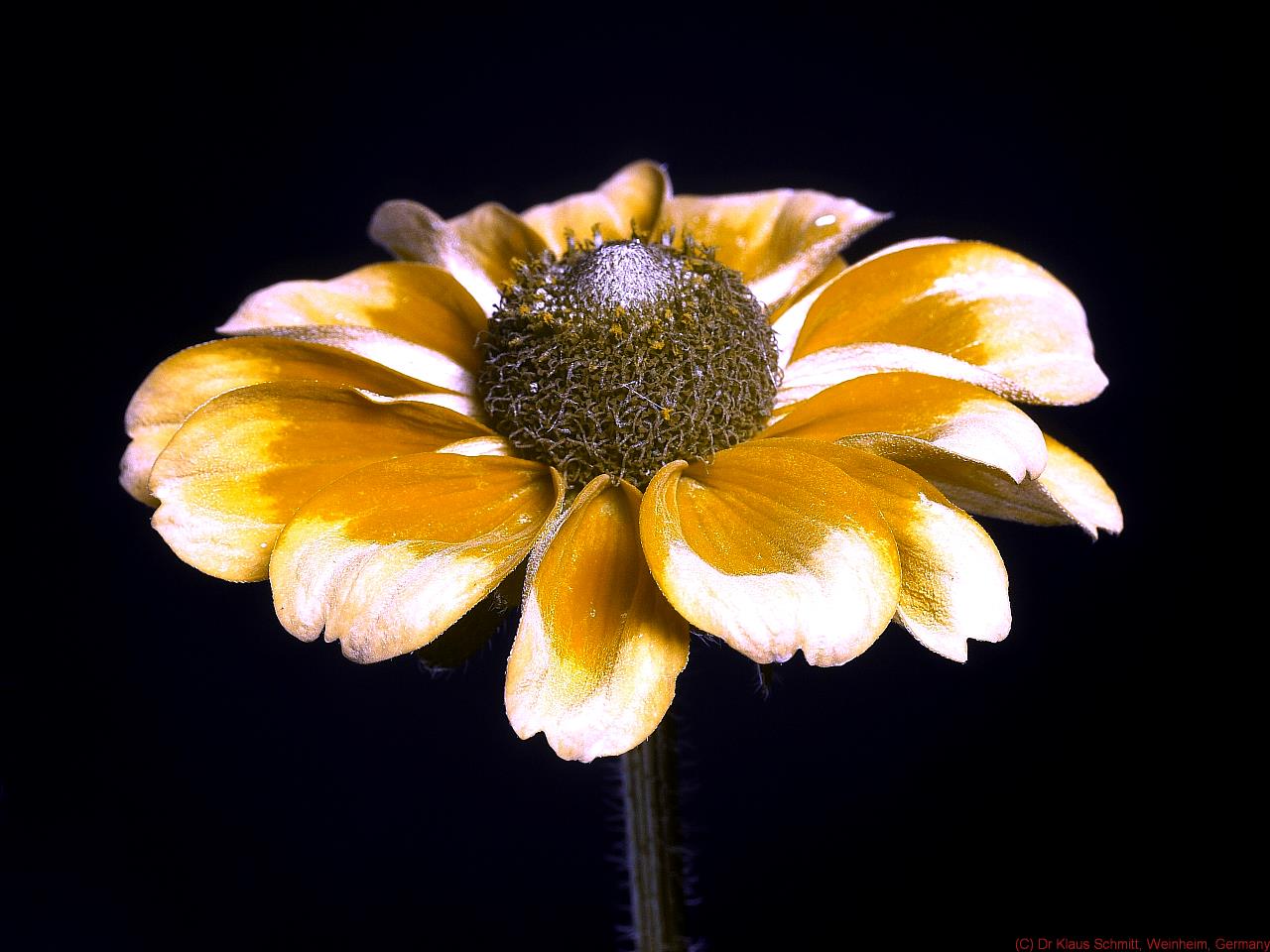
Rudbeckia hirta (visible, simulated butterfly, bee vision and ultraviolet UV):


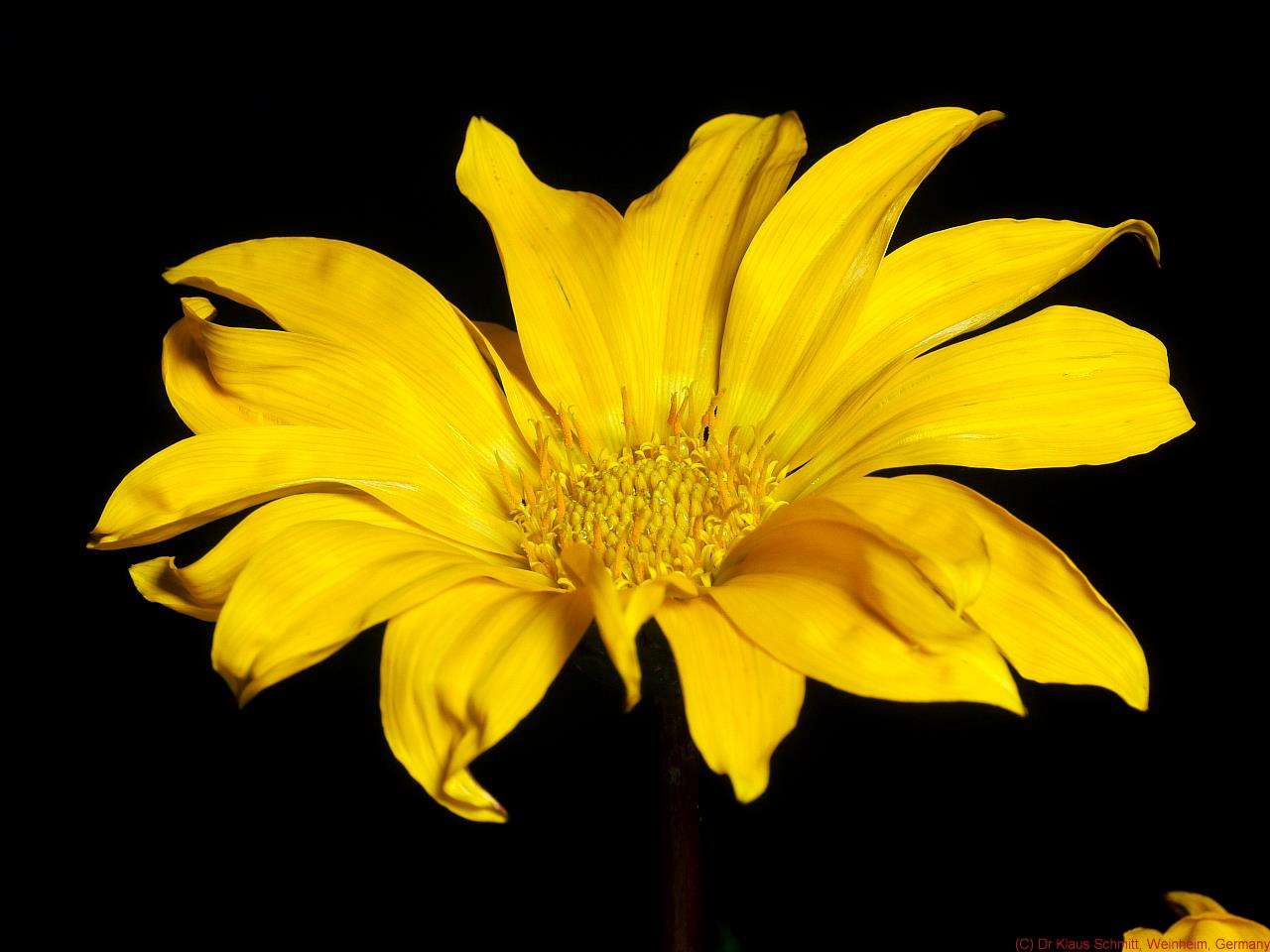
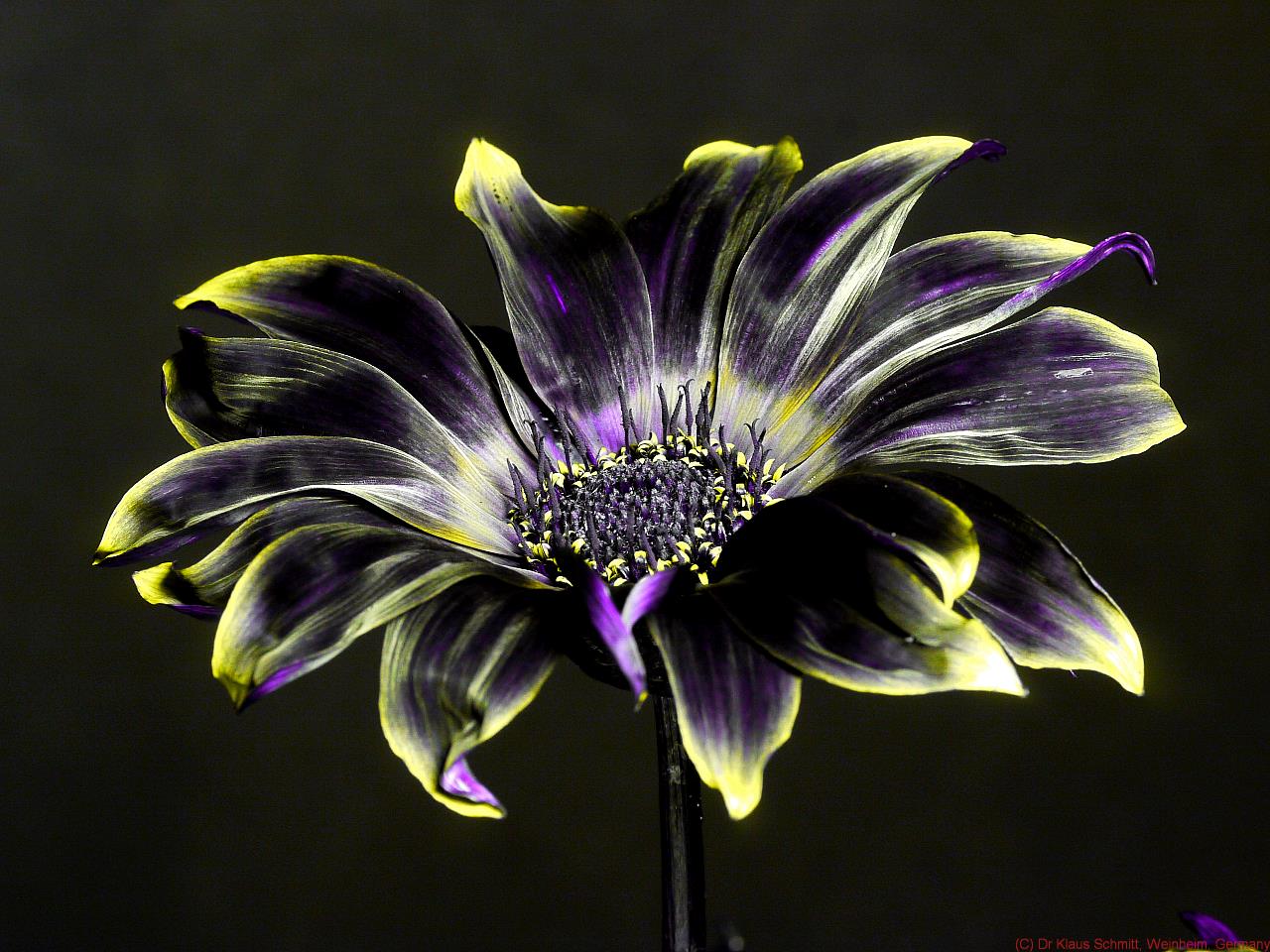
Gazania sp. (visible, simulated butterfly, bee vision and ultraviolet UV):


Zinnia angustifolia (1st: visible, bee vision, long wave ultraviolet UV, ultraviolet UV stimulated visible fluorescence; 2nd: short wave ultraviolet UV, shorter wave ultraviolet UV, ultraviolet UV stimulated visible fluorescence, near infrared IR):


watch here, there will be more to come...

I hope you enjoy the beauty!

Stay tuned, more will follow on that fascinating subject...

More info on this very interesting field may be found on my site http://www.pbase.com/kds315/uv_photos

Sunday, March 17, 2013

Invisible World Photography - some best of reflected ultraviolet, bee + butterfly vision

Here a few of my works, which will be on exhibit soon and also available as large format prints, just some "eye candy" for the nice readers here I thought. Please be fair, respect my work and do not download or distribute those around. I don't mind linking, if proper credit is given to me as is visible in each image, but do ask me first please.

These comprise some 10 years of intense work to make visible the beauty around us, even if it is invisible to our human eyes. All colors shown are real, there when I pressed the trigger, no photoshopping done except fine adjustments, using specialized cameras, special filters, special lightsources and very special lenses. The differences in colors visiblem results from the different UV reflection of those flowers, some do not reflect at all, or differently in different parts of the flower.

Some insects and animals (birds, fish, degus,..) can see ultraviolet (UV) light, bees for instance can see Green and Blue and UV, but no RED but butterflies and birds can see Red, Green and Blue and UV, so both can see what we humans cannot see, so I developed an optical mapping method, which allows to simulate, how we would see the world, if we had such special receptive eyes.

Some of my technique is described in my BLOG uvir.eu and I also teach and lecture about that. Ask me if there is some interest, I'm happy to come by!

[click on image to see a larger one]

Zinnia hybride (visible, ultraviolet UV, simulated butterfly and bee vision):


Rudbeckia hirta (visible, ultraviolet UV, simulated butterfly and bee vision):


Gazania sp. (visible, ultraviolet UV, simulated butterfly and bee vision):


There is a part II HERE.

I hope you enjoy the beauty!

Stay tuned, more will follow on that fascinating subject...

More info on this very interesting field may be found on my site http://www.pbase.com/kds315/uv_photos
Tuesday, March 12, 2013

Three 40mm lenses for reflected UV photography

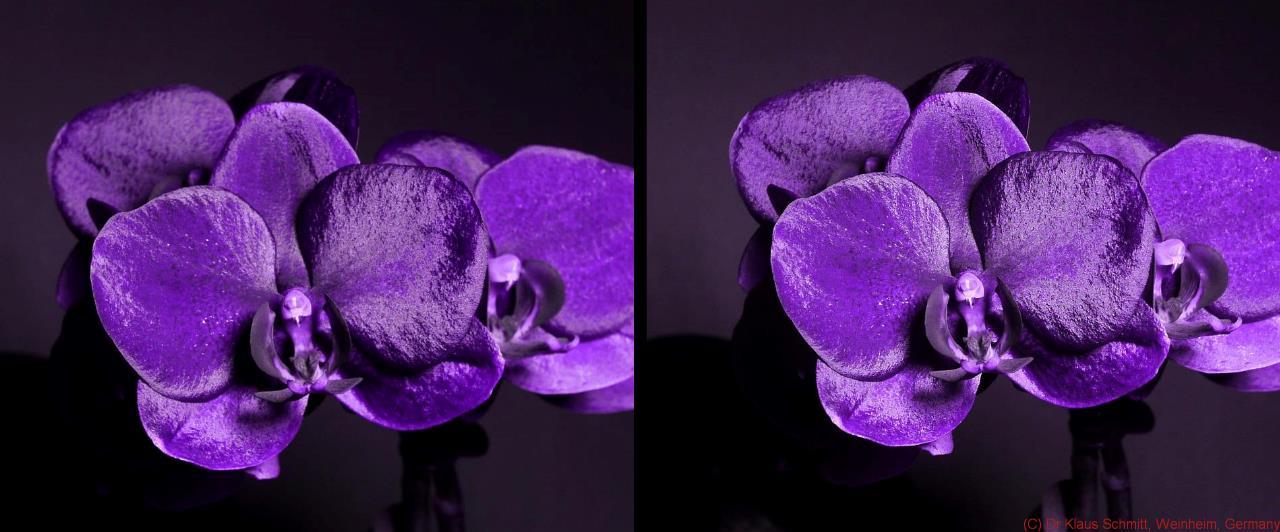
Today about a comparison of three lenses of 40mm focal length for reflected UV, one a Cooke Triplet (C40), one a Dialyte design (D40), one a complex Sonnar design (S40) whose makers will be revealed here later - or simply contact me about it. The best of the three will also compared against the Kuribayashi 35mm. I'm using a yellow/red Phalaenopsis flower for that and my "work horse" UV filter, the Baader-U filter. Light source was an UV enhanced Xenon flash. All shots were done at f8 and are presented in a side-a-side format for easier comparison.

[click on image to see a larger one]

UV image using the Baader-U filter (approx. 320-395nm, effective peak approx. 375nm) - Cooke left, Dialyte middle, Sonnar right:
 

Here the three contestants present themselves side-a-side: It gets obvious, that the Sonnar is the softest of the three and has a bit less UV transmission (the latter had to be expected). The Cooke triplet lens and especially the Dialyte however show some respectable sharpness. So lets's have a closer look at the latter two.

UV image using the Baader-U filter - Cooke left, Dialyte right:
 

Here, the Dialyte has an edge over the Triplet, quite higher micro-contrast and higher detail reproduction, quite remarkable, considering it is an old prewar lens, and uncoated. So let's see how that Dialyte performs against the Kuribayashi 35mm.

UV image using the Baader-U filter - Dialyte lft, Kuribayashi 35mm right:
 

Here now it is hard to choose a winner, as both have very high sharpness and contrast, quite remarkable considering their age difference. I'm undicided honestly.

Transmission graph:
 

The Triplet is represented by a yellow line, the Dialyte by a reddish brown line, the Sonnar by a blue line and finally the Kuribayashi by a pink line. Transmisson of all lenses is quite high, at 365nm Sonnar: 60%, Dialyte: 64%, Triplet: 70% and finally the Kuribayashi 77%. Their reach into UV is quite remarkable, the Kuribayashi and Dialyte having the deepest, Triplet surprisingly the least, maybe caused by its bluish coating. So overall, some remarkable lenses for reflected UV.

Stay tuned, more will follow on that fascinating subject...

More info on this very interesting field may be found on my site http://www.pbase.com/kds315/uv_photos