Friday, March 4, 2016

Ducks in visible, infrared and simulated bee vision photography

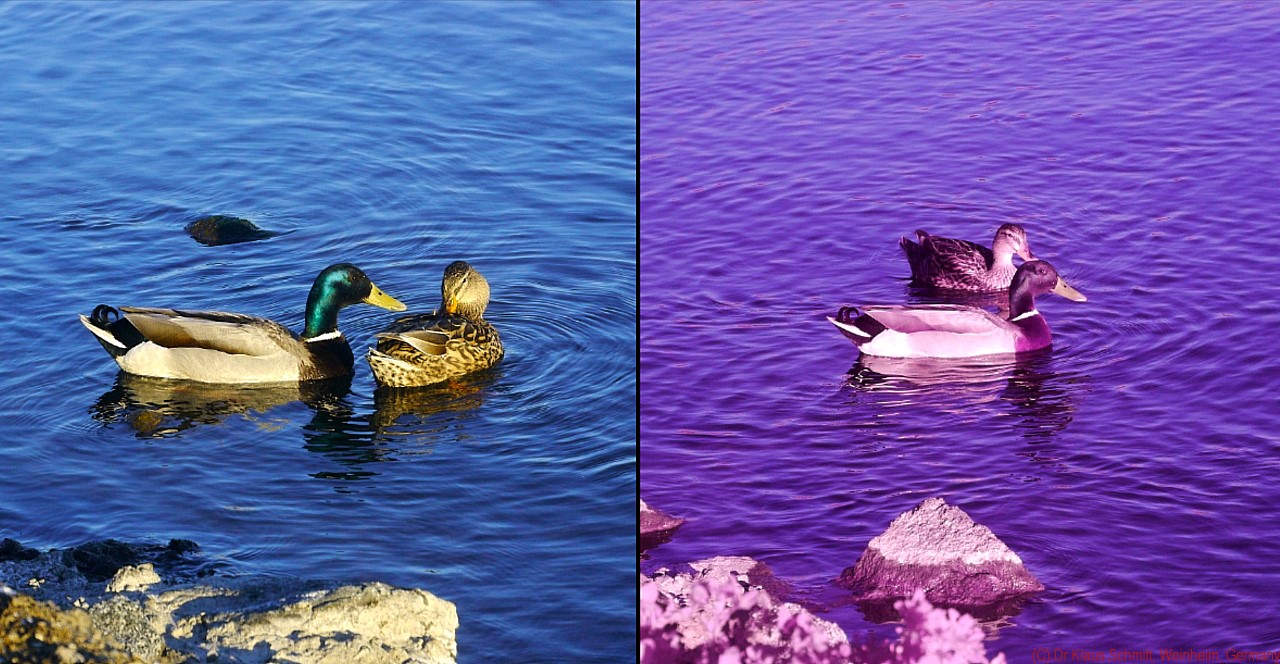
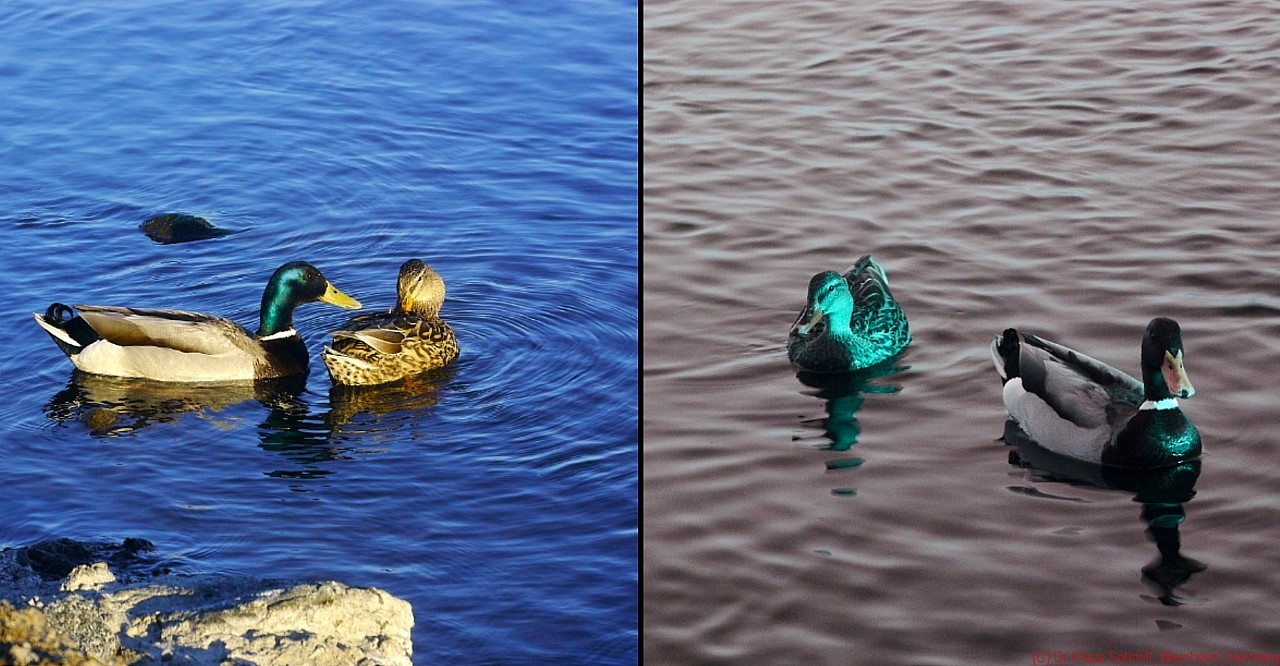
Today about some duck shots I took on my trip to California, shot at Shoreline Park in Mountain Vew, CA in visible light, infrared as well as in simulated bee vision using my XBV6 filter. Lens was my CERCO 94mm quartz fluorite lens. Light source was sun. All shots were done at f8.

[click on image to see a larger one]

Diptych: Human vision and infrared (left to right):


Diptych: Human vision and simulated bee vision (left to right):


These attractive birds shows some prominent patterns, also visible to bees, and all this gets nicely visible.

Stay tuned, more will follow on that fascinating subject...

Bermuda Buttercup - Oxalis pes-caprae in reflected ultraviolet (UV) and photography and simulated bee vision

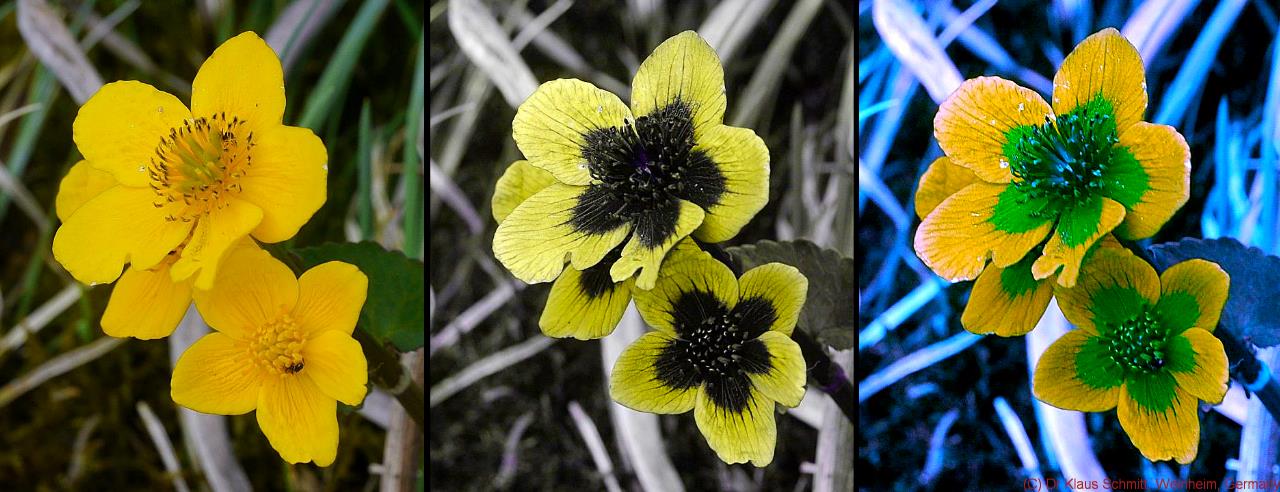
Today about a very common weed flower Bermuda Buttercup - Oxalis pes-caprae I shot shot at Mountain Vew, CA in reflected ultraviolet photography using my "work horse" UV filter, the Baader-U filter as well as in simulated bee vision using my XBV6 filter. Lens was my CERCO 94mm quartz fluorite lens. Light source was sun. All shots were done at f8.

[click on image to see a larger one]

Bermuda Buttercup - Oxalis pes-caprae in Human vision, reflected UV, simulated bee vision (left to right):


This attractive yellow weed flower shows quite a tricky UV pattern, as shown in the following enhanced reflected UV image, a UV bright ring set on a negative space around the dark in UV petals, hence massively increasing contrast. Plus you also see the pyramidal cells in this enhanced resolution image (UV gives approx. 1.6x higher resolution) , which allows pollinators a much better grip while being at the flower.
 

All this invisible to us humans, but visible to bees and butterflies, and all this gets nicely visible here.

Stay tuned, more will follow on that fascinating subject...

Thursday, March 3, 2016

Californian flowers in visible, reflected UV and simulated bee vision photography

Today about some flower shots I took on my trip to California, shot at Shoreline Park in Mountain Vew, CA in reflected ultraviolet photography using my "work horse" UV filter, the Baader-U filter as well as in simulated bee vision using my XBV6 filter. Lens was my CERCO 94mm quartz fluorite lens. Light source was sun. All shots were done at f8.

[click on image to see a larger one]

Triptych: Hibiscus sp in Human vision, reflected UV, simulated bee vision (left to right):


Triptych: Mexican bush sage (Salvia leucantha) in Human vision, reflected UV, simulated bee vision (left to right):


Triptych: Brassica sp in Human vision, reflected UV, simulated bee vision (left to right):


These attractive flowers shows their prominent UV patterns, invisible to us humans, but very visible to bees and butterflies and also hummingbirds which were feeding on them, and all this gets nicely visible.

Stay tuned, more will follow on that fascinating subject...

Friday, February 26, 2016

San Francisco Science Museum - Color of Life Exhibit with Rudbeckia fulgida in reflected ultraviolet (UV) photography II

Today more about that soectacular exhibit at the San Francisco Science Museum which has opened in June 2015 and which has some of my work in it. They included my Rudbeckia fulgida var. deamii outside shots in visible and ultraviolet light.

San Francisco - California Academy of Science exhibit "Color if Life", a great honor to be part of it with my works!

Posted by Klaus Schmitt on Friday, February 26, 2016

The Science Museum has chosen my work, as UV photography reveals the very prominent "bullseye" UV patterns, visible to bees and butterflies, but invisible to us humans.

If you find time to, pay it a visit, certainly worth going, especially their new Thursday evenings (6-10pm) Nighlife events!!

I have written about this previously HERE
 
Stay tuned, more will follow on that fascinating subject...

Friday, February 5, 2016

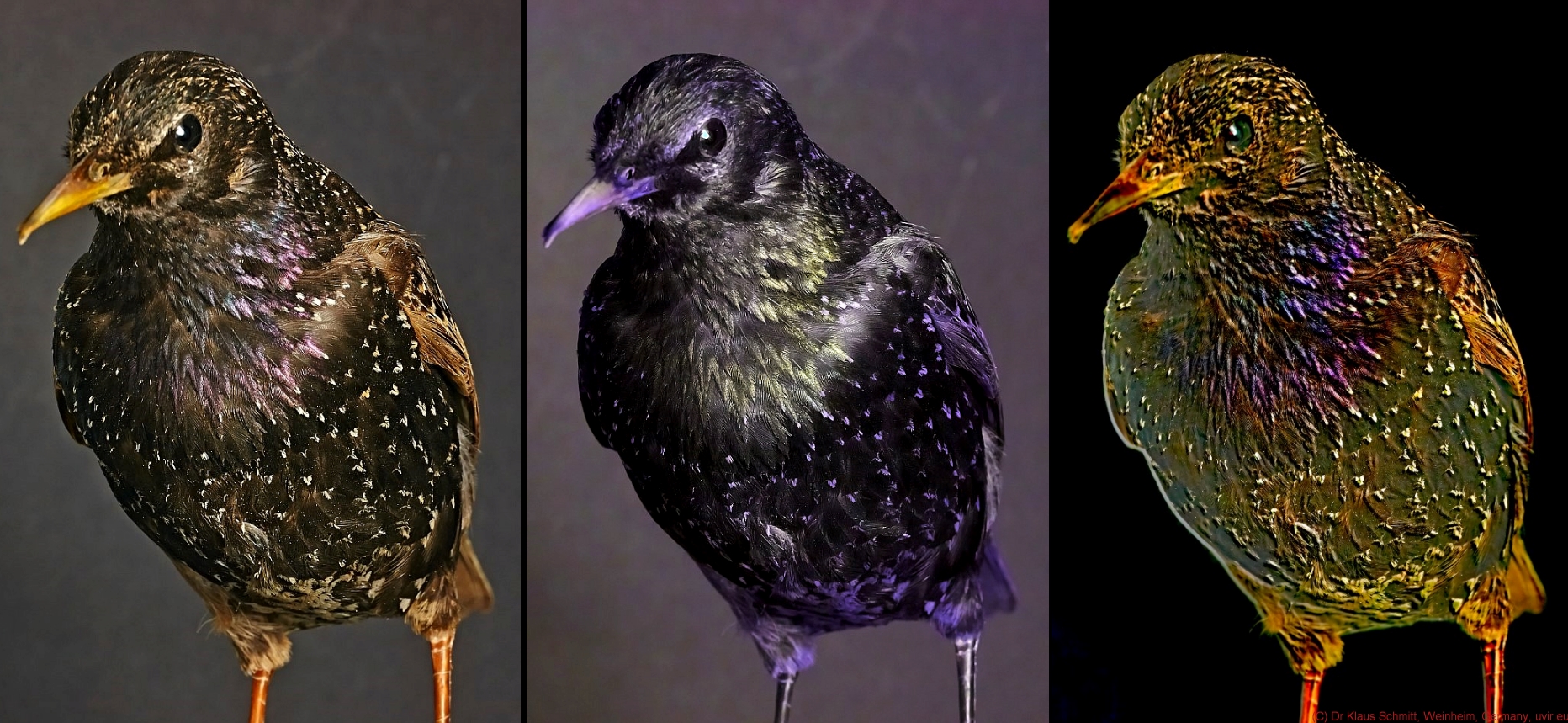
European Starling - Sturnus vulgaris in reflected ultraviolet and simulated bird vision photography

Today again about that a well known, attractive bird, the European Starling - Sturnus vulgaris in reflected ultraviolet photography using my "work horse" UV filter, the Baader-U filter. But this time it will also be about bird vision and a simulation how that might look like to us humans. Lens was my CERCO 94mm quartz flourite lens. Light source was a modified for high UV output Xenon flashlight. All shots were done at f8.

[click on image to see a larger one]

Triptych (left to right): Human vison, reflected UV and simulated bird vision (left to right):


This attractive bird has iridescent feathers with a metallic magenta shine around his throat, chest and back, which reflect at maximum under a 45 degree reflection angle, however it also reflects UV quite strongly, peaking at around 365nm (shown as yellow) and to a much lesser quantity around 385m (shown as purple). This UV image was then combined with the visible image to result into a simulated bird vision image (as birds can see UV, Blue, Green and Red) invisible to us humans (but made visible here using special photographic methods), and all this gets nicely visible here.

I have written about this bird HERE

And HERE is more about bird vision.
 
Stay tuned, more will follow on that fascinating subject...
Science Center Singapore 2016 exhibit about butterfly vision

The Science Center Singapore  will open an exhibit in 2016 which will include a showcase about butterfly vision. Some of my Treasury flower - Gazania rigens images will be used for this purpose, as these clearly demonstrate the difference between human and insect vision.

[click on image to see a larger one]

Triptych of human vision, reflected UV and simulated bee vision (left to right):


They have chosen my work, as it "shows a great and interesting contrast between how we usually see this flower, and how the same flower might be perceived by a butterfly, particularly the colours and directional markers"

I have written about this flower and how this was photographed HERE
 
Stay tuned, more will follow on that fascinating subject...
More info on this very interesting field may be found on my site http://www.pbase.com/kds315/uv_photos

Thursday, January 7, 2016

Minnesota Landscape Arboretum 2016 exhibit about bee vision

The Minnesota Landscape Arboretum  a part of the University of Minnsesota will open an exhibit in 2016 which will include a showcase about bee vision. Some of my Marsh marigold - Caltha palustris images will be used for this purpose, as these clearly demonstrate the difference between human and bee vision.

[click on image to see a larger one]

Triptych of human vision, reflected UV and simulated bee vision (left to right)
 

This Caltha flower has quite a prominent UV pattern: its center is UV dark, and has some UV dark veins on its petals and all this gets quite nicely visible.

I have written about this flower and how this was photographed HERE
 
Stay tuned, more will follow on that fascinating subject...

More info on this very interesting field may be found on my site http://www.pbase.com/kds315/uv_photos