Thursday, November 29, 2018

Common Sunflower - Helianthus annuus in reflected ultraviolet photography and simulated bee vision II

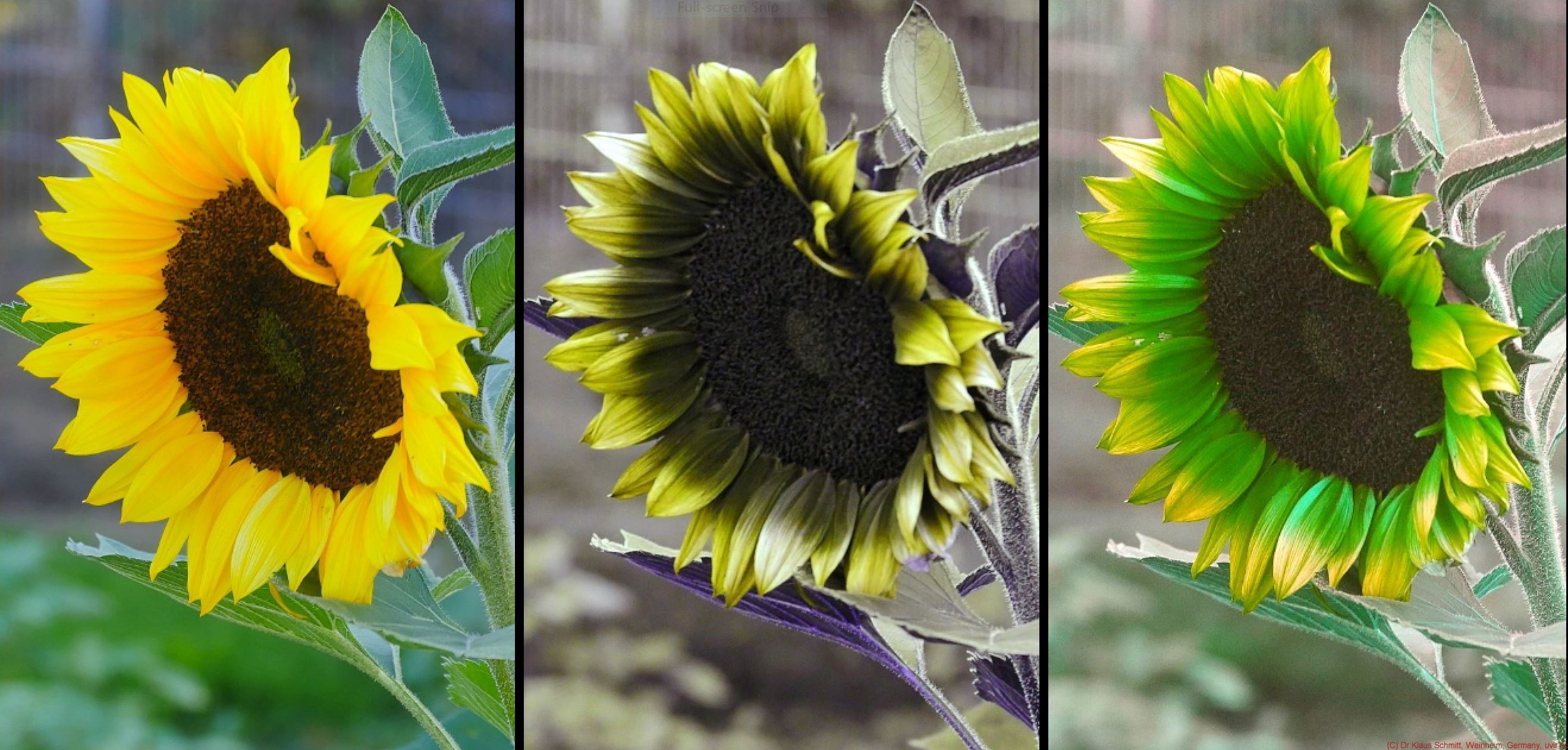
Today more shots of a flower everybody has already seen, a common Sunflower - Helianthus annuus in reflected ultraviolet photography using my "work horse" UV filter, the Baader-U filter as well as in simulated bee vision using my XBV filter. Lens was my UV-Nikkor 105mm quartz flourite lens. Light source was sunlight. All shots were done at f8.

[click on image to see a larger one]

Human vision:
 

Reflected UV:
 

Simulated bee vision:
 

Triptych of human vision, UV, simulated bee vision (left to right):
 

This flower has a specific and unique UV pattern, its petal tops are brightly UV reflective around 365nm and the rest and its center is UV dark forming an UV bullseye pattern, and all this gets nicely visible, also in simulated bee vision.

I have written about sunflowers before HERE
 
Stay tuned, more will follow on that fascinating subject...

More info on this very interesting field may be found on my site http://www.pbase.com/kds315/uv_photos

Wednesday, November 28, 2018

[UV, VIS, IR] Lyman Alpha deep UV lenses IV - Oncostele orchid

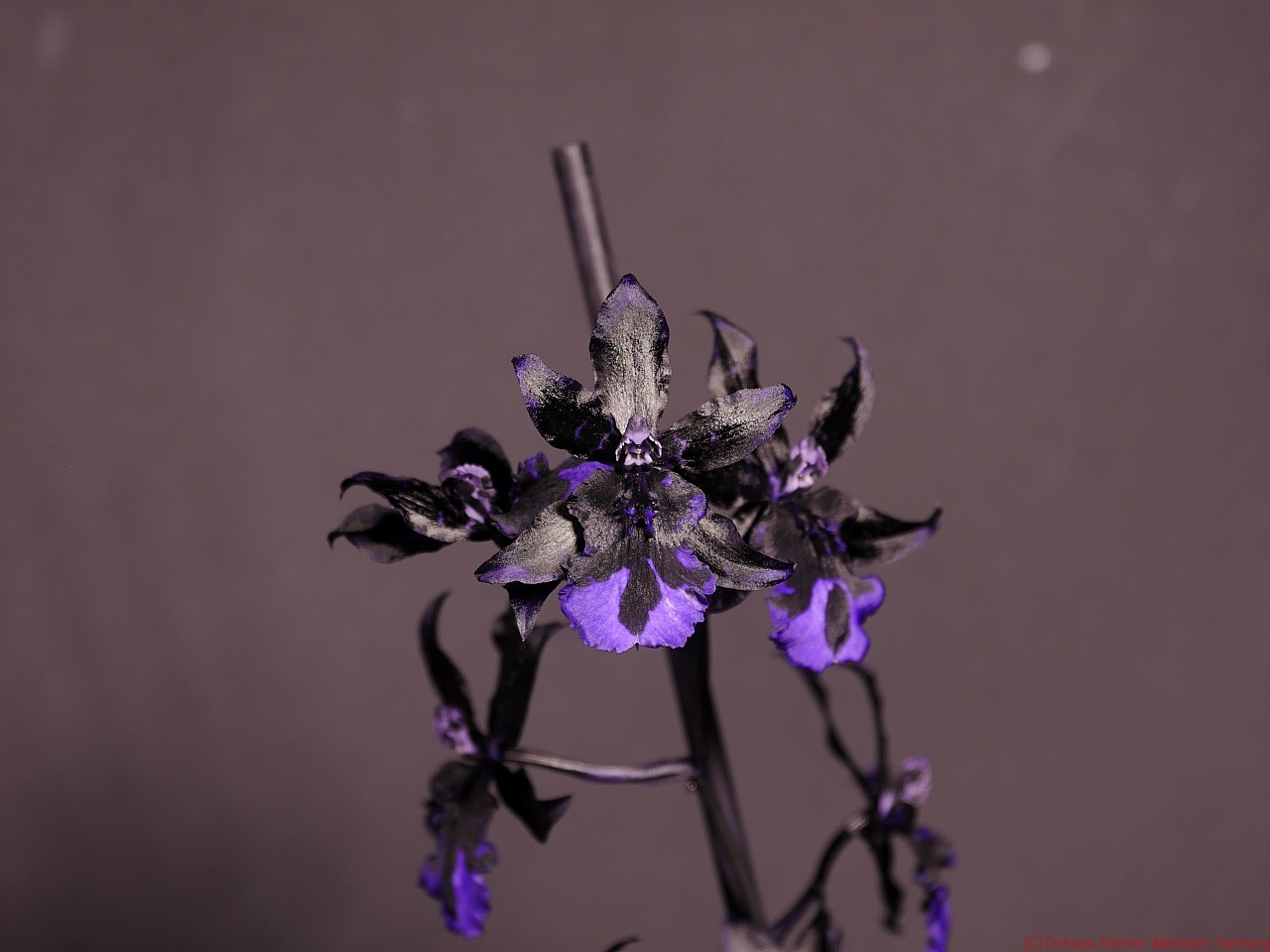
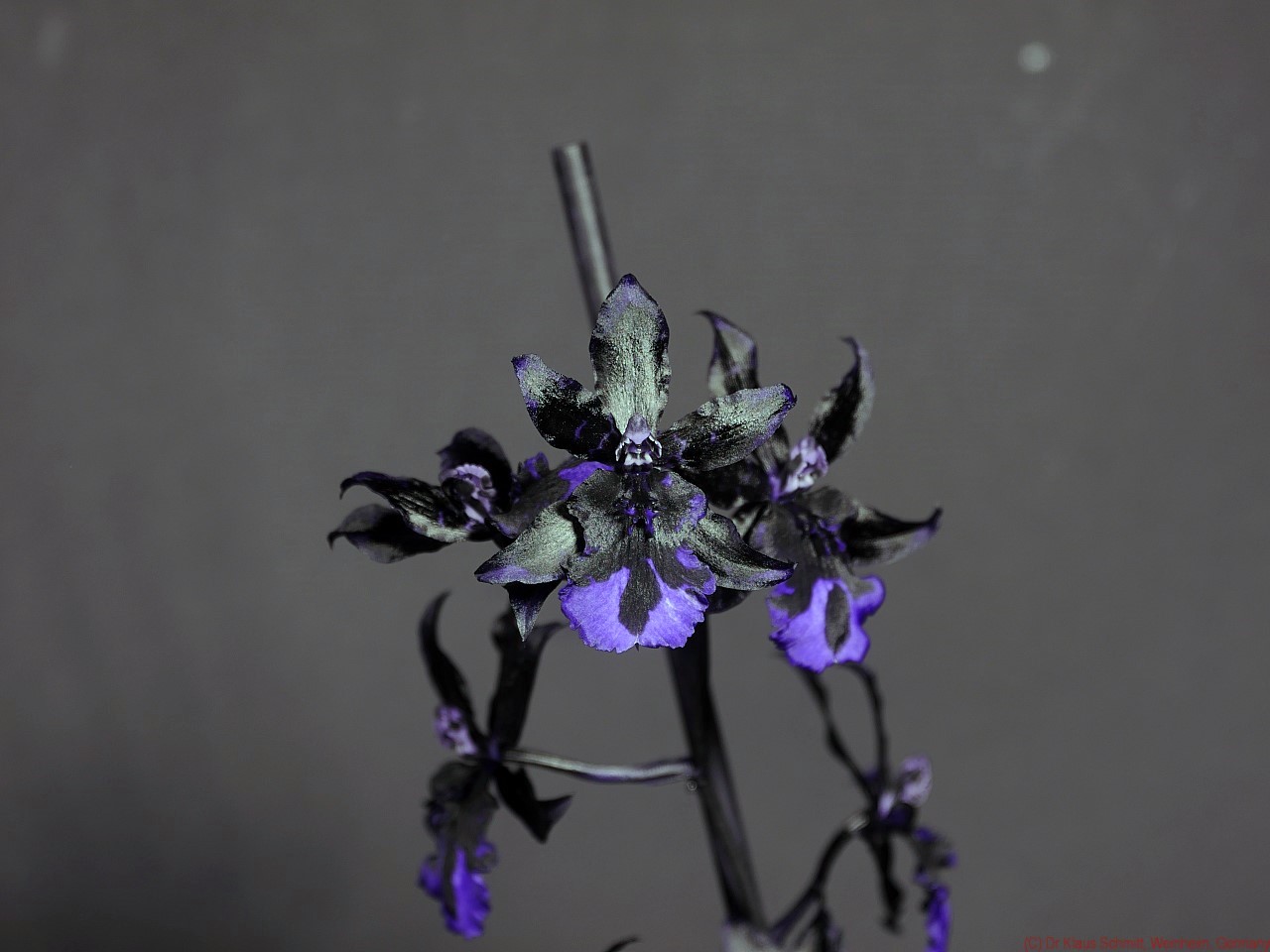
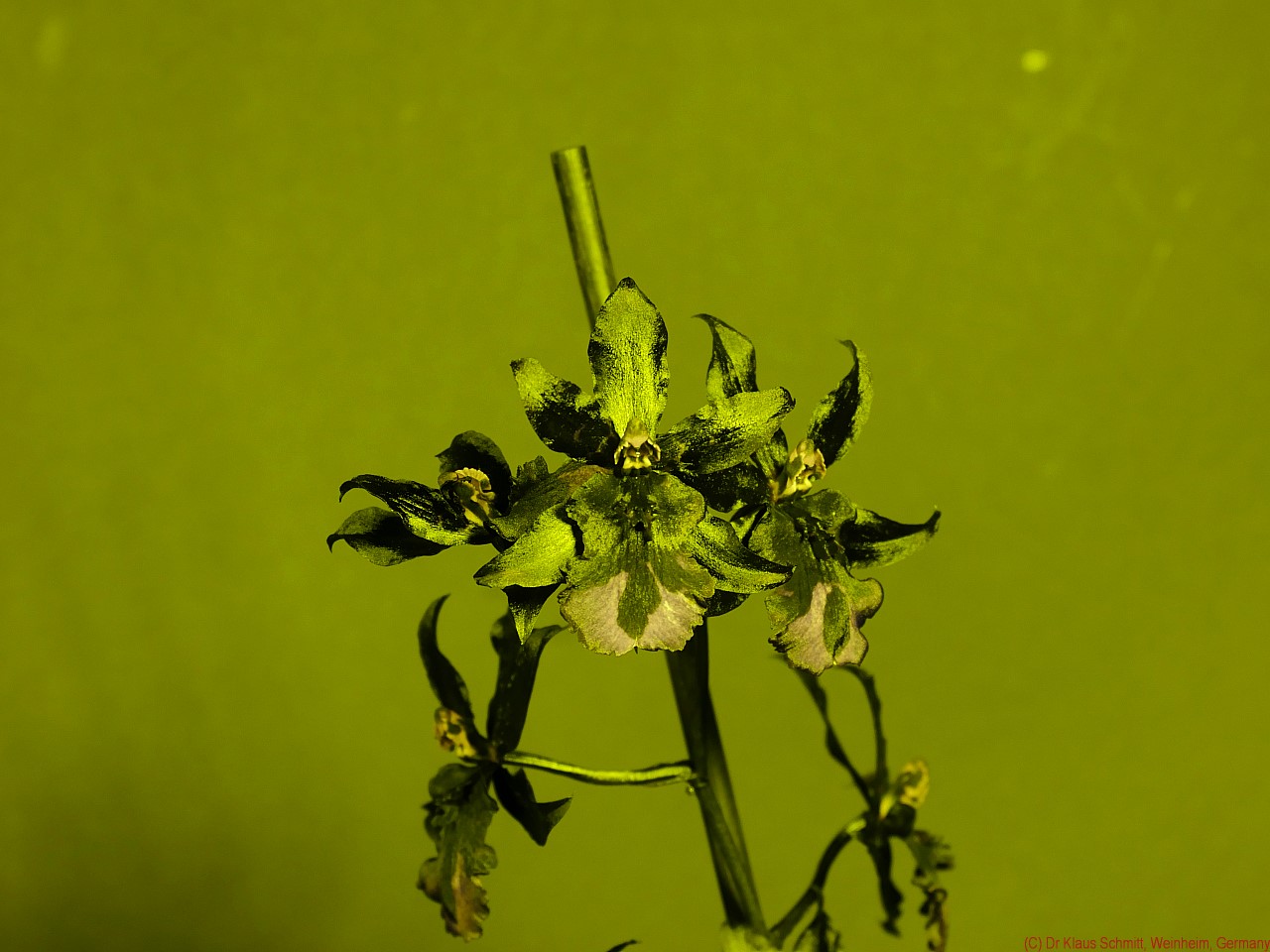
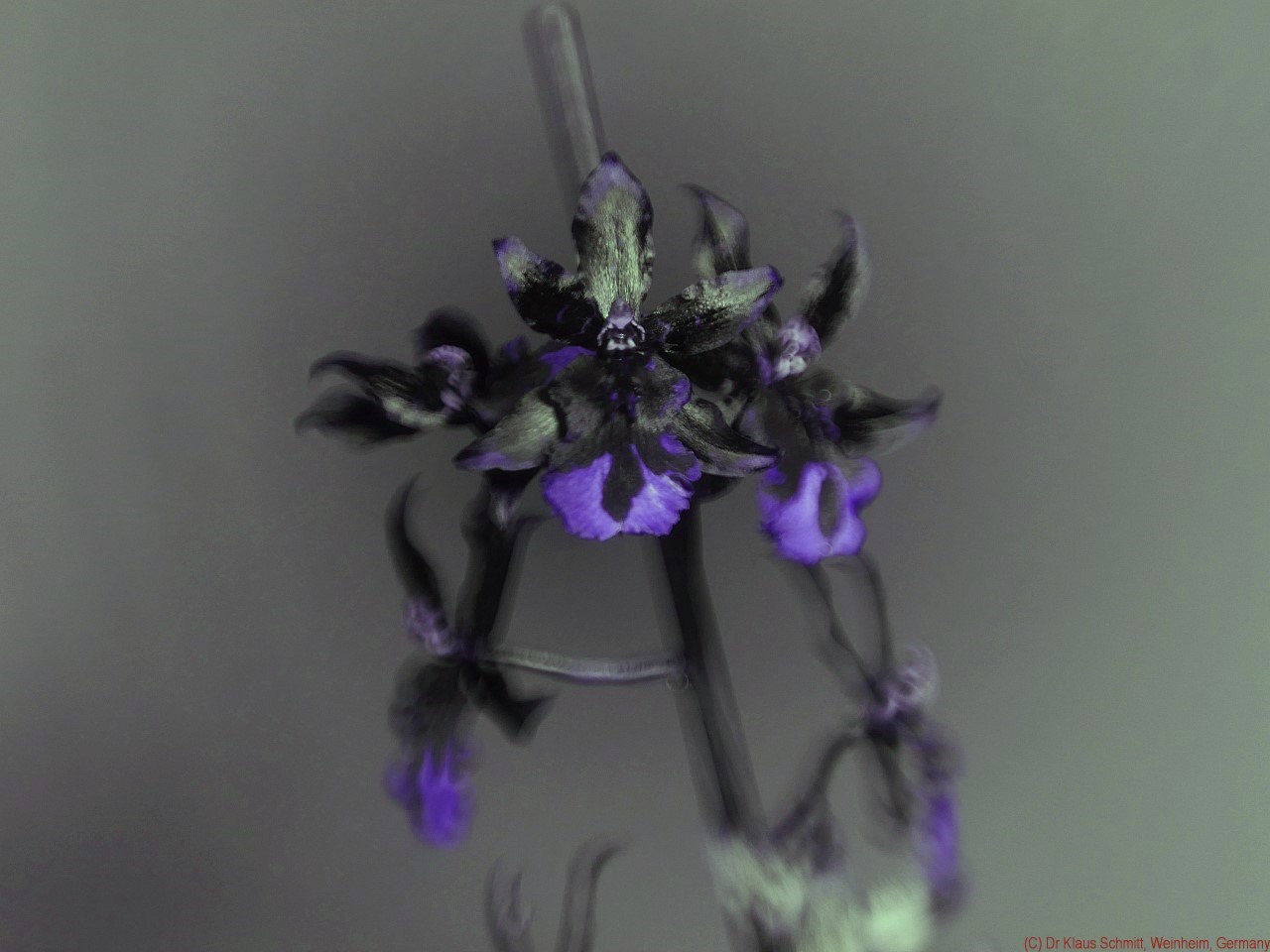
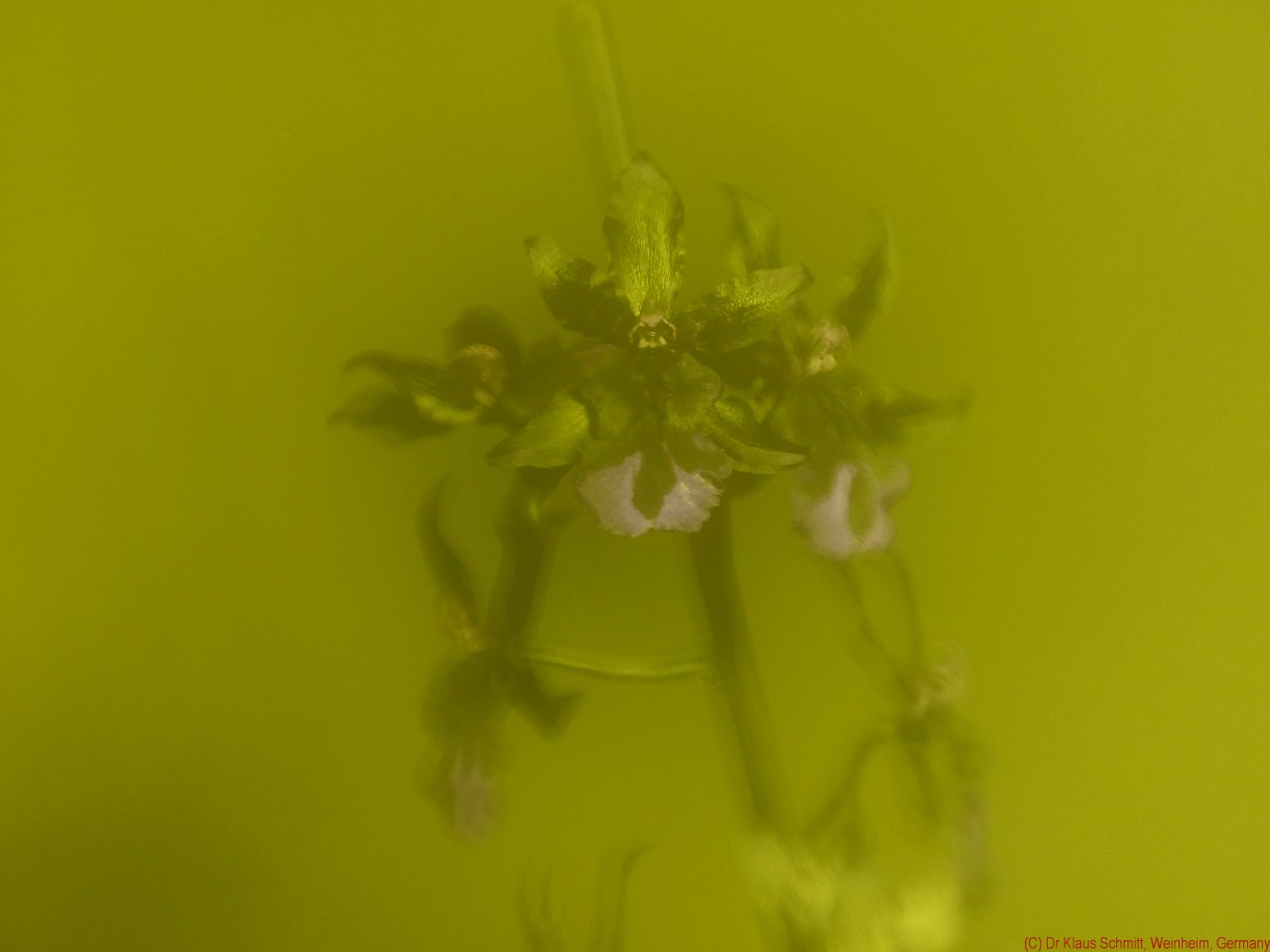
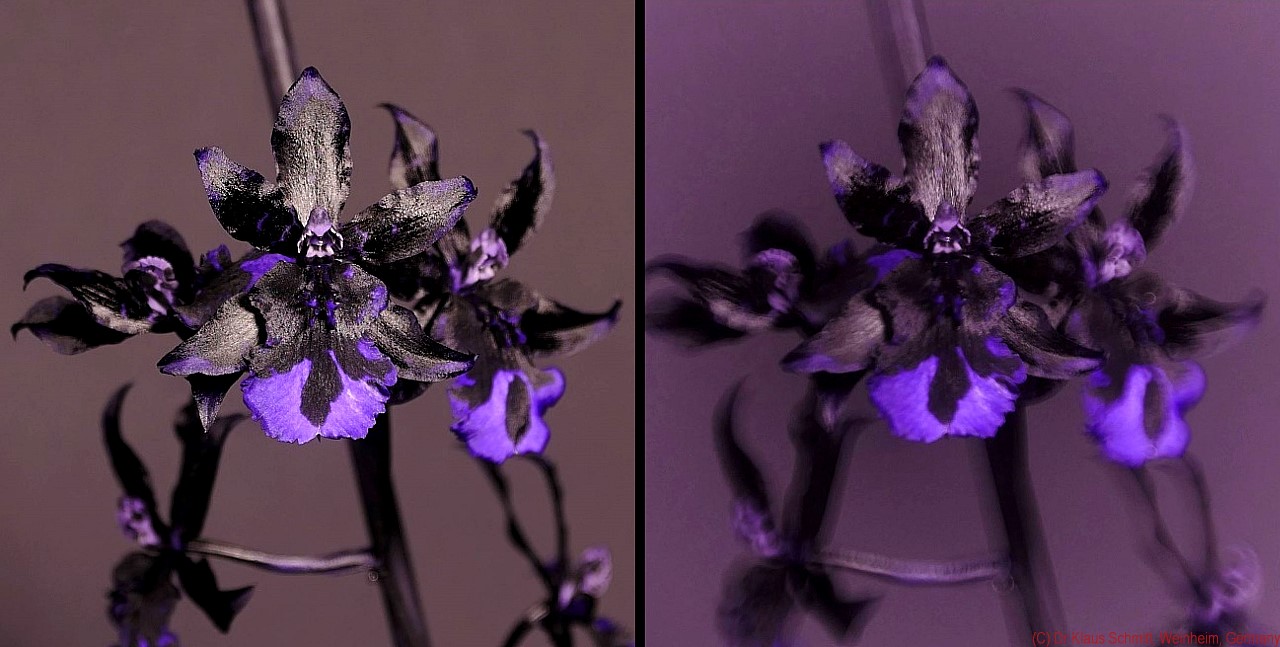
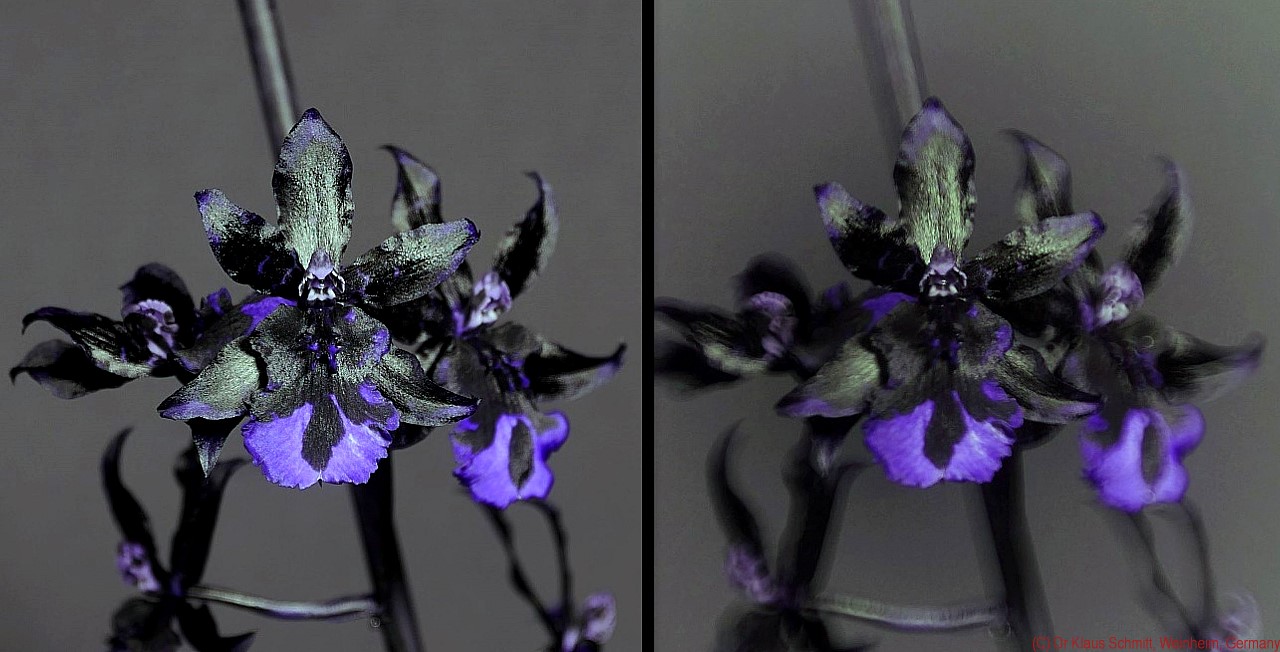
Today tests shots of a Orchid hybride (Oncostele Wildcat 'Golden Red Star') in reflected ultraviolet photography with a NYE OPTICAL Lyman-Alpha II f1.1/90mm UV-VIS-NIR lens in comparisoon with my UV-Nikkor 105mm lens. UV filters used was the Baader-U and the IDAS 340nm filter for the UV-Nikkor and a UV transmitting stack of UG11+S8612 as well as a 340nm filter for the Lyman Alpha 90mm, both rear mounted. All shots were done at f4.5 for the UV-Nikkor resp. f1.1 as the Lyman Alpha lens has no iris. Light source used was Xenon flash.

[click on image to see a larger one]

UV-Nikkor 105mm Visible Light:
 

UV-Nikkor 105mm Baader-U filter:
 

UV-Nikkor 105mm Baader-U filter (whitebalanced):
 

UV-Nikkor 105mm 340nm IDAS filter:
 

Lyman Alpha II 90mm UG11+S8612 filter:
 

Lyman Alpha II 90mm UG11+S8612 filter (whitebalanced):
 

Lyman Alpha II 90mm 340nm filter:
 

UV-Nikkor vs Lyman Alpha II 90mm in UV:
 

UV-Nikkor vs Lyman Alpha II 90mm in UV (whitebalanced):
 

UV-Nikkor vs Lyman Alpha II 90mm in UV (340nm):
 
This orchid has a very specific UV pattern, its petals are very UV dark, but its lower petal lip has on the lower center a very UV bright spot as well as on its center "nose" formation an UV reflecting spot and all this gets nicely visible.

Both lenses are very different animals so to speak, that Lyman Alpha II f1.1/90mm has extremely shallow DOF as compared to the f4.5 / 105mm UV-Nikkor lens, as well as some bent field, but it shows a very useful UV transmission. That rear mounted 340nm seems not to be the clearest filter, as the resulting image was a bit cloudy, not the fault of the lens.

I have written about the Nye Lyman-Alpha lenses previously HERE and about this Orchid HERE
 
Stay tuned, more will follow on that fascinating subject...

More info on this very interesting field may be found on my site http://www.pbase.com/kds315/uv_photos

Saturday, November 17, 2018

ZUFAR 4/350mm and its prototype quartz fluorite catadioptric lens III

Today again about that Quartz Fluorite catadioptric ZUFAR-2CA f4/350mm anastigmat lens which had been developed for the Soviet MARS 2 to 5 missions to planet Mars. I'm rather excited to report that I  found and bought the grandfather of this ZUFAR-2 space lens from planet Mars exploration, a prototype lens with a very different internal name Ob-512, but company data (LOMO) I was able to locate confirmed my suspicion, it is indeed one or even "the" factory prototype of it. 


Top Ob-512 prototype, Bottom: ZUFAR-2CAM lens

The prototype OB-512 also was made of synthetic Quartz and Calcium Fluorite (CaF2) crystals to be able to work in UV and also visible light, designed for 200-700nm without focus shift, so actually is an apochromatic (APO) f4.7/350mm catadioptric lens as per its lens passport. Lens transmission is >57%. Viewing angle is approx. 3 degrees (later 4 degrees). Image diameter 24.6mm. 51mm back focal length. Its weight is 2.2 kilograms, which was later changed in the final ZUFAR-2 CA lens to 1.8 kg using special alloys, as every gram counted then for space missions.

Those ZUFAR lenses have been designed in the 70s under the lead of Institute head and chief designer Prof. Volosov together with N. Khmelnikova, I. Driatskaya, K. Mikhailova at GOI, the russian state lens design institute in St. Petersburg / Leningrad. Details were published by Prof Volosov in 1974.

(Made for my use by my dear friend Marco Cavina)


Optical data of the Ob-512 prototxpe as per Volossov et al.

This lens was made to be used on a very elaborate camera system which could take multispectral images on film, develop that and scan it and send the scanned data back to Earth in selectable resolutions (up to 2000x2000 pix, which took over one hour to transmit).


NASA also wrote about this lens (quote):

Zufar objectives were used on the television cameras carried by the Mars-2, 3, 4, and 5 spacecraft. The compact catadioptric quartz-fluorite anastigmat was developed as a result of research on the possible optical arrangements of lens and mirror-lens systems meeting the rigid criteria for spaceborne operation. The system is characterized by precise correction of all aberrations over a broad spectral range, about 300-700 nm. The spectral transmission is about 60% over this range. The Zufar-2CA version of the objective has a geometric aperture ratio of 1:4 and a focal length of 350 mm. The image format is 24 x 24 mm. The housing is 164 mm long and 130 mm in diameter, and the mass of the objective is 1500 g.

Here one of the published images from Mars taken on Mars-5 mission:


The lens will be given a suitable adaption to fit my digital multispectral cameras and I will certainly take multispectral photos with it as soon as possible and report about here later on.

Data of this lens, as well as its normal (= non catadioptric) quartz fluorite sister lenses with shorter focal length may be found on my macrolenses database site HERE

There is more about this lens HERE.


Stay tuned, more will follow on that fascinating subject...
 

Wednesday, October 24, 2018

[UV, VIS, IR] Lyman Alpha deep UV lenses III

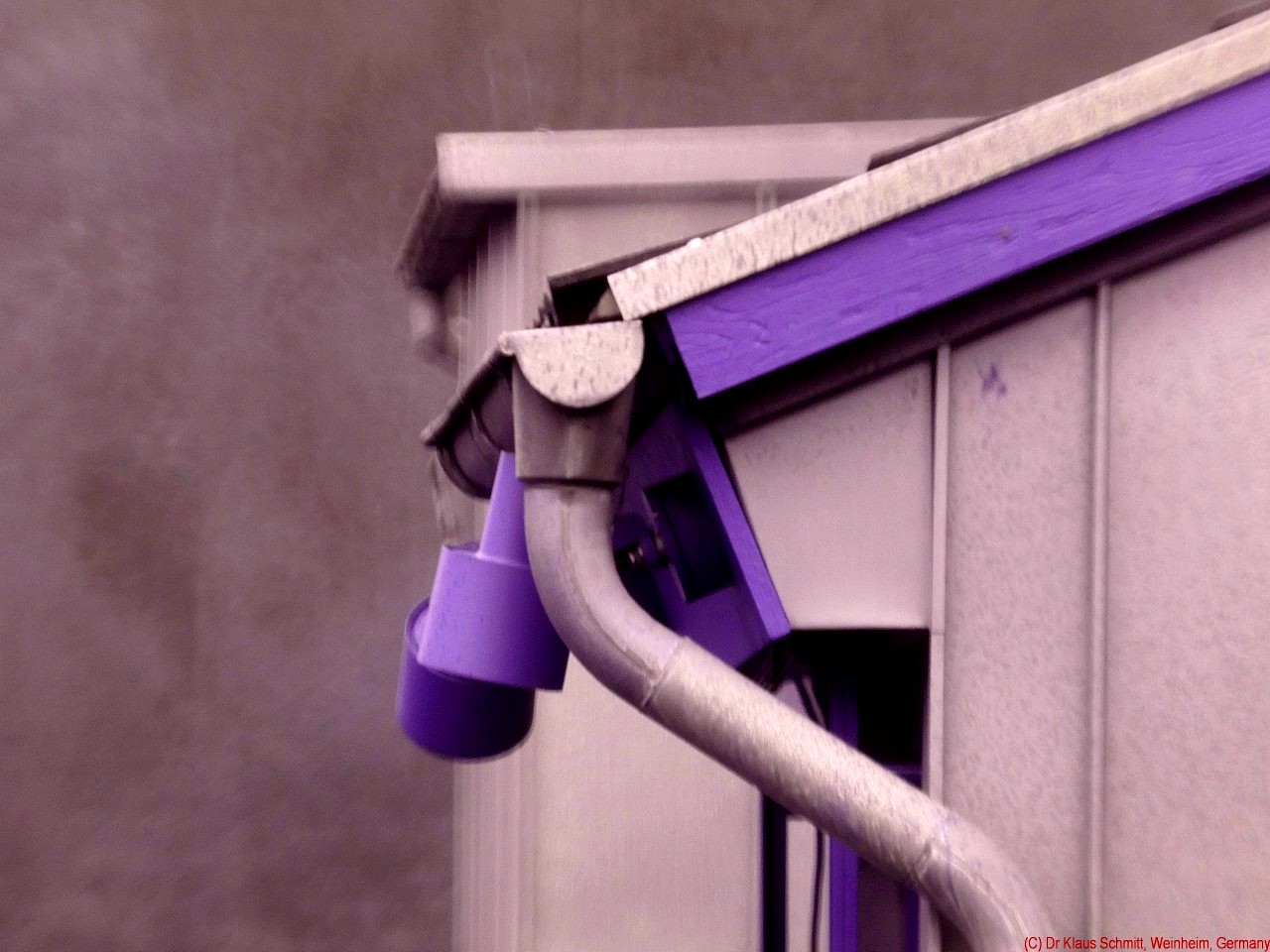
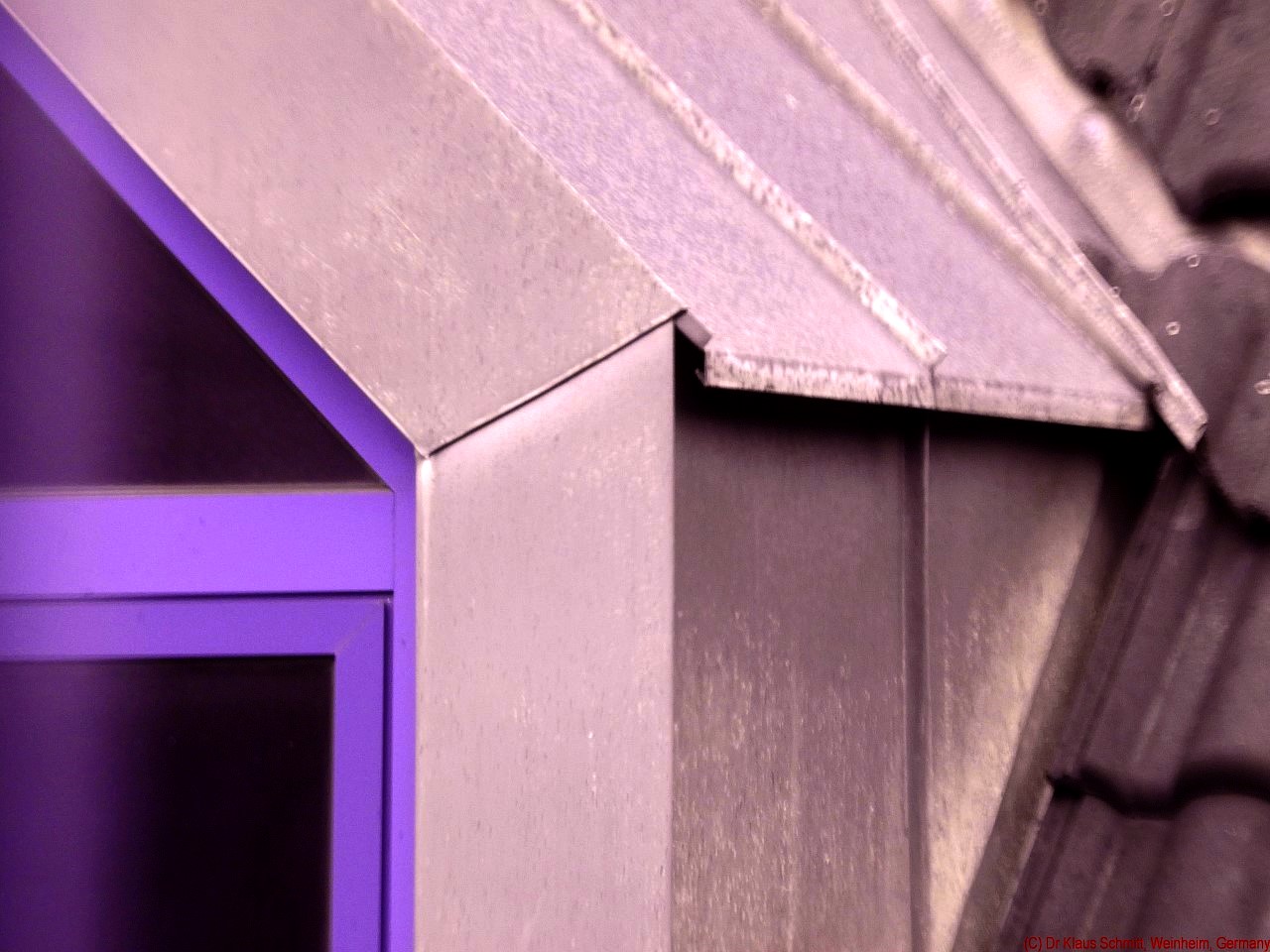
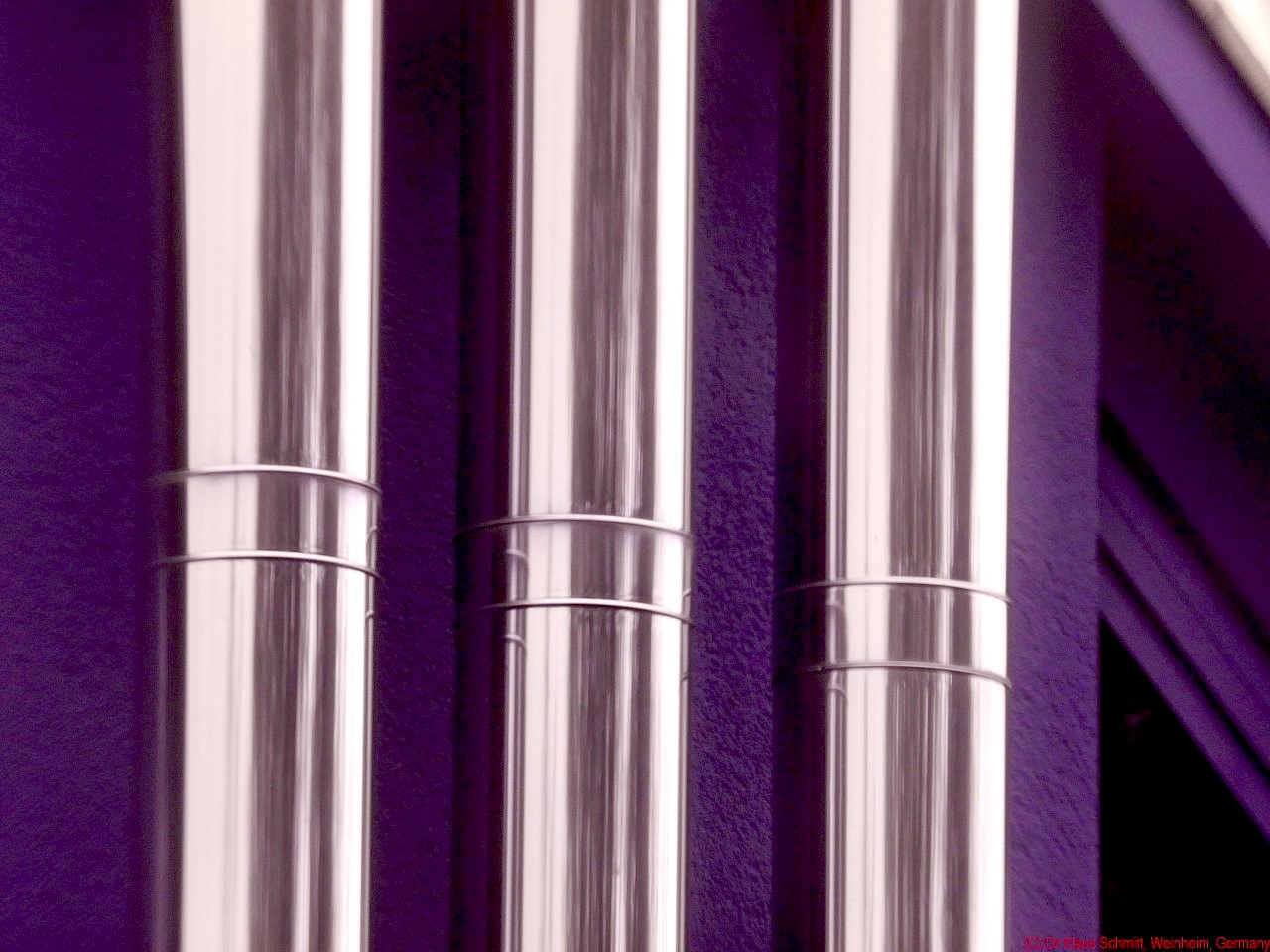
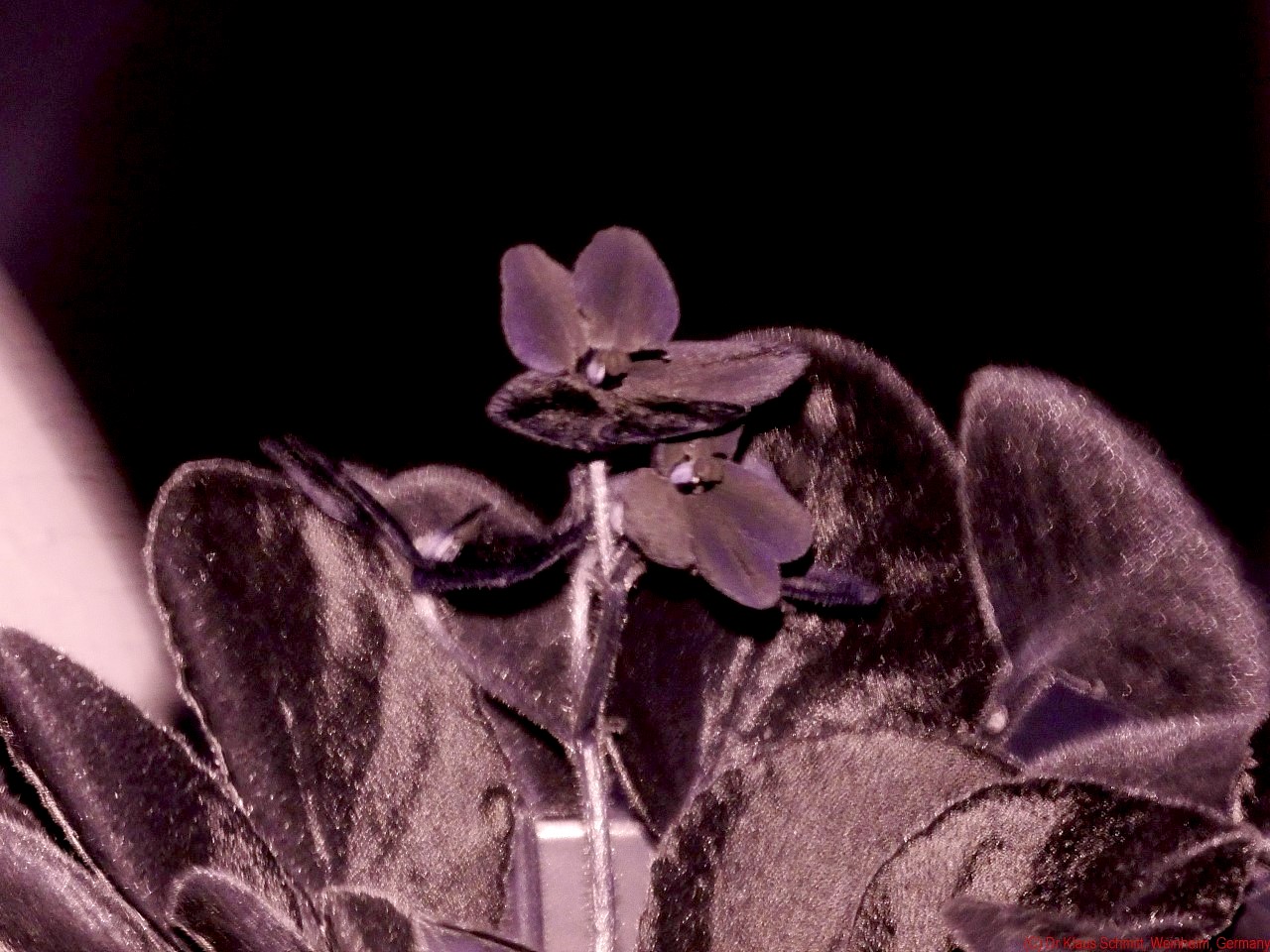
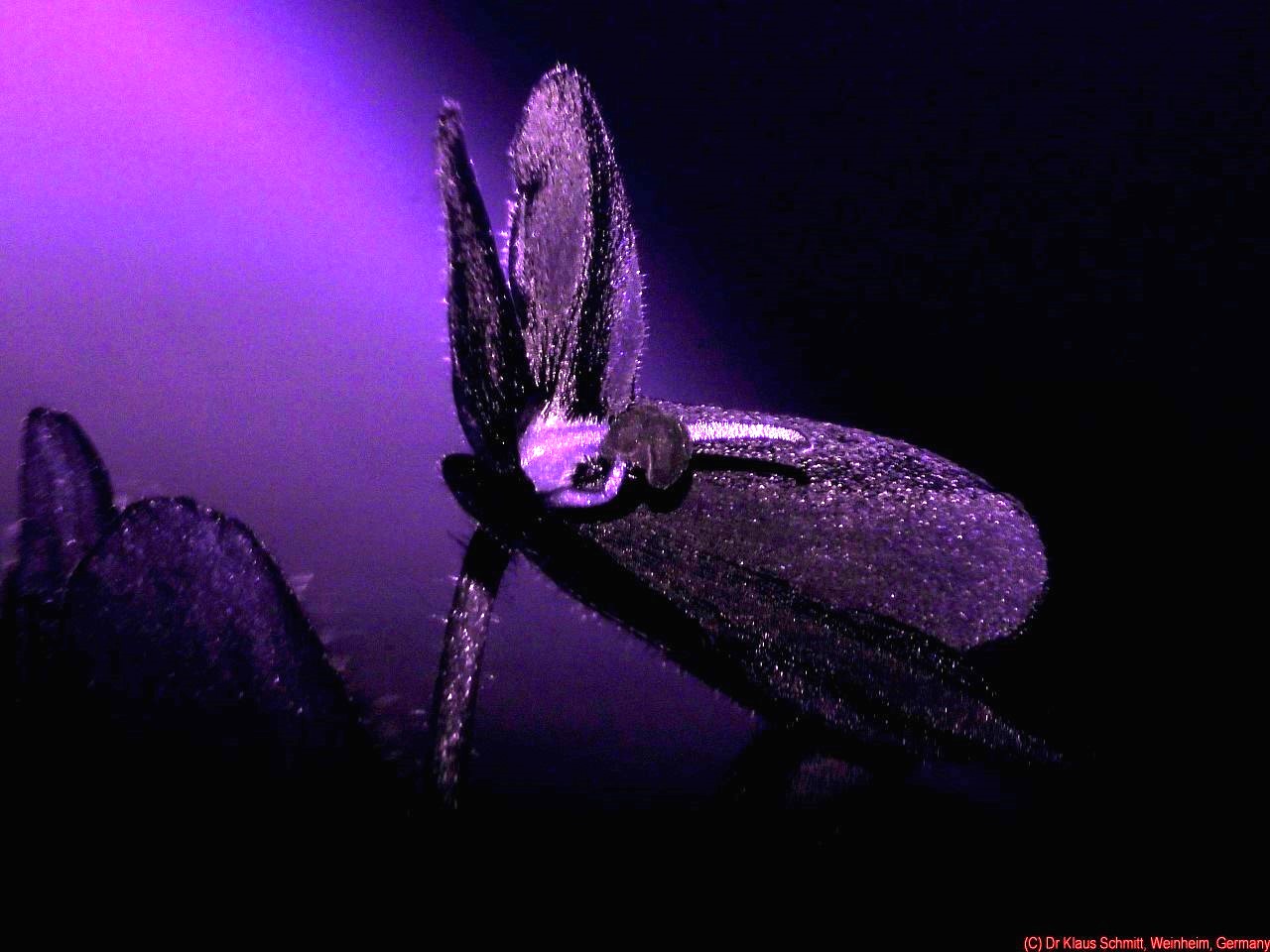
Today tests shots in reflected ultraviolet photography with a NYE OPTICAL Lyman-Alpha I f2.8/200mm UV-VIS-NIR lens. UV filter used was my work horse UV transmission filter, the Baader-U, rear mounted. All shots were done at f2.8 as this lens has no iris. Light source used was daylight at a dull and rainy day.

[click on image to see a larger one]

Roof detail approx. 30ft/10m away:
 

Window detail approx. 30ft/10m away:
 

Absence of CA, easily seen on the stainless steel exhaust tubes approx. 60ft/20m away:
 

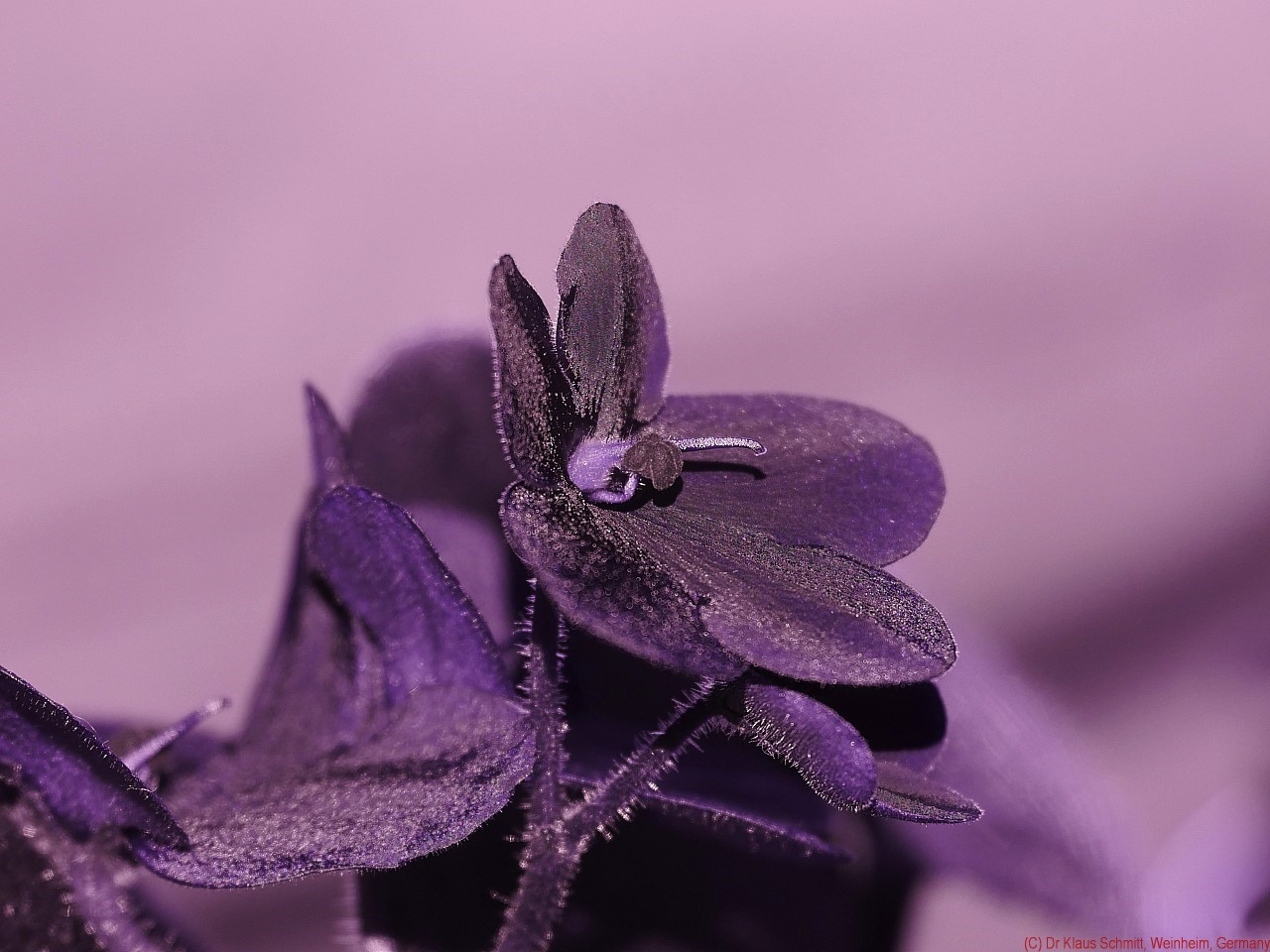
Closeup shot of an African Violet, approx. 3ft/1m away, using Nichia UV LED (365nm):
 

This lens has a UV transmission in the 190-400nm range of 85-88% and a resolution of 25lpm at infinity and 60lpm at 300mm distance and covers full format (maker data).The test images certainly confirm its usefulness.

I have written about the Nye Lyman-Alpha lenses previously HERE
 
Stay tuned, more will follow on that fascinating subject...

More info on this very interesting field may be found on my site http://www.pbase.com/kds315/uv_photos

Tuesday, October 23, 2018

LDM-1 long distance microscope for reflected UV (ultraviolet) light and African Violet

Today shots of an African Violet flower in reflected ultraviolet photography using a UV filter stack consisting of SCHOTT UG1 + BG40. All shots were done at f11. Lens was a rather rare LDM-1(s) 800mm mirror only lens, the close-up using the AP300 achromatic cloe-up lens, which was once sold with this lens system. Light source used was a 365nm Nichia UV LED light.

[click on image to see a larger one]

LDM-1(s) alone:
 

LDM-1(s) with the AP300 achromatic close-up lens:
 

And now here some comparison images I have shot with my "work horse" UV-Nikkor 105mm plus Baader-U filter.

Overview:
 

Closeup at closest focusing distance:
 

I have written about this LDM-1 lens previously HERE
 
Stay tuned, more will follow on that fascinating subject...

More info on this very interesting field may be found on my site http://www.pbase.com/kds315/uv_photos

Sunday, October 21, 2018

[UV, VIS, IR] Lyman Alpha deep UV lenses II

Oh well, it has been five years, but now I finally infinity-converted these very special lenses...

Back a little in time: When in 2012 I was able to acquire three prototypes of those lenses, made 1992, which came from the estate of the inventor, Richard Nye and his company, Nye Optical of La Mesa CA, I was very excited to find such lenses able to record in deep UV. But they turned out to be a bit tricky to convert and adapt to digital cameras. Now with mirrorless ones, it looked rather promising...

So, these scientific lenses Mr Nye invented and custom made, were for deep UV recording (capable to even work beyond 200nm, especially made to record the 121nm Lyman alpha lines, hence the name). It is a catoptric (reflex) Cassegrain design, which came in f2.8/200mm and f1.1/90mm (and some other) versions for full format cameras, but also for intensifier tubes and video cameras (25mm image circle, like the f1.1/90mm), with focusing from 250mm to infinity and some adjustable 50mm resp.18mm back focal length. And now I have them working on my Panasonic GH4 camera....

[click on image to see a larger one]


Inside the aluminum housing resides an about 25mm (1") thick quartz (ZERODUR most likely) mirror block, front aluminized plus a secondary mirror (most likely made of the same material) held by an adjustable metal "spider" in front of that first one. Quite built like a small 90mm diameter Cassegrain astronomical telescope.

DOF at one (1) meter (3ft) is as thin as a razor blade when using the Lyman Alpha f1.1/90mm lens and that doughnut shaped bokeh etc. makes it fun to use.

Here now a few images in visible light, UV will follow, weather permitting...


The very thin DOF of course generates those doughnut shaped bokeh bubbles, but by chosing a proper i.e. less noisy background it can be "tamed".

I have written about those lenses before HERE


Stay tuned, more will follow on that fascinating subject...

More info on this very interesting field may be found on my site http://www.pbase.com/kds315/uv_photos
Friday, October 12, 2018

Common Sunflower - Helianthus annuus in reflected ultraviolet photography and simulated bee vision
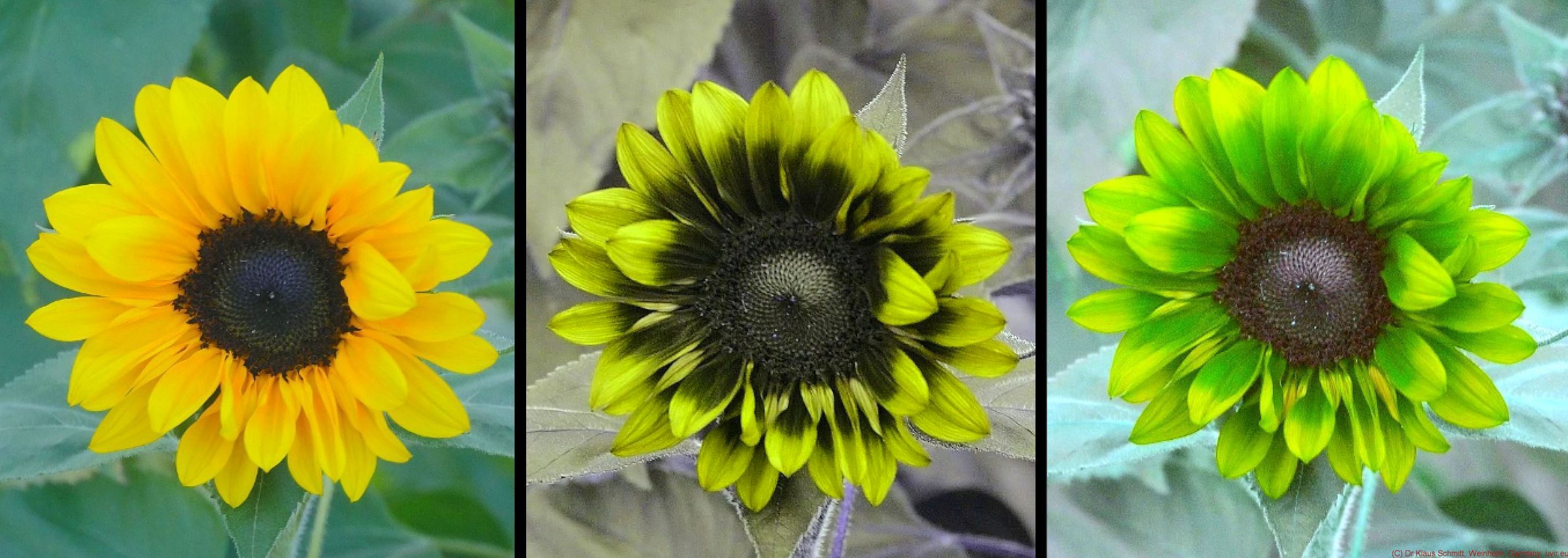
Today shots of a flower everybody has already seen, a common Sunflower - Helianthus annuus in reflected ultraviolet photography using my "work horse" UV filter, the Baader-U filter as well as in simulated bee vision using my XBV filter. Lens was my UV-Nikkor 105mm quartz flourite lens. Light source was sunlight. All shots were done at f8.

[click on image to see a larger one]

Human vision:
 

Reflected UV:
 

Simulated bee vision:
 

Triptych of human vision, UV, simulated bee vision (left to right):
 

This flower has a specific and unique UV pattern, its petal tops are brightly UV reflective around 365nm and the rest and its center is UV dark forming an UV bullseye pattern, and all this gets nicely visible, also in simulated bee vision.

I have written about sunflowers before HERE
 
Stay tuned, more will follow on that fascinating subject...

More info on this very interesting field may be found on my site http://www.pbase.com/kds315/uv_photos