Friday, August 22, 2008

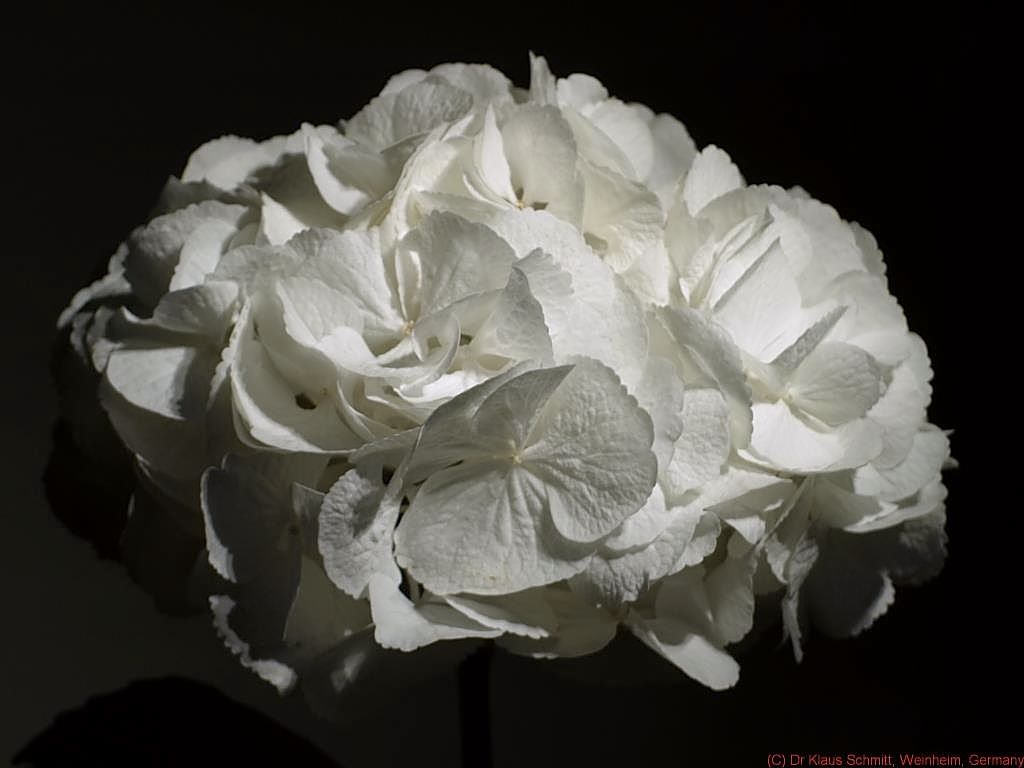
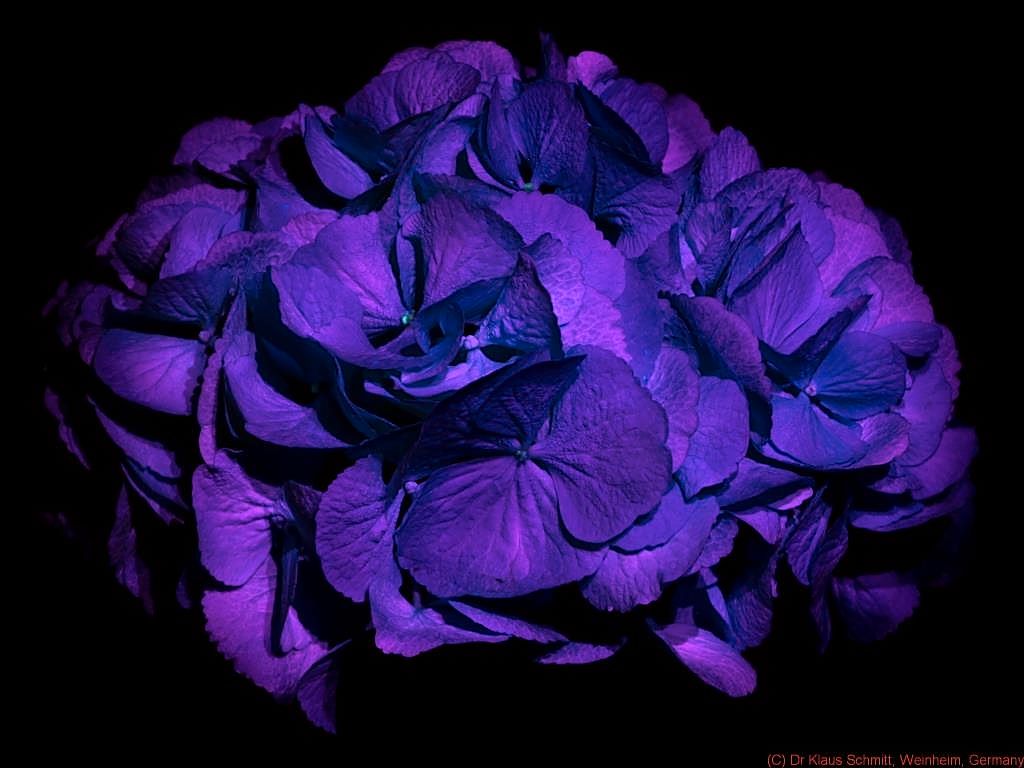
White Hortensia as seen from the invisible world

These are shots of a white Hortensia my florist Christian Mayer in Weinheim gave me today, since he was curious to see how that one would look like in the "invisible world" (in preparation of our forthcoming exhibition on September 21st).

And here now the results, using my calibrated for UV X35 lens, Baader U-filter, Nichia UV LED lamp. [click on image to see a larger version]

Visual shot:


UV shot:


UV induced fluorescence shot:


UV remapped into the Visual space "bee vision":


So I hope you like these shots of a beautiful white Hortensia as much as I do....

Stay tuned, more will follow on that fascinating subject...

More info on this very interesting field may be found on my site http://www.pbase.com/kds315/uv_photos

UV helps to recover details of fossils

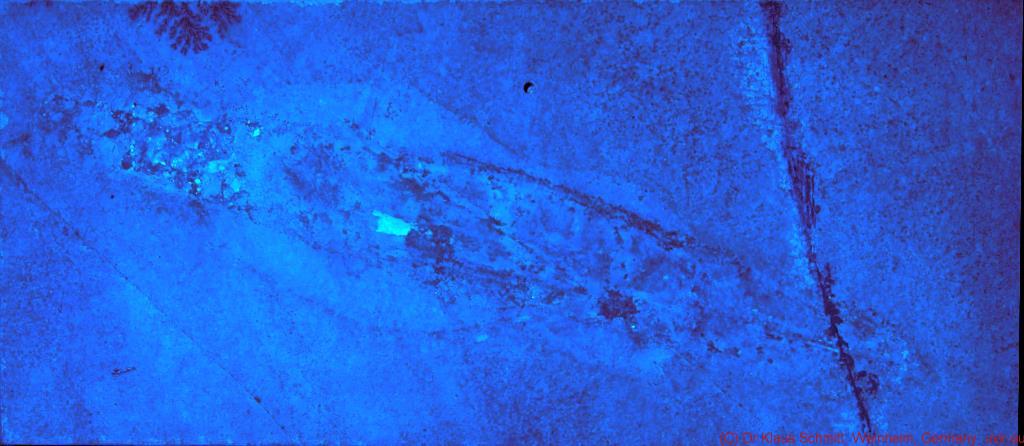
Today it is about fossils. Fossils and UV? Yes, since UV is not only able to resolve about 60% more details than a visual shot due to the shorter wavelength used, it also allows to extract more information by combining a visual and an UV shot into one using my remapping technique.

So lets see this on an example, here an about 100 Million year old squid. The lens used in that case was a calibrated for UV X90 lens plus my famous Baader U-filter (310-390nm) with perfect IR suppression.

[click on image to see a larger version]

Visual shot:


UV shot:


UV remapped into the Visual space:


I find it quite interesting that the remapped image reveals quite a bit more information now and due to the different colors helps to differentiate details of that fossilized squid much easier.

I have written about fossils previously HERE

So I hope you like it as much as I do....

Stay tuned, more will follow on that fascinating subject...

More info on this very interesting field may be found on my site http://www.pbase.com/kds315/uv_photos

Wednesday, July 30, 2008

X-lenses help to discover the Secret of Bats with UV vision


Recently researchers have found out (Nature, 9. October 2003 p. 612-614) that many bat species seem to have a sensitivity to ultraviolet (UV) light, which is more abundant at dawn and dusk. The colour-blind Long-tongued Nectar bat (Glossophaga soricina) for instance is sensitive to UV down to a wavelength of 310 nm. Experiments at Universities in Guatemela and Erlangen, Germany revealed a sensitivity in the green (max. 510 nm) and UV (>365 nm) spectra. The same very same photoreceptor was responsible for both peaks in the green and the UV. Quite interesting to note since in all rodents and marsupials with colour vision, there is a separate receptor which handles UV light.

Link to the original publication of the Max Planck Institute, Germany

The University of Ulm, Biology Dept., Germany has decided to equip their two year long lasting Panama expedition, starting spring 2008, together with the US Smithsonian Institute with two calibrated for UV lenses, my X135 and X35, to help to discover the secret of bats with UV sight there. These bats live from fig fruits which are supposed to carry marks only visible in UV. 

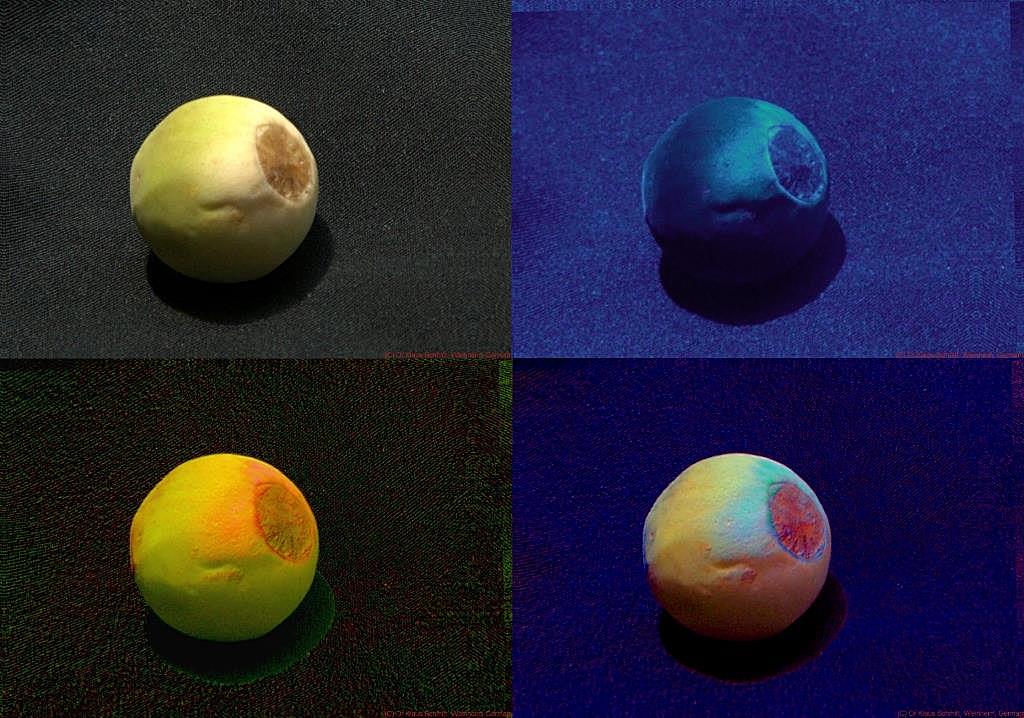
First interim results now show, that indeed there seems to be UV marks at these fruits which come from the wax coated surface. [click on image to see a larger version]


[top images curtesy and (C) Universtiy of Ulm; processing and UV remapping by me]

Top left shows a sample of that Panamanean fig fruit in visual light, top right in UV light shot using the calibrated for UV X-lenses. Bottom left and right shows UV remapped into the visual domain to enhance the UV pattern present.

["X-lenses" denotes a series of lenses which are calibrated for UV photography. Up to today there are the X28, X35, X50, X90, X135 and longer lenses available, the number after the "X" denoting the focal length. These allow for high quality reflected UV photography at a fraction of the cost of these specialized fluorite/quartz lenses]

So I hope you found that as interesting as I do....

Stay tuned, more will follow on that fascinating subject...

More info on this very interesting field may be found on my site http://www.pbase.com/kds315/uv_photos
Tuesday, July 29, 2008

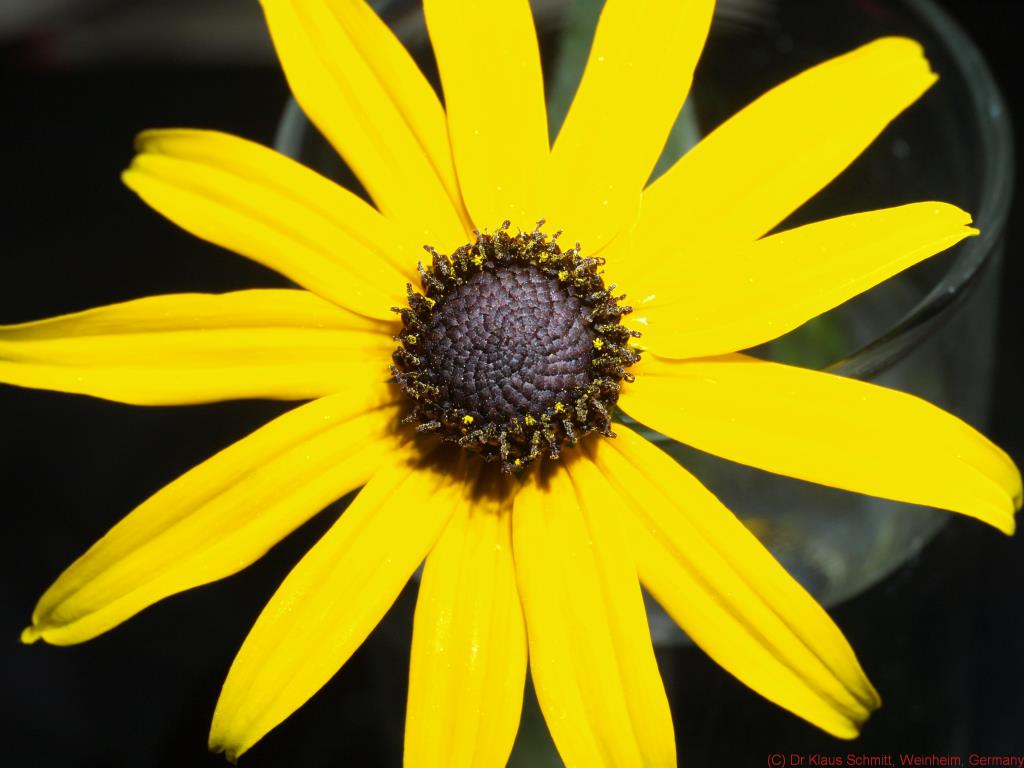
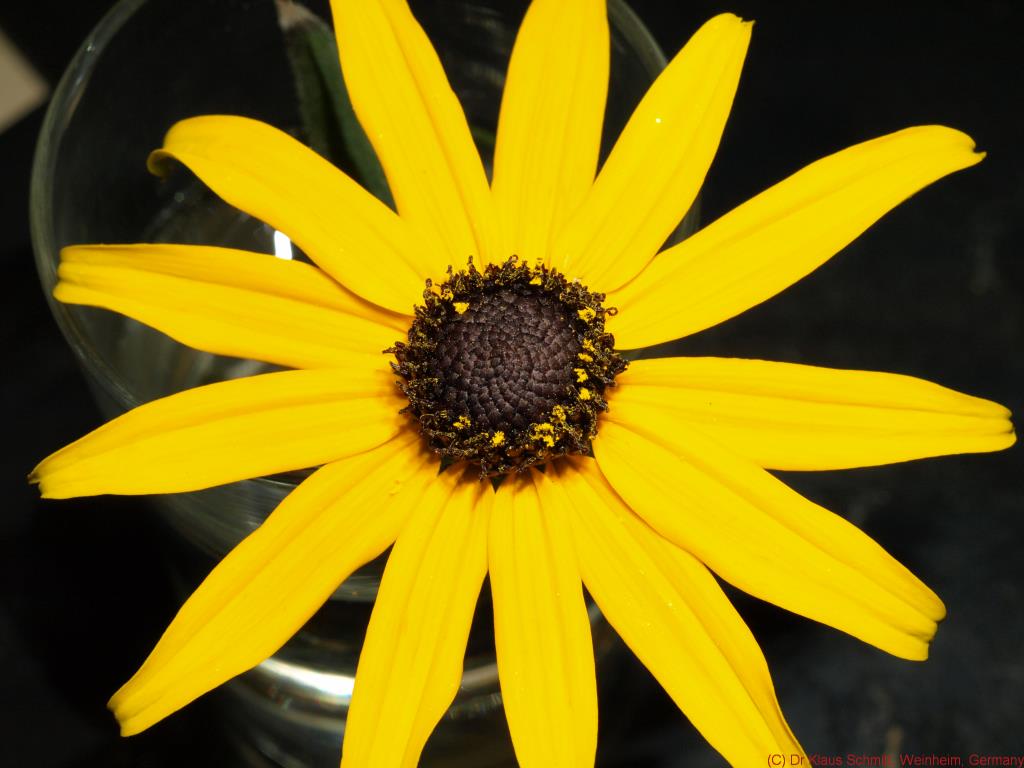
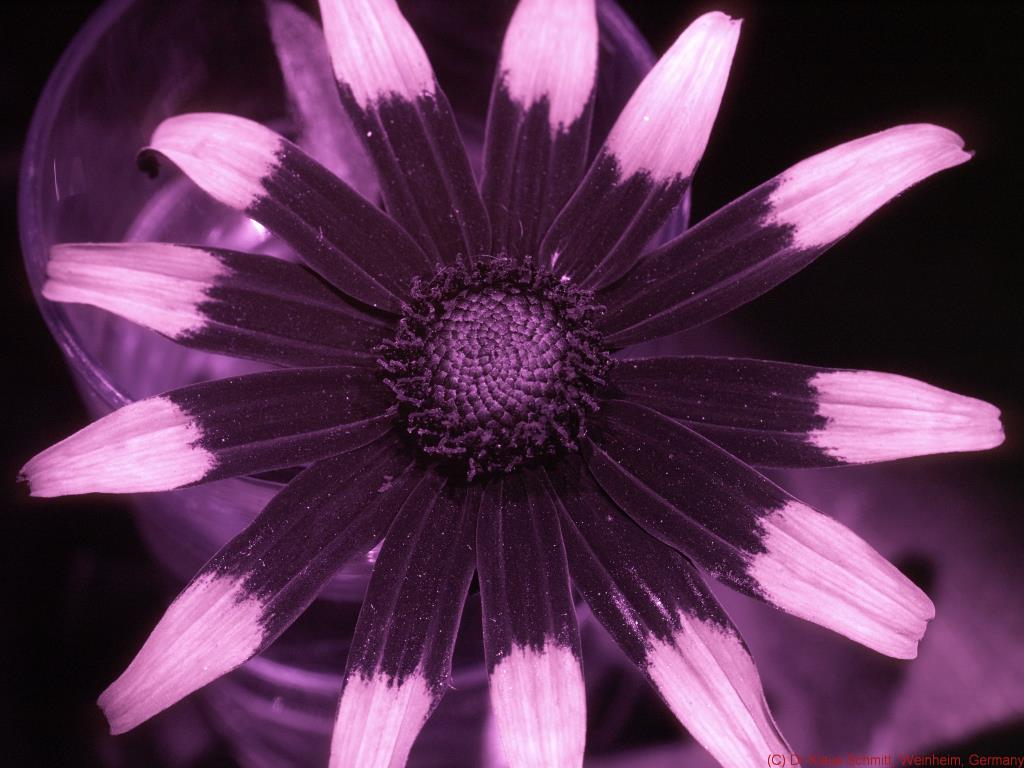
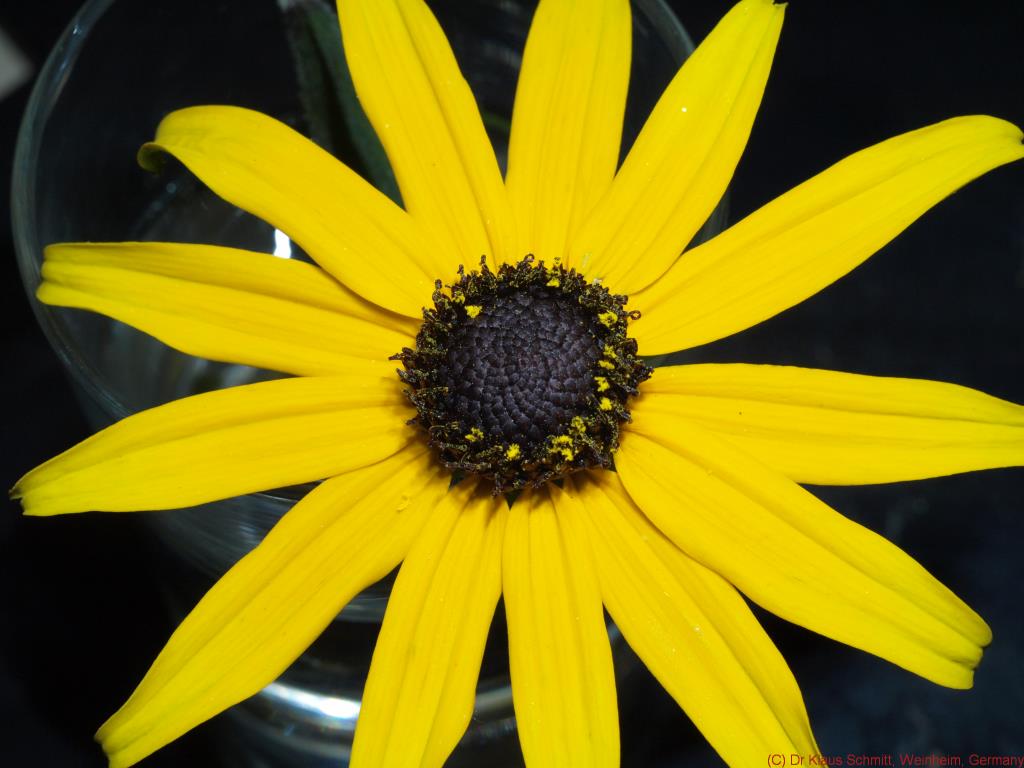
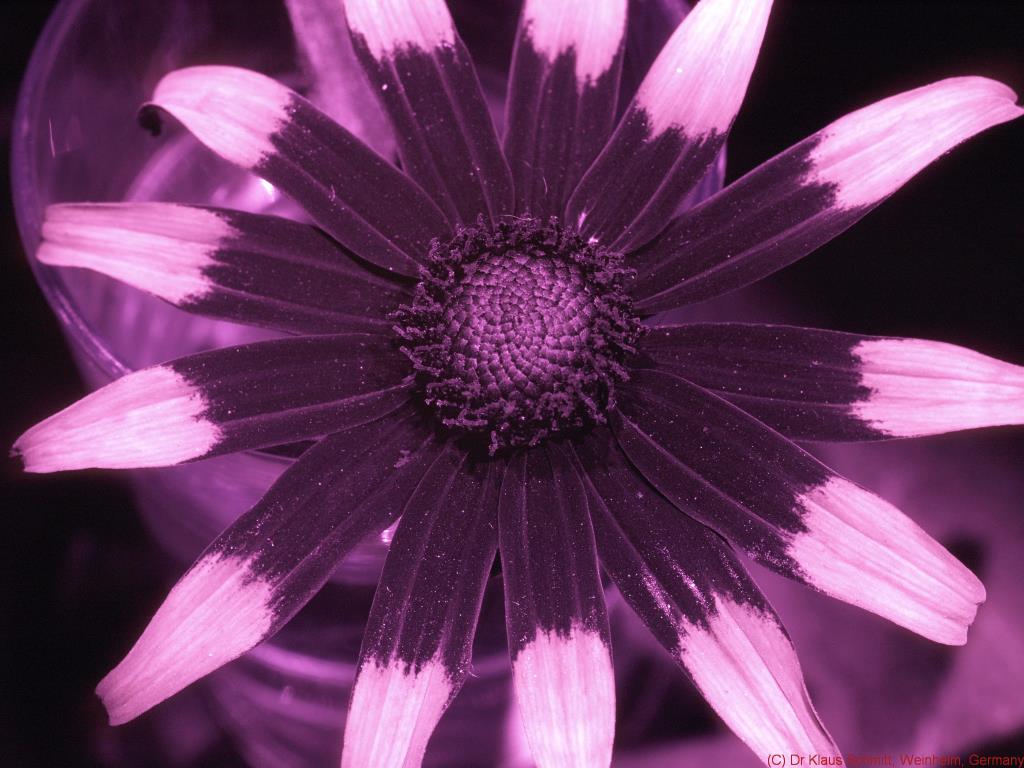
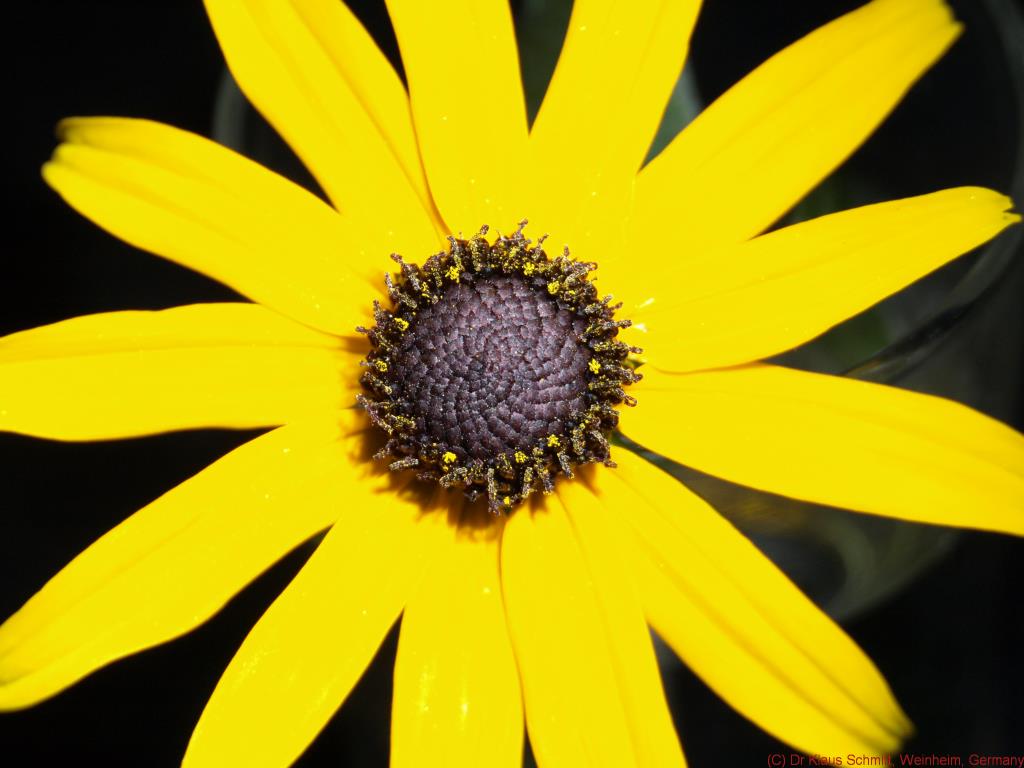
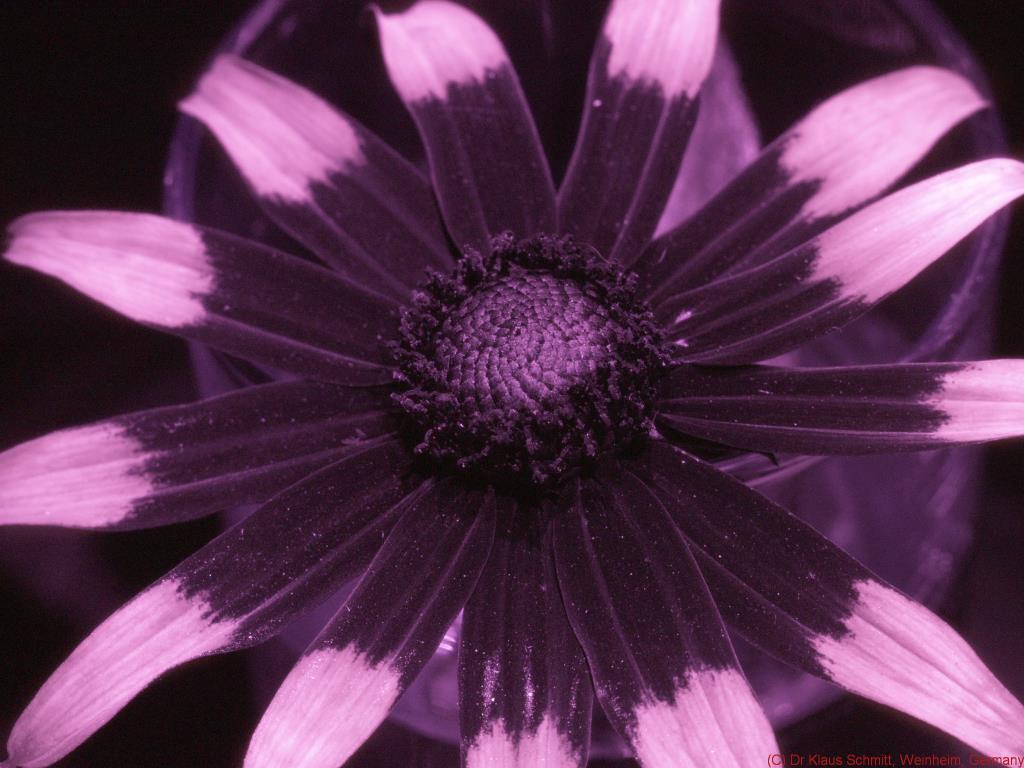
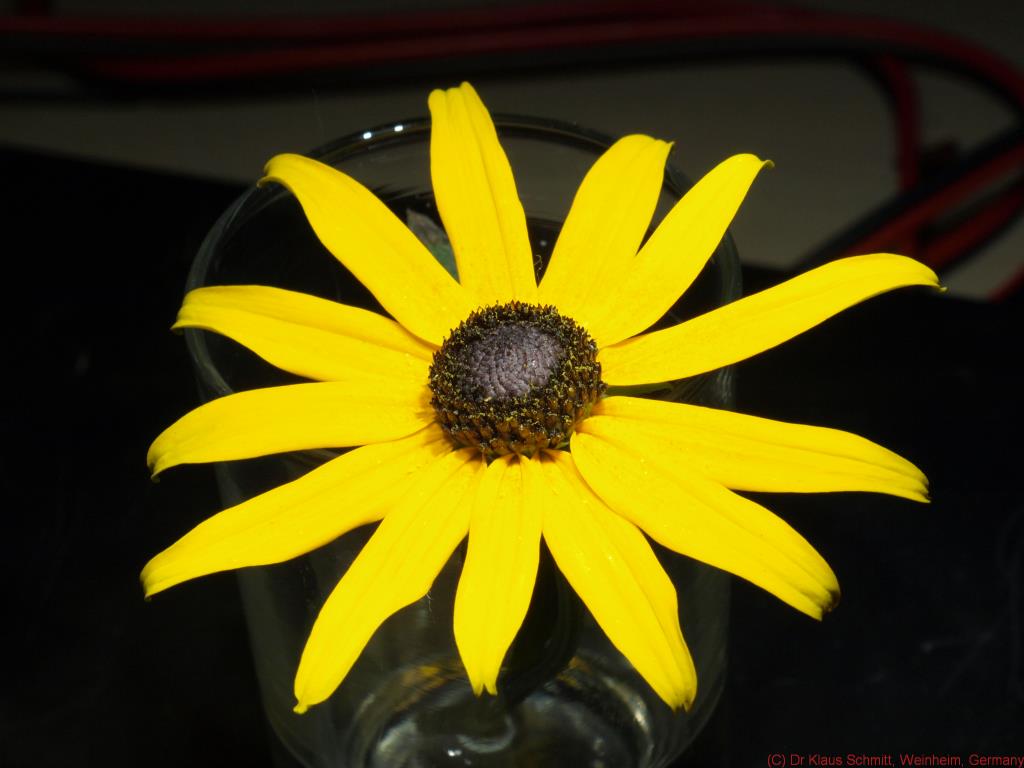
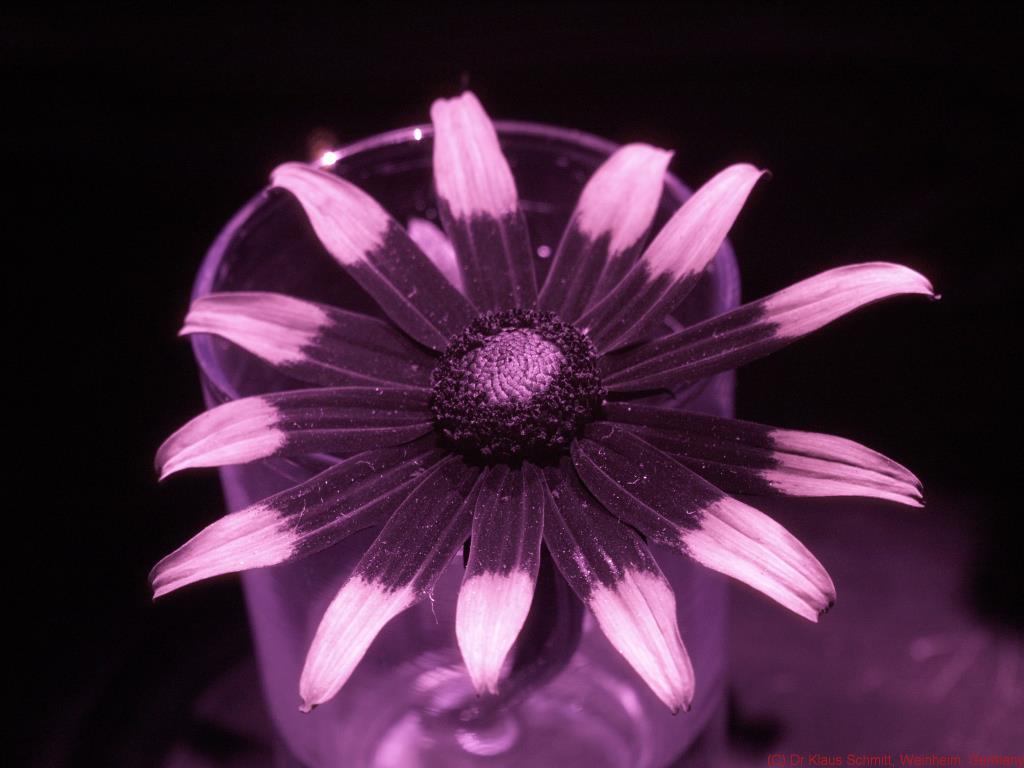
Dive into the Beauty of Rudbeckia fulgida flower

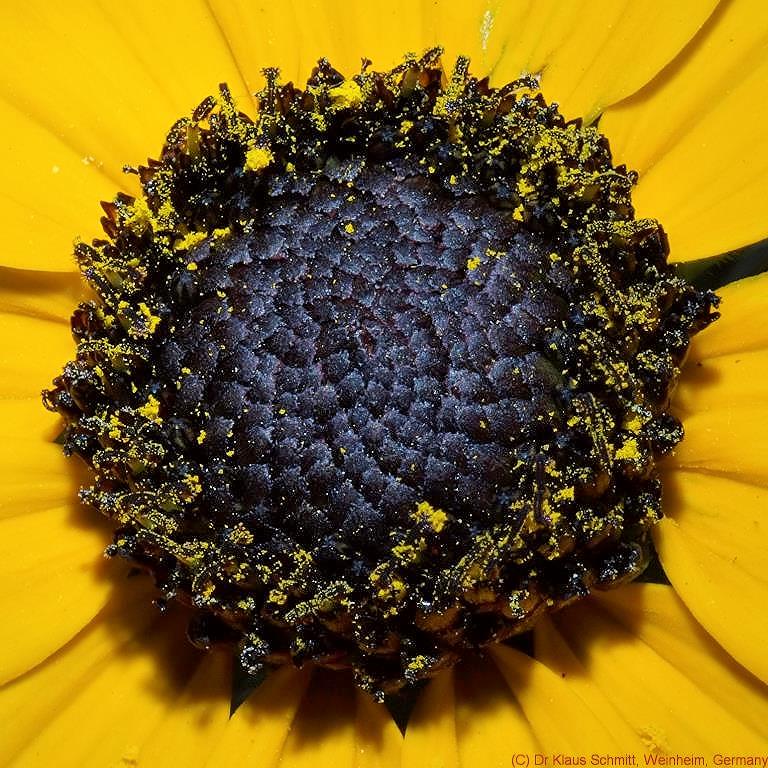
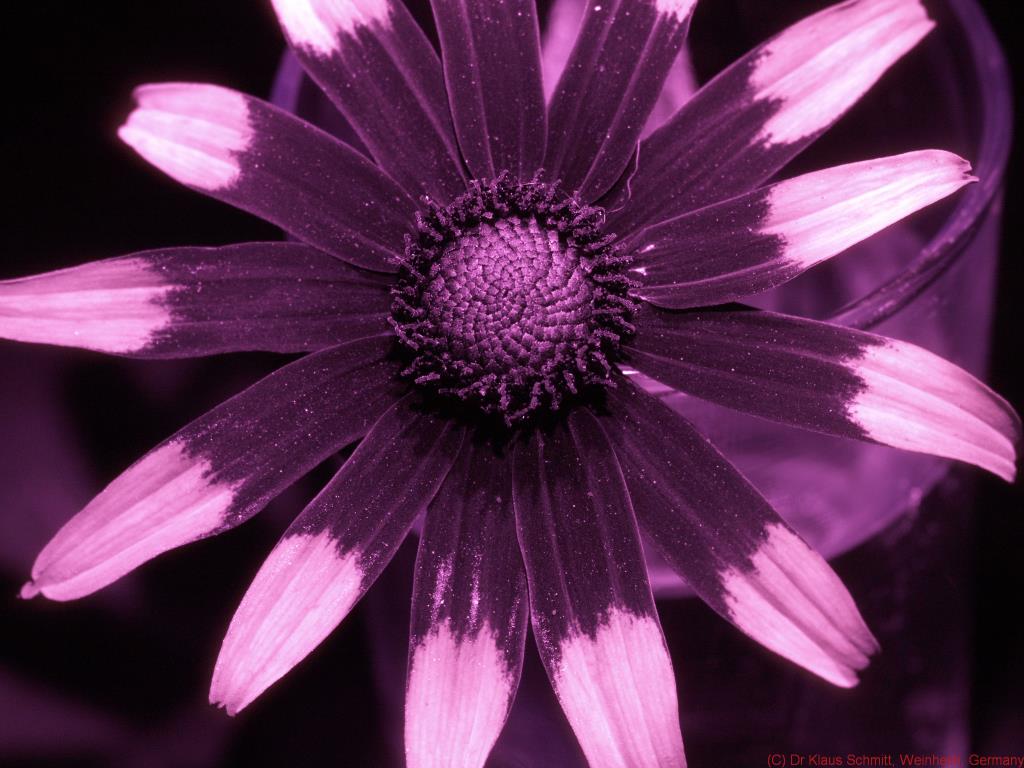
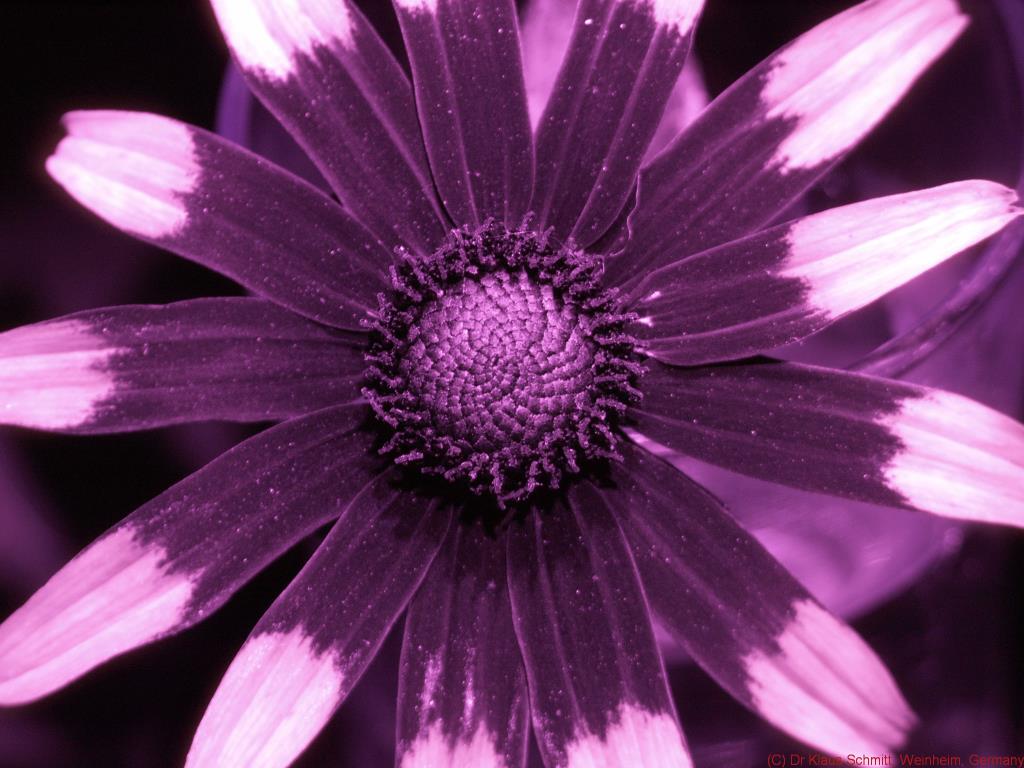
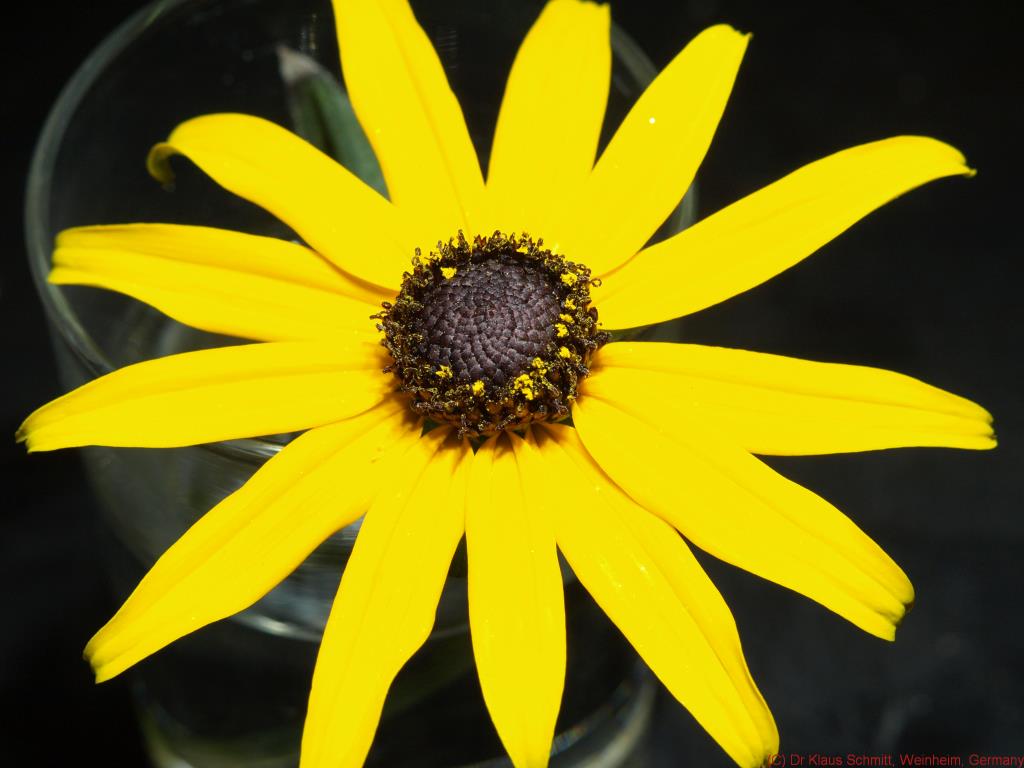
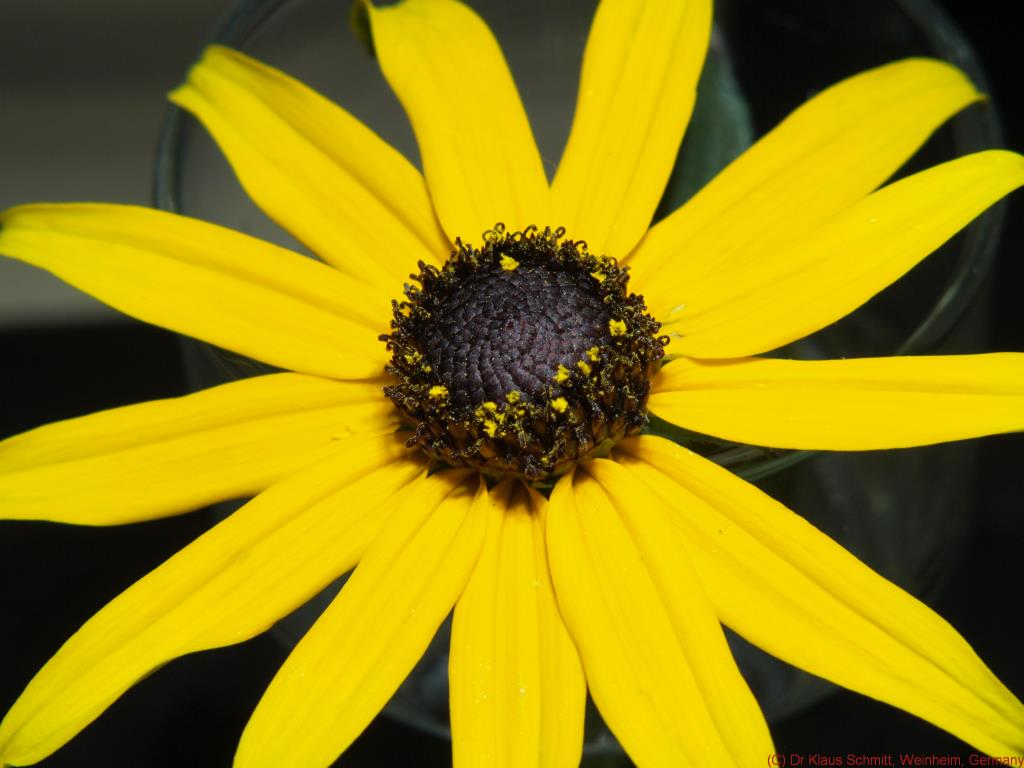
So, again, the same setup as before - how boring? I'm just excited (pun intended, since it is fluorescenece...) about that beauty of that Rudbeckia fulgida flower, so let's dive into that a bit more, using some old lens I always wanted to try out, and voĆ­la, that is one great little razor sharp gem (and no, it it not one of my loved Zeiss Luminars)!

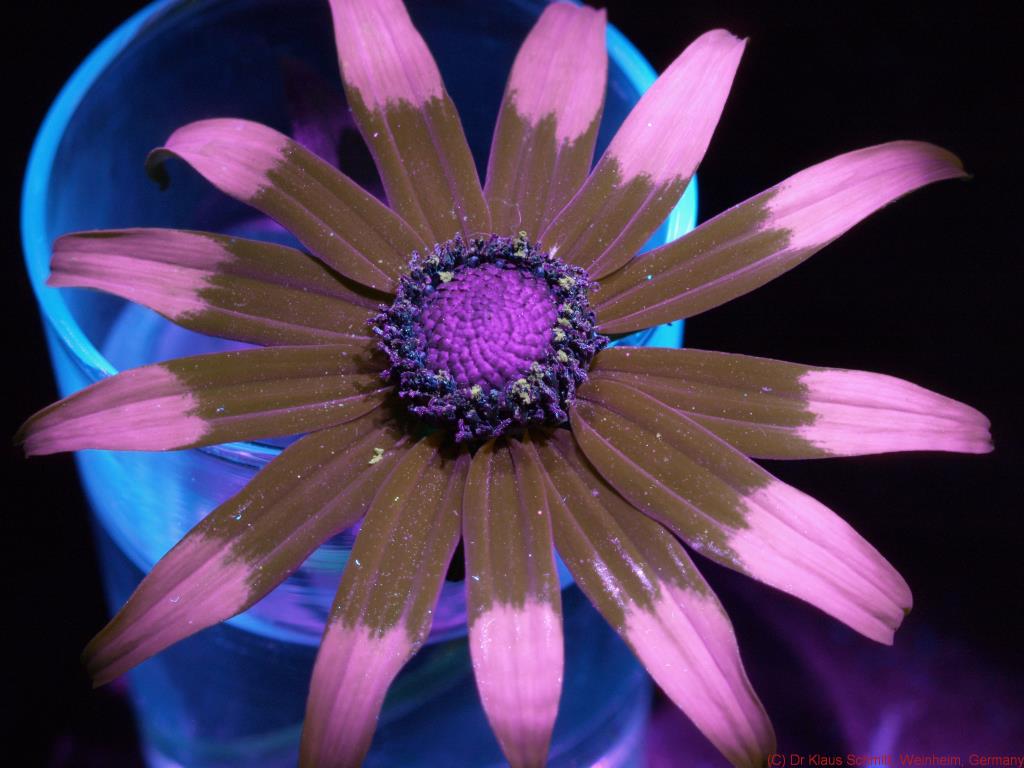
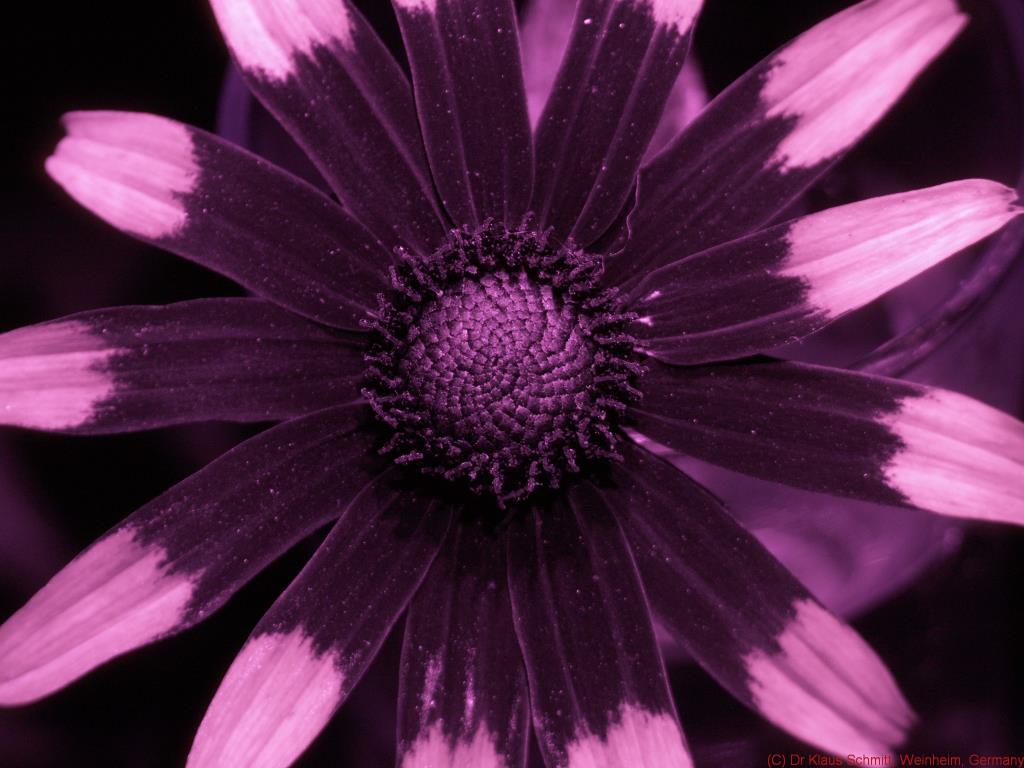
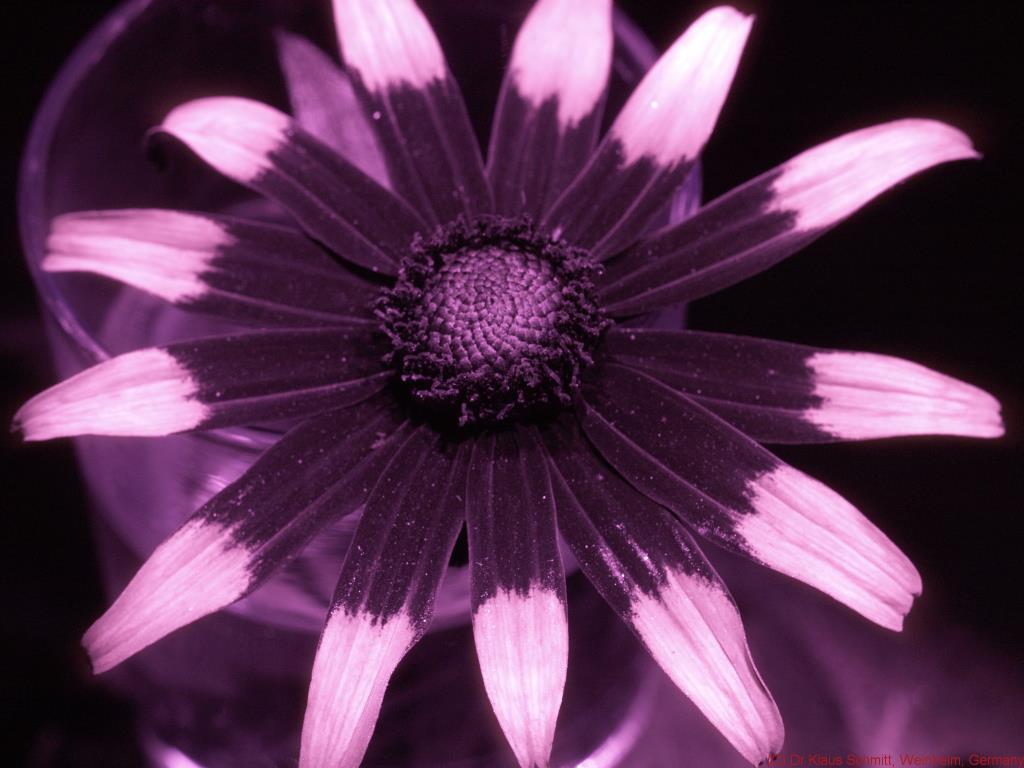
What we see in the second picture is UV induced visible fluorescence, using my Nichia 365nm UV LED lamp as exciter. No filter was used in that case, so what we see here is a mix of visual and some reflected UV light.

The flower center, as may be seen in the second shot, has a very strong UV reflectance, even if it appears dark brown/black in the visible shot. One may assume that this is intended together with the highly reflective UV pattern at the end of the flower petals, to attract pollinators like a "helicopter landing port".

[As usual, a click on an image opens up a larger one.]

Visual shot:


UV induced fluorescence shot:


So I hope you like it as much as I do....

Stay tuned, more will follow on that fascinating subject...

More info on this very interesting field may be found on my site http://www.pbase.com/kds315/uv_photos

Sunday, July 27, 2008

A comparative, subjective shootout of Lenses for UV Photography ... Fluorescence

So, same setup as before, but what we see here is UV induced visible fluorescence, using that Nichia 365nm UV LED lamp as exciter. No filter was used in that case, so what we see here is a mix of visual and UV light. Actually this creates quite a test case for UV lenses, since it clearly shows, how well both wavebands (UV + VIS) are corrected in terms of focus shift.

UV Rodagon 60mm:


EL Nikkor 3.5/63mm:


X50 calibrated lens for UV 50mm [looks differently since I had another light on...]:


X90 calibrated lens for UV 90mm:


X135 calibrated lens for UV 135mm:


And now, a few days later, that rare UV Rodagon 150mm.
UV Rodagon 150mm:


So I hope you also found these results useful....

Stay tuned, more will follow on that fascinating subject...

More info on this very interesting field may be found on my site http://www.pbase.com/kds315/uv_photos
Saturday, July 26, 2008

A comparative, subjective shootout of lenses for reflected UV photography


Now this will be a rather lengthy entry I presume, so be forewarned! Why you might ask? Well today I got a request and di a comparative shootout of various lenses for UV, using that Rudbeckia fulgida flower as a target, ca. 80mm (3.1") in diameter. The Baader U-filter was used, as well as Xenon lighting and UV LED lighting (365nm).

The candidates were the classic UV Nikkor 105mm, the Coastal Optics Micro Apo 105mm, the UV Rodagon 60mm (making up the group of the most expensive ones), then the EL Nikkor 3.5/63mm enlarger lens and my calibrated lenses for UV in 50mm, 90mm and 135mm focal length (X50, X90, X135).

Here now the results, and as usual here, a click on a picture opens up a large version of it.

UV Nikkor 105mm:

Visual shot:


UV shot:


Coastal Optics Micro Apo 105mm:

Visual shot:


UV shot:


UV Rodagon 60mm:

Visual shot:


UV shot:


EL Nikkor 63mm:

Visual shot:


UV shot:


X50 calibrated lens for UV 50mm:

Visual shot:


UV shot:


X90 calibrated lens for UV 90mm:

Visual shot:


UV shot:


X135 calibrated lens for UV 135mm:

Visual shot:


UV shot:


And now here a few days later a rare find, the results using an UV Rodagon 150mm. The flower has aged of course...

UV Rodagon 150mm:

Visual shot:


UV shot:


But now you're up to you to interpret....

[Just some hints: be careful when comparing the images, since the working distance had to be very different due to the different focal lengths used to achieve about the same magnification. So you will notice, that although the same aperture f8 was used, the depth of focus is different. This is because of the changed angle of view, and has nothing to do with a lens being more or less sharp.]

Stay tuned, more will follow on that fascinating subject...

More info on this very interesting field may be found on my site http://www.pbase.com/kds315/uv_photos

Thursday, July 24, 2008

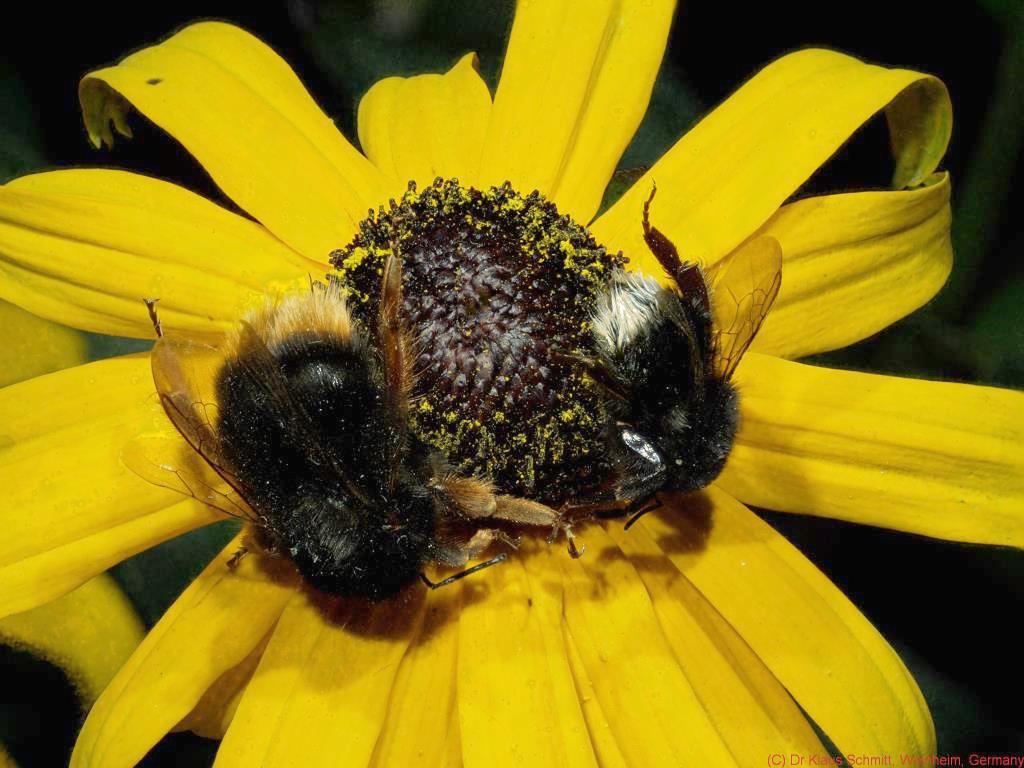
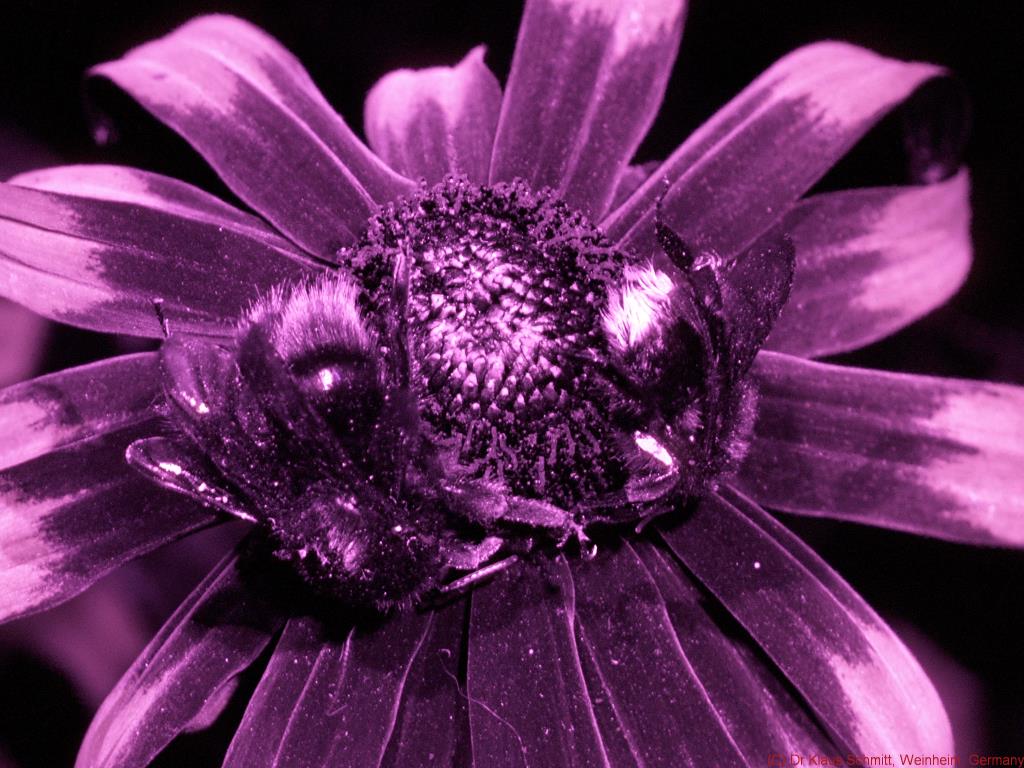
Bumble Bees on Rudbeckia fulgida (B. xanthopus, B. canariensis)


Here now a shot showing two types of Bumle Bee on Rudbeckia fulgida, Bombus xanthopus (left) and Bumbus canarienses (right).

Visual shot:


UV shot:


UV remapped into the visible domain now yields:


So, I hope you like that, too.


Stay tuned, more will follow on that fascinating subject...

More info on this very interesting field may be found on my site http://www.pbase.com/kds315/uv_photos