Wednesday, March 10, 2010

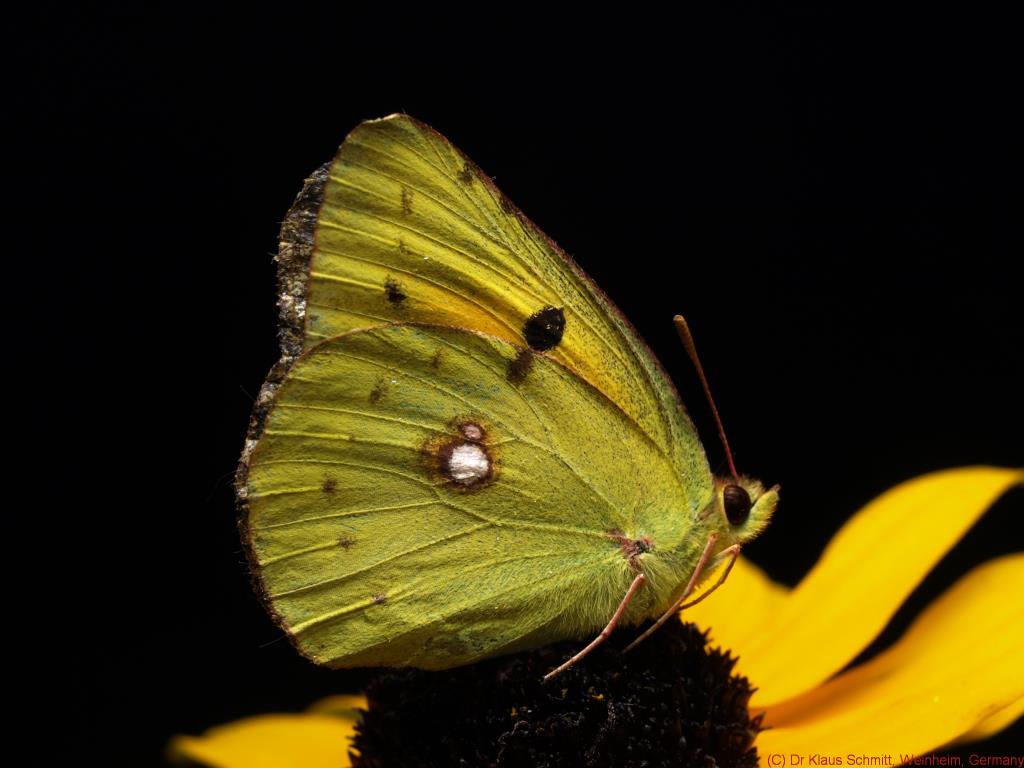
Cleo Butterfly on Rudbeckia Flower

This is a CLEO butterfly on a Rudbeckia flower in VIS and simulated tetrachromatic butterfly vision (UV+VIS).

[click on image to see a larger one]

This is the visual image (VIS): 


And here now the simulated tetrachromatic vision image using (XBV2 Filter):


Stay tuned, more will follow on that fascinating subject...

More info on this very interesting field may be found on my site http://www.pbase.com/kds315/uv_photos

Tuesday, March 9, 2010

Carl Zeiss UV-Planar 4/60mm

Today let me present you a lens which was thought to have gotten lost, but now it finally made it here after more then 4 months of travel: The extremely rare (5 or so ever made; that second one of mine is #4) Carl Zeiss UV-Planar 4/60mm lens. Zeiss serial number range #258xxx stands for special order lenses, prototypes etc. Funny that the Zeiss files don't even have that one listed...

[click on image to see a larger one]


A lens made for UV Photography and UV enlarging which consists of quartz and special glass. Symmetrical Gauss design, 6 lenses in 4 groups. Color corrected for 320-450nm, transmits down to 300nm. Full data is here.  

If anyone wonders about the lens coating: Zeiss has applied a special lens coating which transmits UV light, thus it does not look like a normal multicoated lens.

 
Stay tuned, more will follow on that fascinating subject...

More info on this very interesting field may be found on my site http://www.pbase.com/kds315/uv_photos

Thursday, March 4, 2010

Richard Hammond's Invisible Worlds begins 16th March on BBC1

BBC Press Office announced March 3rd that (quote) Richard Hammond's Invisible Worlds begins 16th March, 3 episodes @ 9pm on BBC1 (unquote).

Just got the confirmation that episode 2 + 3 will be aired the following weeks later at the same time (March 23 + 30). My contribution will be seen in episode 2 on March 23, "Out of Sight". ((quote from BBC)) In Out Of Sight, Richard explores the extraordinary wonders of the world beyond the visible spectrum.

The human eye is a remarkable piece of precision engineering. But beyond the narrow range of light that makes up the familiar colours of the rainbow is a vast spectrum of light that is entirely unseen. In fact, the visible world is just the tiniest sliver of a far greater reality.

Now, through the use of ground-breaking new imaging technologies and state-of-the-art cameras, Richard Hammond takes a journey beyond the visible spectrum, seeing the world, quite literally, in a whole new light. 
...  
Closer to the ground, ultraviolet cameras transform the view of an ordinary flower garden, capturing a dizzy array of hidden patterns and colours – an insect's eye view.
((unquote))


Stay tuned, more will follow on that fascinating subject...

More info on this very interesting field may be found on my site http://www.pbase.com/kds315/uv_photos

Saturday, February 27, 2010

Richard Hammond's Invisible Worlds BBC DVD on pre-order

Amazon UK has the BBC DVD  already on pre-order, release date has been shifted to May 3rd, 2010.

This the PAL version, most likely only viewable in Europe.

Link to amazon.co.uk is here

I would assume there will be a Blue-Ray Disc also, since it has been produced in full HDTV, but I have no further info on that.


Stay tuned, more will follow on that fascinating subject...

More info on this very interesting field may be found on my site http://www.pbase.com/kds315/uv_photos

Tuesday, February 23, 2010

Influence of Filters on Image Sharpness

In my previous Blog entry, I had presented how an orchid will look like in simulated bee vision using that "multispectral in one shot" XBV2 filter. Strangely enough the resulting "bee vision" images looked a bit soft, so I wondered what caused that. So let's analyze the influence of filters on the sharpness of the resulting image a bit....

The first idea which might have caused softness was IR leakage, but since that special XBV2 filter stack used includes an IR suppressing filter, this was not the reason.

Since I have an alternative filter stack called XBV2a, I tested it against it - with a a big surprise: A much sharper result could be obtained.

All shot using UV-Rodagon 105mm at f8 using Xenon high Power flash and otherwise identical conditions except the filters used. 


[click on image to see a larger one]

XBV2 (left) versus XBV2a (right):


It gets very obvious, that the use of the XBV2a filter results in much improved sharpness, whereas the XBV2 filter result looks rather soft (1:1 pixel presentation).

Here now the two images full size:

XBV2 (old version):


XBV2a (new version):


Well, I'm not yet completely done finding out the reason for the softness of the XBV2 filter stack, so... 


Stay tuned, more will follow on that fascinating subject...

More info on this very interesting field may be found on my site http://www.pbase.com/kds315/uv_photos
Tuesday, February 16, 2010

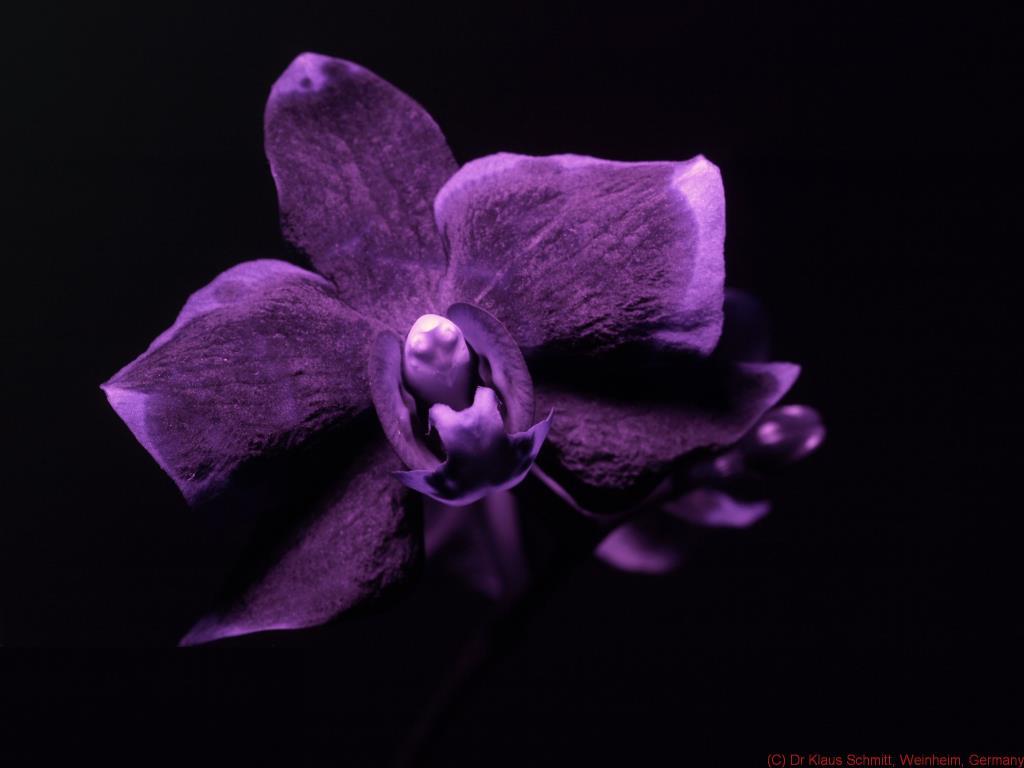
Orchid in simulated Bee Vision

An inspiration by Bob Friedmann showing his excellent VIS and UV images on nikongear.com. I wondered how orchids would look like in simulated bee vision using my "multispectral in one shot" filter XBV2.

Here it is, simulated Bee Vision shot using XBV2 filter, high power UV flash, UV-Rodagon 5.6/105mm....and no focus shift.

[click on image to see a larger one]

VIS: 


Simulated Bee Vision using XBV2 filter: 


UV using Baader-U filter: 


Stay tuned, more will follow on that fascinating subject...

More info on this very interesting field may be found on my site http://www.pbase.com/kds315/uv_photos

Tuesday, February 9, 2010

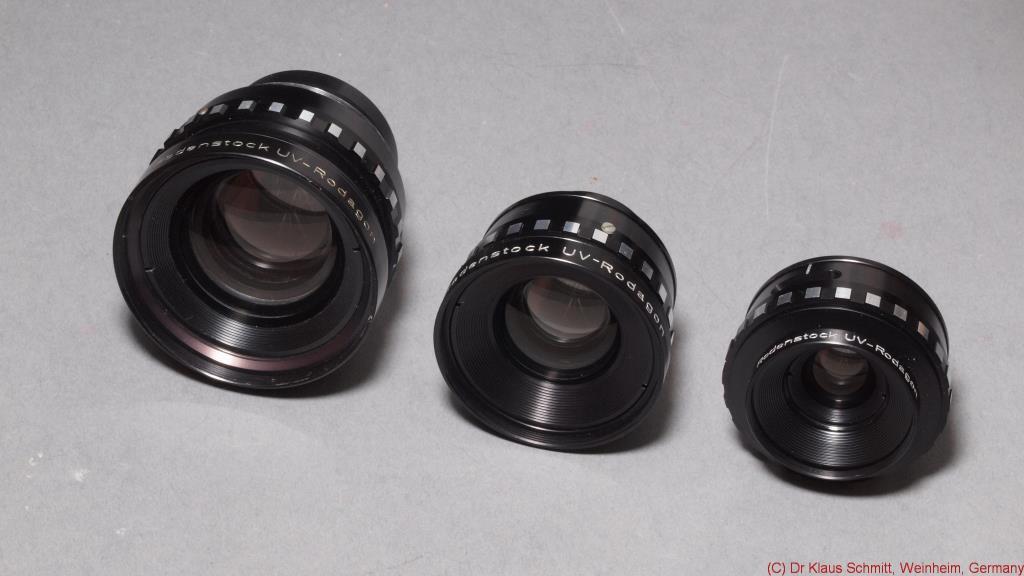
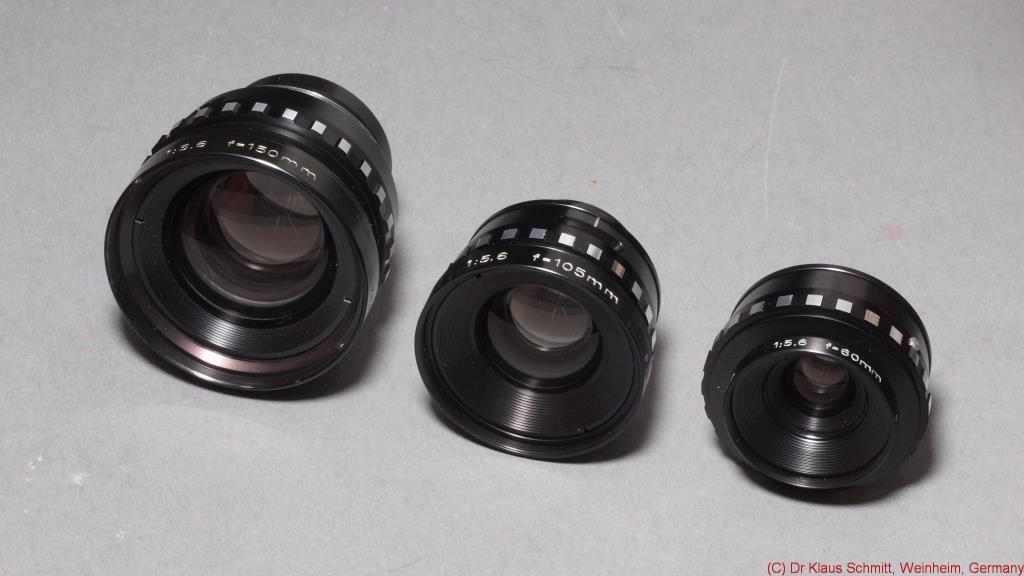
UV-Rodagon Brothers

A buddy of mine and avid lens collector once mentioned the credo of all collectors: "everything comes to him, who can wait long enough...". Well, I must have waited long enough, since after some years, the brothers finally found each other..

[click on image to see a larger one]


Of course I had to test them, although the 60mm and 105mm have never been used before, MINT in makers box. Only about 25 or so have ever been made I was told, decades ago.

Measured UV-transmission (-3EV) is: 150mm: 320nm; 105mm: 315nm; 60mm: 310nm, but they do well up to 700nm (NIR)

Focus shift between UV and VIS is hardly measurable, fractions of mm only.


Stay tuned, more will follow on that fascinating subject...

More info on this very interesting field may be found on my site http://www.pbase.com/kds315/uv_photos