Sunday, November 7, 2010

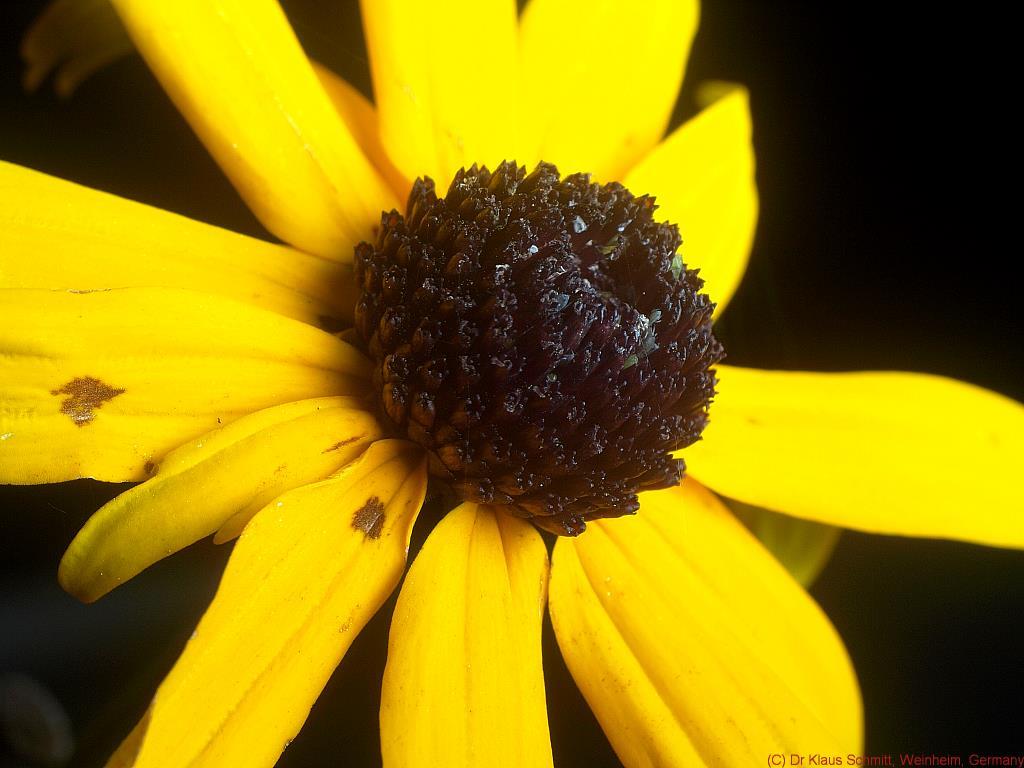
Bidens meets UV-Planar 4/60mm

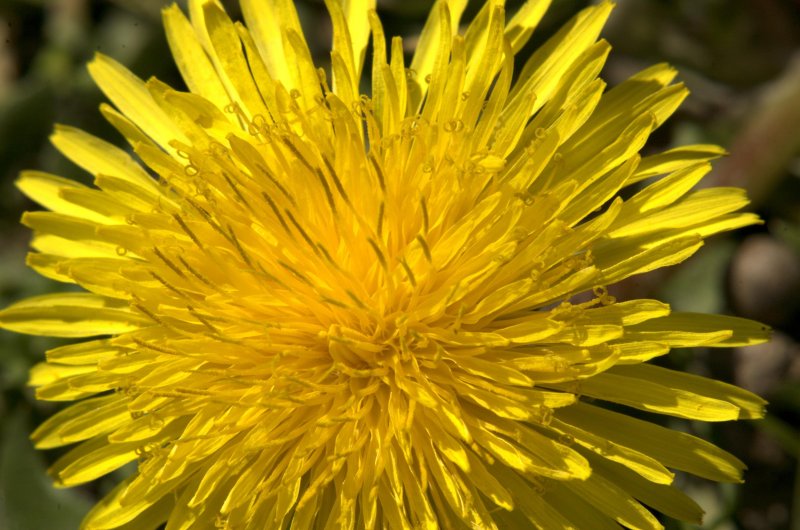
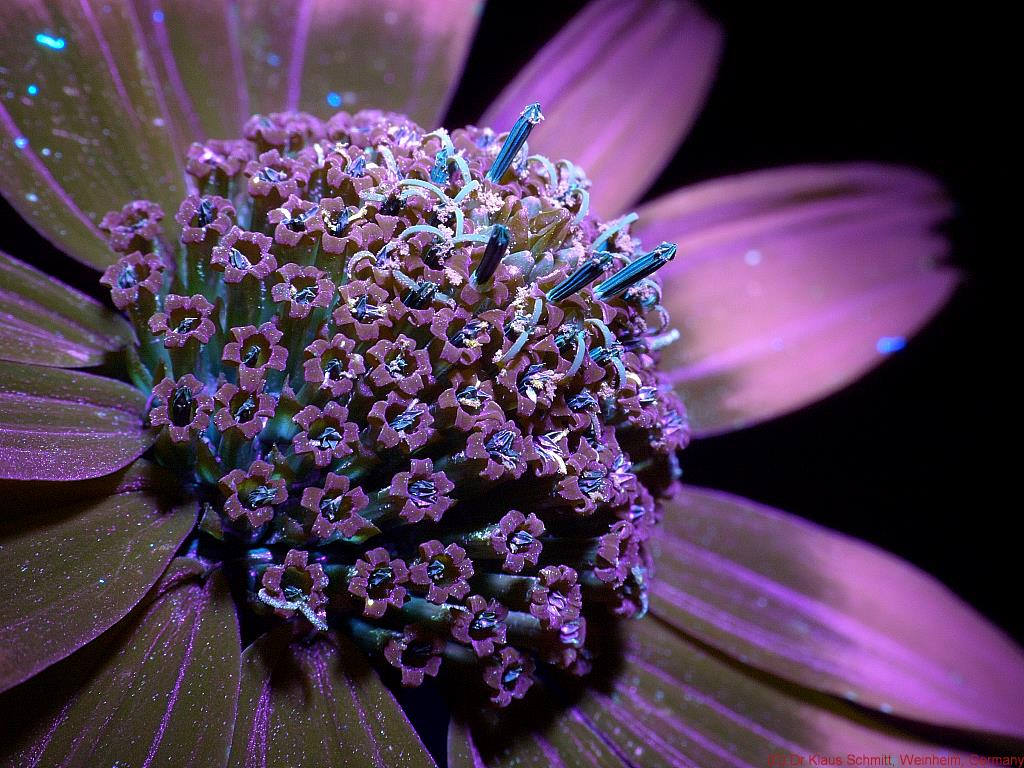
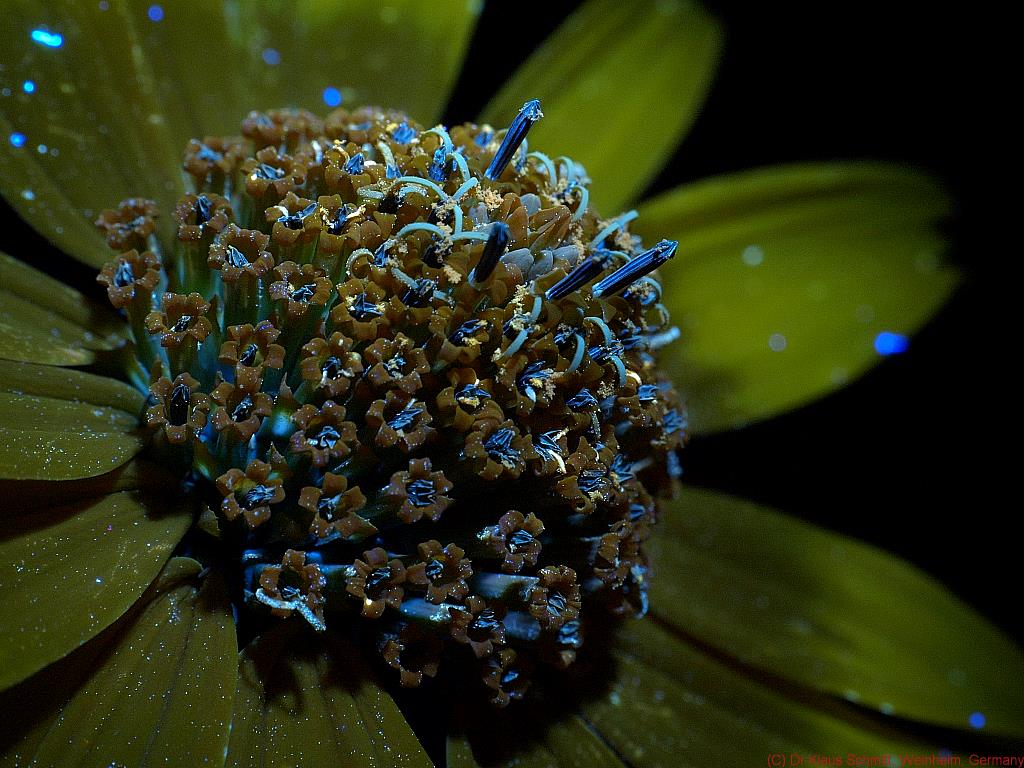
Some Bidens ferulifolia shots today using the famous UV-Planar 4/60mm lens and my proprietary XBV2 butterfly vision mapping filter.

[click on image to see a larger one]

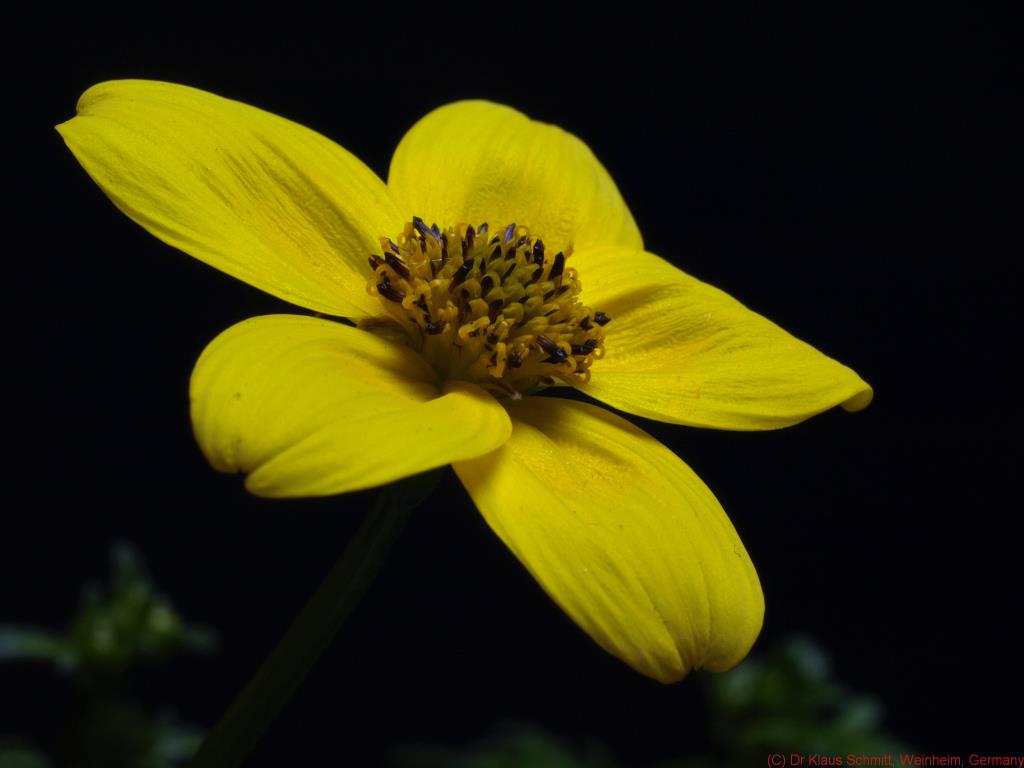
visible light shot: 


butterfly vision shot (simulated, using XBV2 filter): 

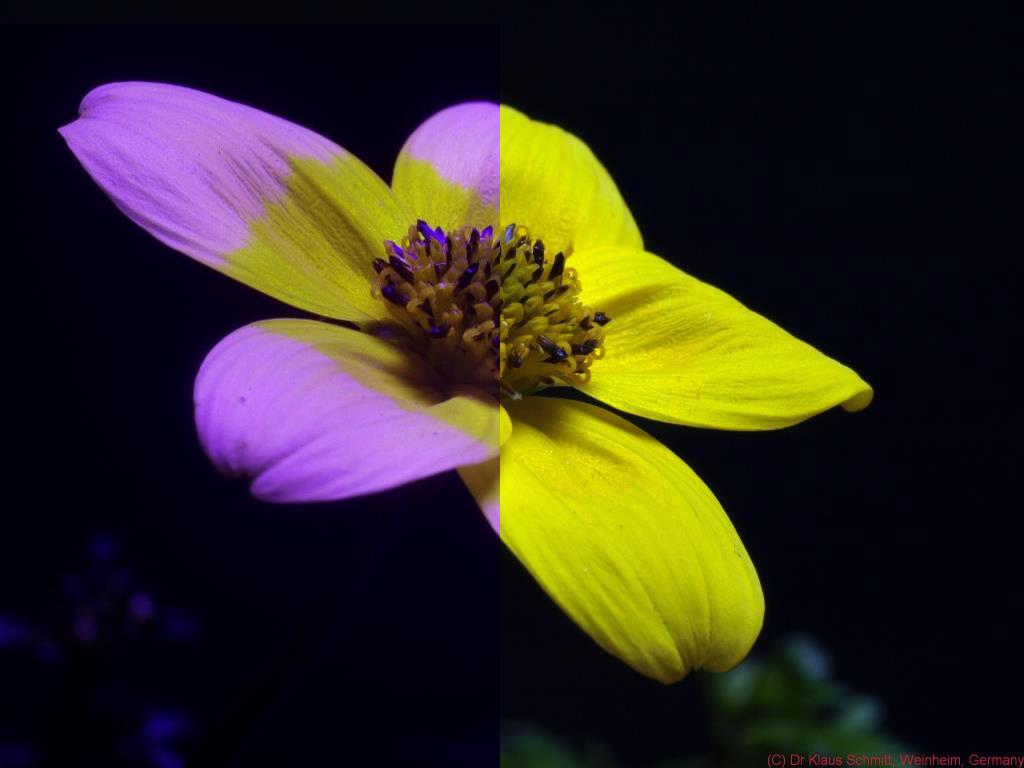
That last image has the ultaviolet image a butterfly (and bee) is able to see, mapped into our human image (blue, green, red) as blue so as to simulate the tetrachromatic butterfly vision.

Here another respresentation showing that side-a-side: 


I'm still amazed about what nature has developed to attract butterflies (and bees) attention!

Stay tuned, more will follow on that fascinating subject...

More info on this very interesting field may be found on my site http://www.pbase.com/kds315/uv_photos

Thursday, October 28, 2010

Calibration of a lens for correct UV focus (focus shift)

I have been asked a lot how to overcome that focus-shift issue when taking reflected UV shots with a non-color corrected "normal" lens (but having useful UV transmission of course...)

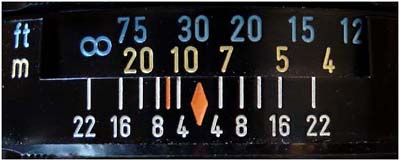
Well, make a blue UV mark like that usually to find red IR mark on your lens and find the right position by refocusing your lens for sharp UV focus. Best works for me to shoot with that lens from a tripod to a meter scale on the ground. The magnified display sometimes is enough to find that point of max. sharpness, but actually processing the images gives a much higher precision.

The coarse first step... 

I take a visual reference shot at position 0 and then UV shots at 0, 4, 8, 11, 16 and find out which one gets closest to the visual reference shot.

The numbers indicate how much I had to turn focus towards the DOF aperture markings on my lens under test (sometimes in the direction of the IR mark, in very rare cases in the opposite direction)


[DOF scale (c) fineart-photography.com]

Now just select the sharpest focus point and you're about done. Repeat for various focusing distances - it may not be the same result. I found that blue UV mark for that lens was around the 11 marking. (And before someone asks, if there are no such markings - make some.)  

Now the fine second step...

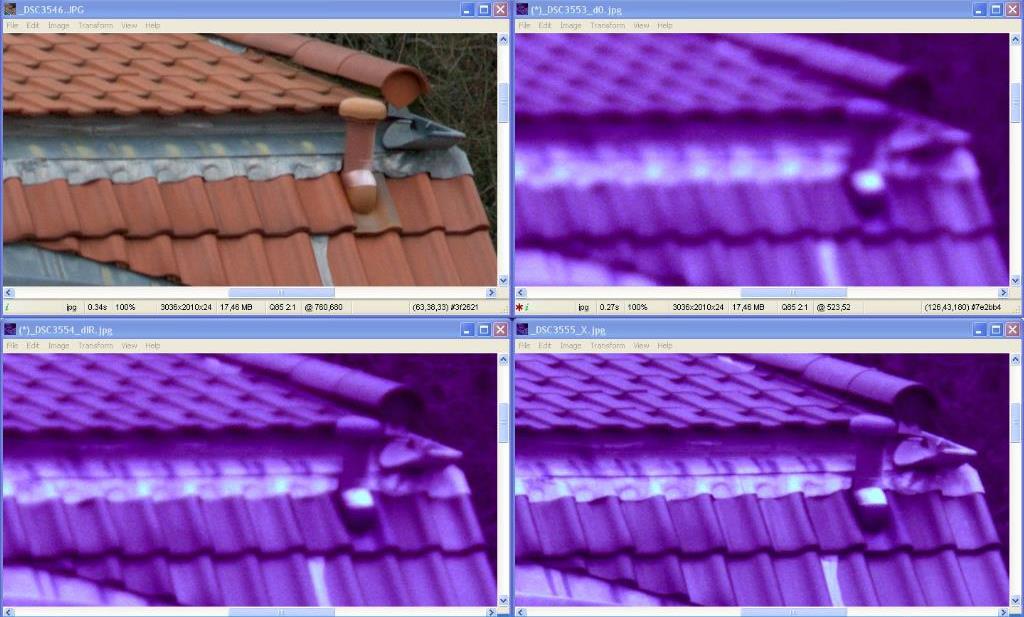
Usually I overlay the visible and the UV image to see the actual focus difference and to see if my solution was correct or if still more adjustment is needed. It is an iterative, time consuming process actually, as it has to be done for different distances, so some patience is needed. 

during adjustment, still 1mm to go: 


after correct adjustment: 


And that was the precise result (top:VIS, middle:UV, bottom VIS overlayed w. UV; focus point was at 12.5mm) 


So the blue UV mark ended somewhere between the 11 and 16 marking for that specific lens.

And here now some real results using that lens, now correctly calibrated for UV:

VIS: 


UV: 


VIS: 


UV: 


Same method applied to a 4/200mm Nikon lens, left VIS, right after UV calibration: [in that case the blue UV mark had to be way off the IR mark...]

infinity: 


medium distance: 


close distance: 


That later lens works best in UV at short to medium distances, but not really that impressive at infinity, caused by its lens design.

Stay tuned, more will follow on that fascinating subject...


More info on this very interesting field may be found on my site http://www.pbase.com/kds315/uv_photos
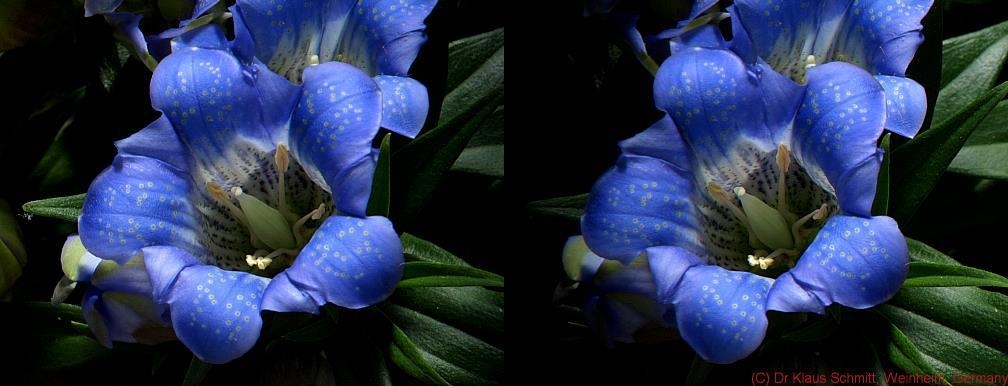
Gentiana 3D stereo, human vs butterfly vision II

Here another presentation of a Gentiana flower, in stereo for crossed eye viewing.

[click on image to see a larger one]


Differential human to butterfly vision (using a different color scheme):


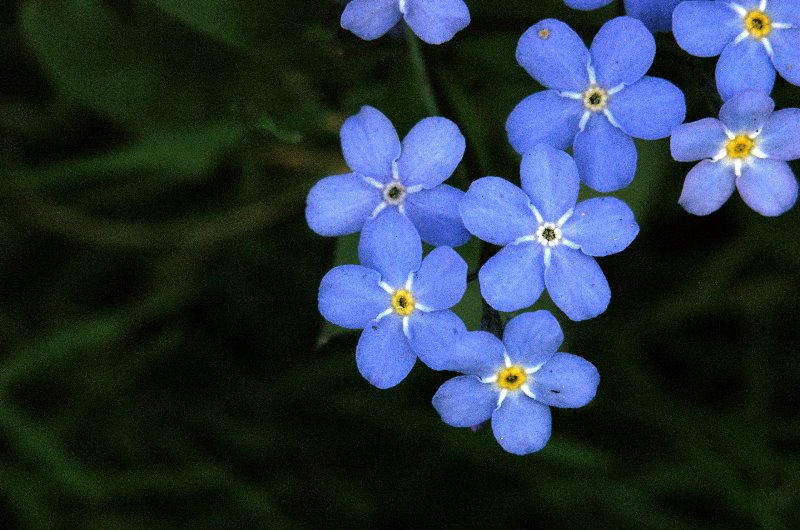
Human vision:


Stay tuned, more will follow on that fascinating subject...

More info on this very interesting field may be found on my site http://www.pbase.com/kds315/uv_photos

Tuesday, October 26, 2010

[UV] Gazania Experiments

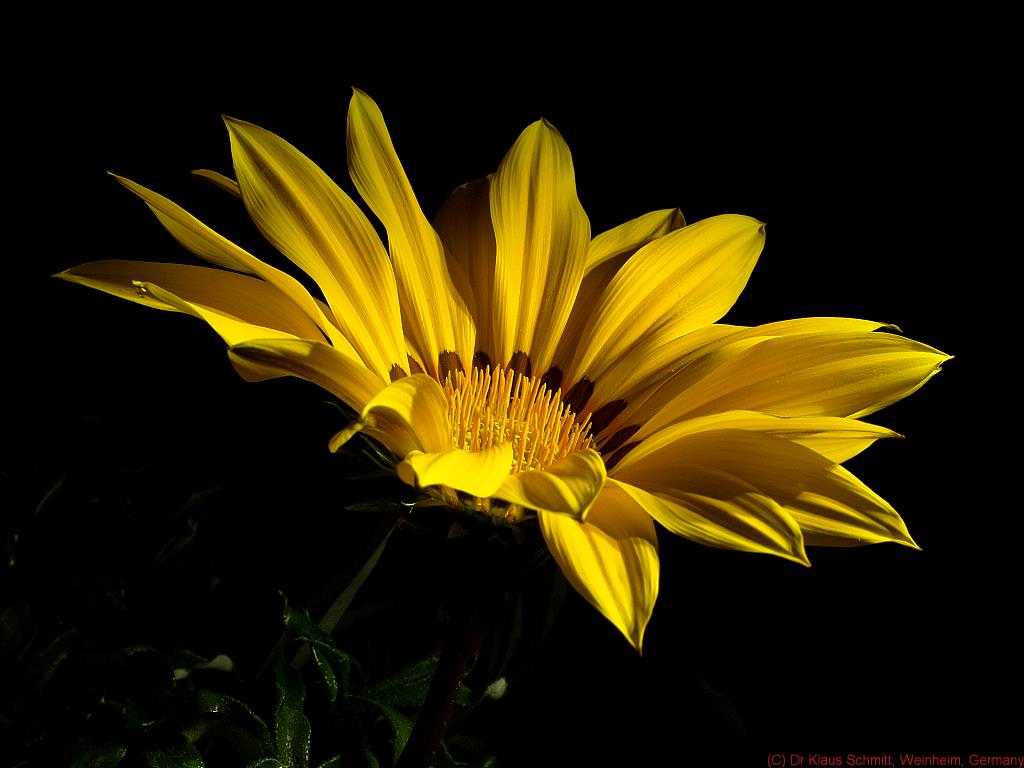
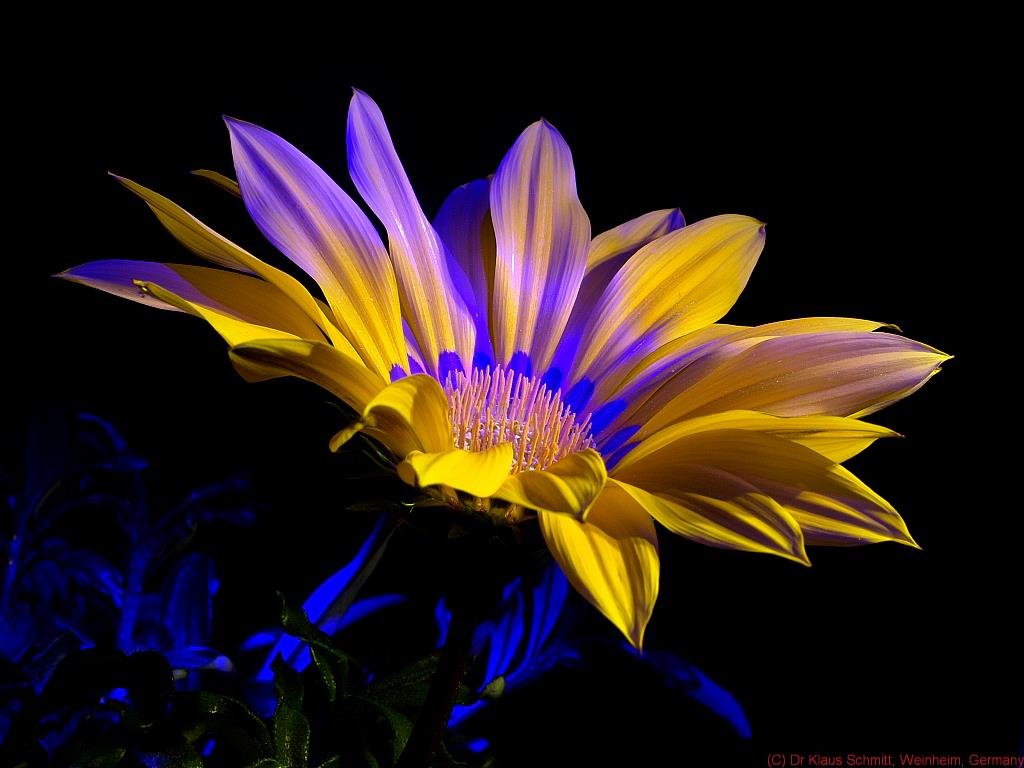
Some Gazania experiments today, shot using a Zeiss UV-Planar 4/60mm. 

visible light shot:


visible + ultraviolet light shot:


well, just eye candy I thought, but then that brownish pattern which lit up so much in UV started to first fascinate me, then made me think about it....

Stay tuned, more will follow on that fascinating subject...

More info on this very interesting field may be found on my site http://www.pbase.com/kds315/uv_photos
Friday, October 1, 2010

[UV] A surprising lens without UV focus shift

Well, I am studying lenses since quite some time and was researching the history of some, when I noticed the same reflection pattern (which is a hint for the lens design) in an previously overlooked lens I have...

Well, I tested it good for 330nm in my spectrometer and in theory it should have no focus shift (or just a tad)...

So best is always to try it out, so here some first tests!

[click on image to see a larger one]

VIS: 


UV (Baader U-filter, 310-390nm):


Long story short - it has hardly any visible focus shift!

Look at these mites and  fine webs!! Pretty fine resolution it has.

More about it later ... and sssshhhh, that lens is a secret until then ;)


Stay tuned, more will follow on that fascinating subject...

More info on this very interesting field may be found on my site http://www.pbase.com/kds315/uv_photos

Tuesday, September 28, 2010

Cover Photo October Issue Journal of Zoology

The new October Issue of the Journal of Zoology is out now. The cover photo is mine, as I am also a co-author of the paper: "Effects of aposematic coloration on predation risk in bumblebees? A comparison between differently coloured populations, with consideration of the ultraviolet" by R. J. Stelzer, N. E. Raine, K. D. Schmitt, L. Chittka

[click on image to see a larger one]


(reproduced with permission from the Zoological Society of London)

Stay tuned, more will follow on that fascinating subject...

More info on this very interesting field may be found on my site http://www.pbase.com/kds315/uv_photos

Friday, September 17, 2010

Nichia UV LED torches for fluorescence photography

Well, since we're at it, let's have a look at UV induced visible fluorescence and how these UV LED torches perform there as compared to a Xenon flash.

Test done under identical conditions, ISO400, f5.6, 41mm quartz fluorite lens, except a Baader UV/IR blocking filter in front of the lens, ISO400, 15sec exposure.

[click on image to see a larger one]

1) UV Led 390nm, Baader U-filtered ´


2) UV Led Nichia 365nm P6, no cut filter in front of taking lens 


3) UV Led Nichia 365nm P6, baader U-filtered, no cut filter in front of taking lens 


4) UV Led Nichia 365nm P6, Baader U-filtered, Baader cut filter in front of taking lens 


5) Xenon UV enhanced studio flash@400Ws filtered through Schott UG1, 3 shots, Baader cut filter in front of taking lens 


Here the Nichia really excells, since both the 390nm and 405 turned out to be of no use, since there is way too much visible light content (>400nm) in the output to be useful for stimulating visible fluorescence (the visible light content of the UV LED actually overlays the fluorescence, thus spoils the result). If the 390nm UV LED is filtered through a Baader U-filter, there is not enough UV left to stimulate fluorescence (#1)

#2 shows the result of using the Nichia LED w/o cut filter in front of the taking lens nor was the beam filtered. The little but noticeable visible light content of the LED beam plus the reflected UV both spoil the result.

#3 is an interesting result as the Nichia beam was Baader-U filtered and it even shows red and NIR stimulated chlorophyllum fluorescence (>650nm) as well as visible fluorescence. There might also be a reflected UV content, but that cannot be determined.

#4 shows the result of Nichia UV stimulated pure visible fluorescence (400-650nm), this is the result desired.

#5 shows the comparison shot if a Xenon flash is used to stimulated visible fluorescence. Since quite some UV is needed for that, three flashes had to be fired within 15sec open shutter. There is IR leakage from the Xenon flash, so this shows the advantage of the Nichia UV LED for stimulating visible fluorescence.


Stay tuned, more will follow on that fascinating subject...

More info on this very interesting field may be found on my site http://www.pbase.com/kds315/uv_photos