Monday, June 6, 2011

[UV] on wide angle lens whitebalance using a GH1-UVIR

In previous posts on whitebalancing using my ReflectionDisc I warned about generalizing results and stated that it is only valid for that camera, that lens, that filter and that lighting situation. Well, I was curious, how much would change if two parameters were changed: a) using a wide angle lens (with substantial less UV transmission), b) lighting situation
So, using my GH1-UVIR, a Cerco 94mm lens, Baader-U filter and sunlight, I had preset a whitebalance for a similarely lit situation using my Reflection Disc, call that WB1 for now.

The weather today was very overcast and no sun, just about 250 microWatt/cm² UV-A (as measured using a calibrated Minolta UV-A meter).
The lens was changed, from a color corrected, flat transmitting (<300nm) quartz / fluorite lens to a non-color corrected not that much UV transmitting conventional wide angle lens, a 2.8/28mm in that case, which barely reaches about 350nm, to see which impact that would have. A set WB was done for that 28mm wide angle lens, call that WB2.
So what we see here is:
1) top left: previously set sunlight WB used (WB1)
2) top right: correct WB for that lighting situation set (WB2)
3) bottom left: previously set sunlight WB used (WB1), bw version with histogram
4) bottom right: correct WB for that lighting situation set (WB2); bw version with histogram
[click on image to see a larger one]
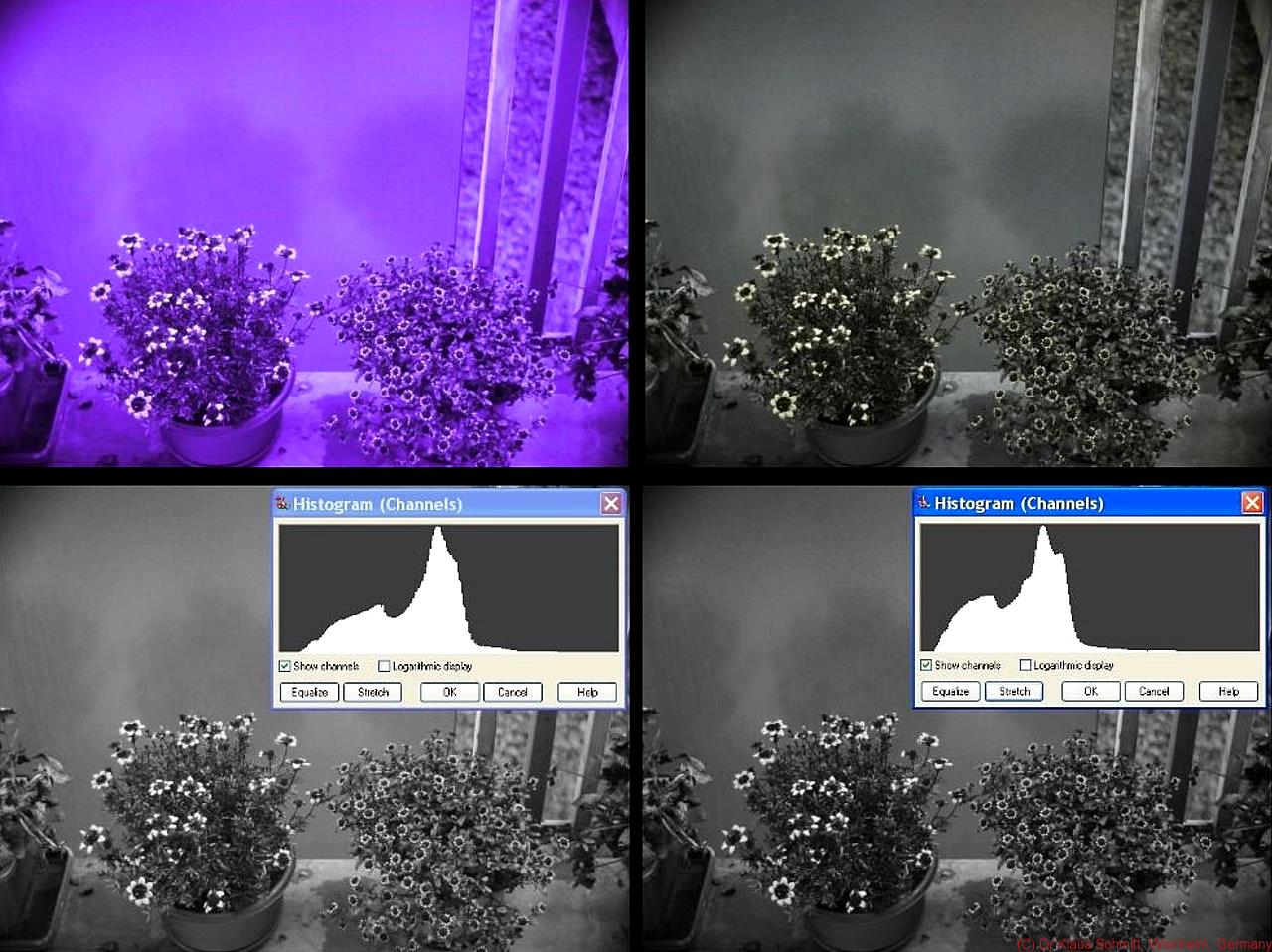


Here now quite some difference in whitebalancing may be noted; the preset WB1 was quite different from the correct WB2 for that lens (and lighting situation). Major impact had the lens change, not the changed lighting. As may be seen on the histogram, the correctly whitebalanced image is about 1/4 - 1/3 stop less exposed than the incorrectly one (both images were identically exposed at 1/1.6sec, same ISO) , so consequently using the correct WB at shooting time would require a somewhat higher exposure.

SUMMARY: UV whitebalance, for lenses having very different spectral (UV-) transmission, should be correctly set at exposure, not later in post processing and properly exposed (a tad more).
P.S.: I have tested at different exposure values (higher + lower) but the principal result remained the same.


Stay tuned, more will follow on that fascinating subject...

More info on this very interesting field may be found on my site http://www.pbase.com/kds315/uv_photos

Sunday, June 5, 2011

[UV] on whitebalance tolerance using a GH1-UVIR

In previous posts on whitebalancing using my ReflectionDisc I warned about generalizing results and stated that it is only valid for that camera, that lens, that filter and that lighting situation. Well, I was curious, how much would change if two parameters were changed: a) lens in use, b) lighting situation

So, using my GH1-UVIR, a Cerco 94mm lens, Baader-U filter and sunlight, I had preset a whitebalance for that situation using my Reflection Disc, call that WB1 for now.

The weather today was different, quite well lit, but overcast and no sun. A set WB was done, call that WB2.
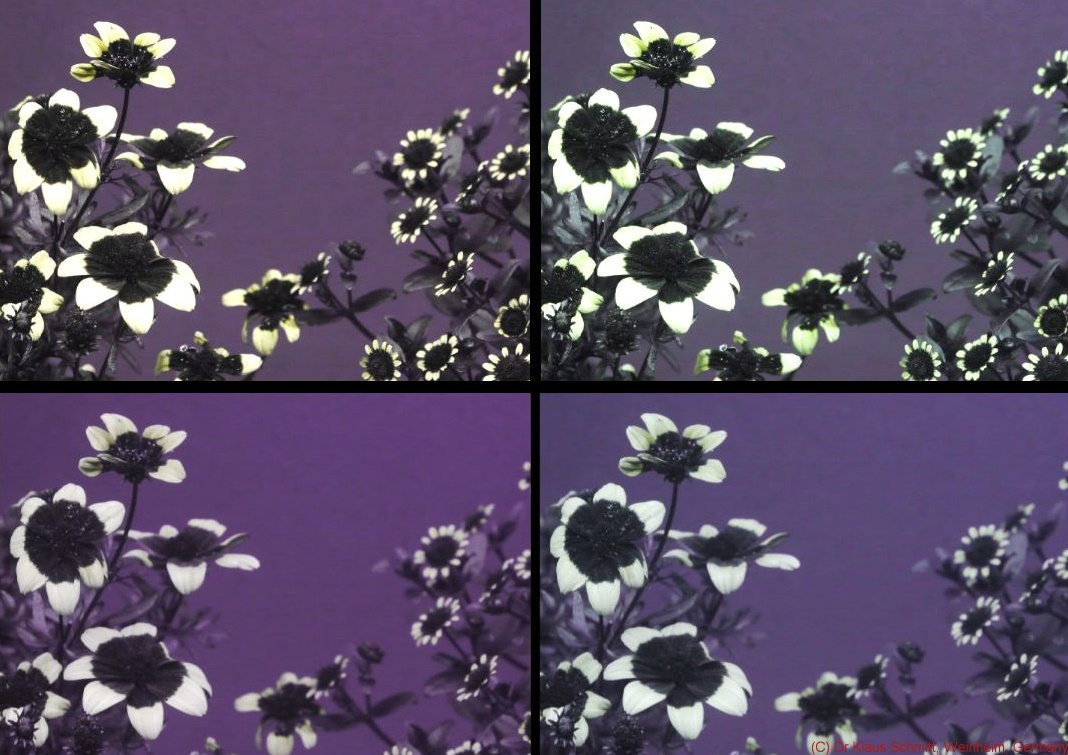
Also the lens was changed, form a color corrected, flat transmitting (<300nm) quartz / fluorite lens to a non-color corrected suitably UV transmitting conventional enlarger lens, which reaches about 350nm, to see which impact that would have. So what we see here is:
1) top left: Cerco 94mm lens, correct WB for that lighting situation set (WB2)
2) top right: Cerco 94mm lens, previously set sunlight WB used (WB1)
3) bottom left: 95mm enlarger lens, correct WB for that lighting situation set (WB2)
4) bottom right: 95mm enlarger lens, previously set sunlight WB used (WB1)
[click on image to see a larger one]


Interesting to note, that only the blue and red channels are shifted just a bit, which can easily be corrected afterwards in post processing, but the image out of the camera is still quite close to the "correct" one.

That's important if you're out in the field and the lighting situation changes and / or different lenses are used (as long as they are suitably UV transmitting; this may not work for white angle lenses having hardly any UV transmission). For critical scientific work I would of course always do proper whitebalancing upfront.

SUMMARY: UV whitebalance, once correctly set, works suitably well also under changed situations (light, lens)


Stay tuned, more will follow on that fascinating subject...

More info on this very interesting field may be found on my site http://www.pbase.com/kds315/uv_photos
Saturday, June 4, 2011

Wednesday, June 1, 2011

[UV] Sunlight vs Nichia 365nm UV LED - colors

A quick experiment using the same preset WhiteBalance using my ReflectionDisc.

UV sensitive camera, Baader-U filter, ReflectionDisc for in-camera WB

[click on image to see a larger one]

Left: Nichia 365nm UV LED; Right: Sunlight:


Interesting to note, that the WB still holds and the proof for the wavelength "used" is in the middle (frosted glass on my balcony) - just compare the colors with the "UV color palette" I have pasted on top.


Stay tuned, more will follow on that fascinating subject...

More info on this very interesting field may be found on my site http://www.pbase.com/kds315/uv_photos

Tuesday, May 31, 2011

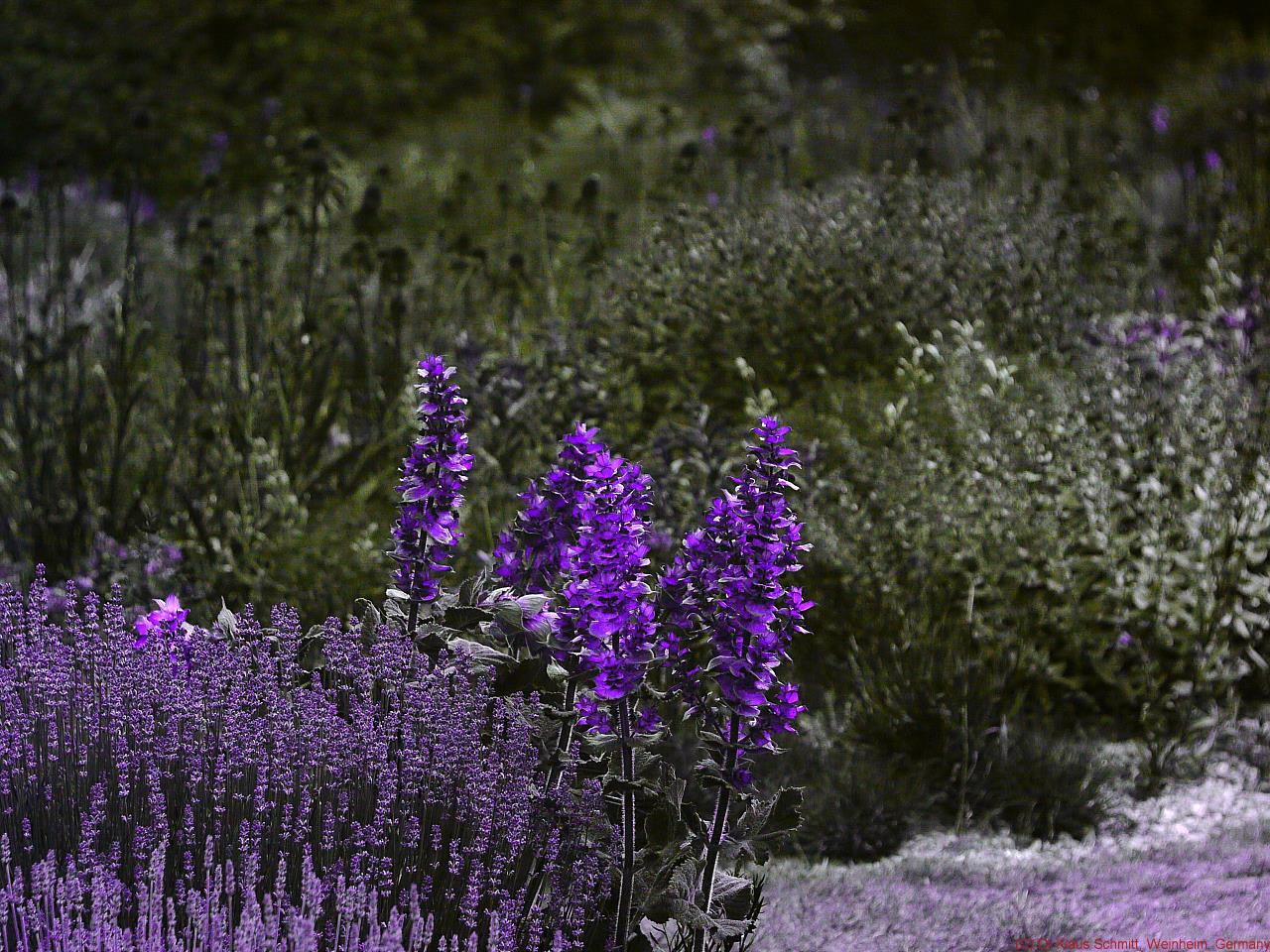
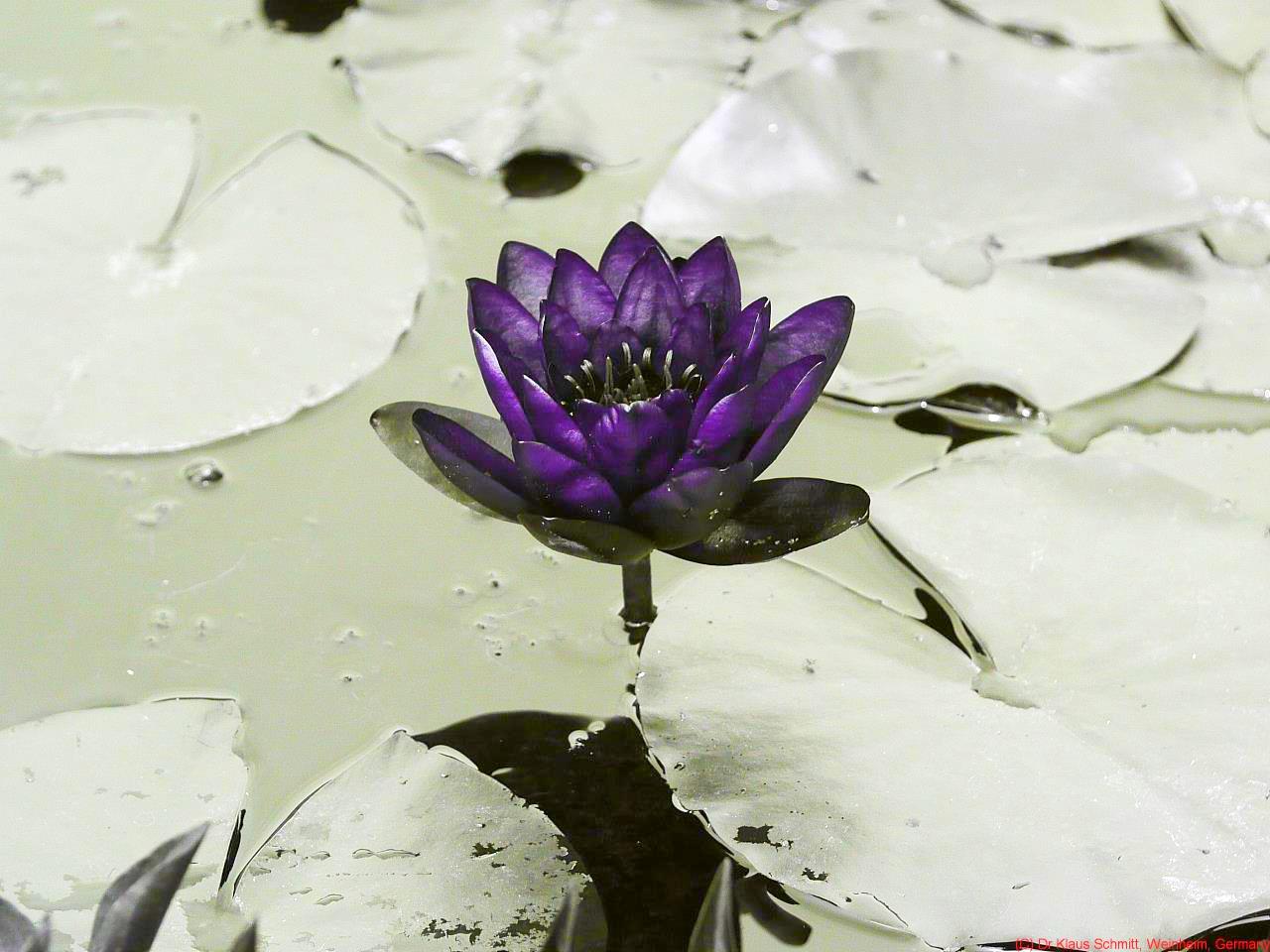
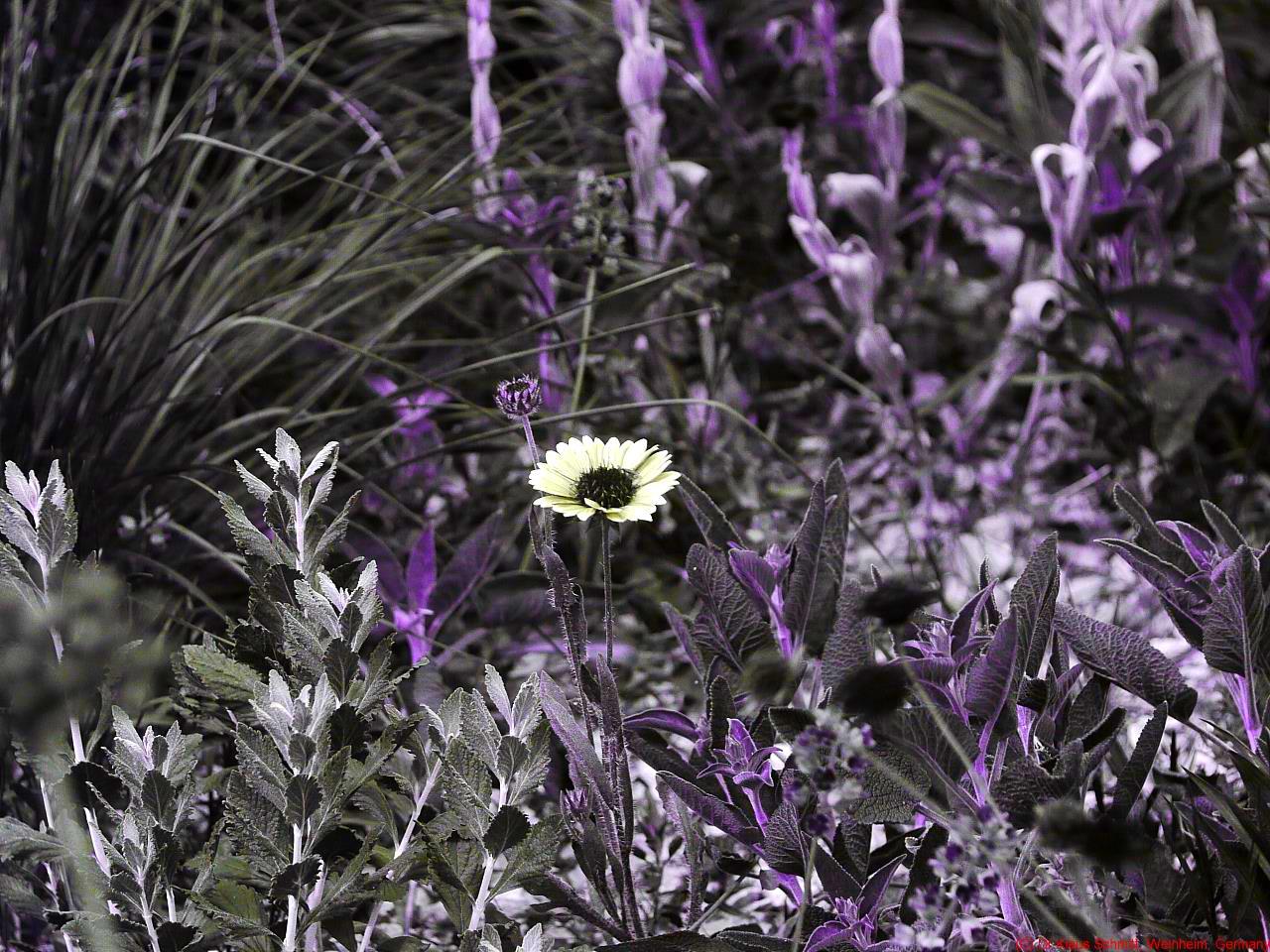
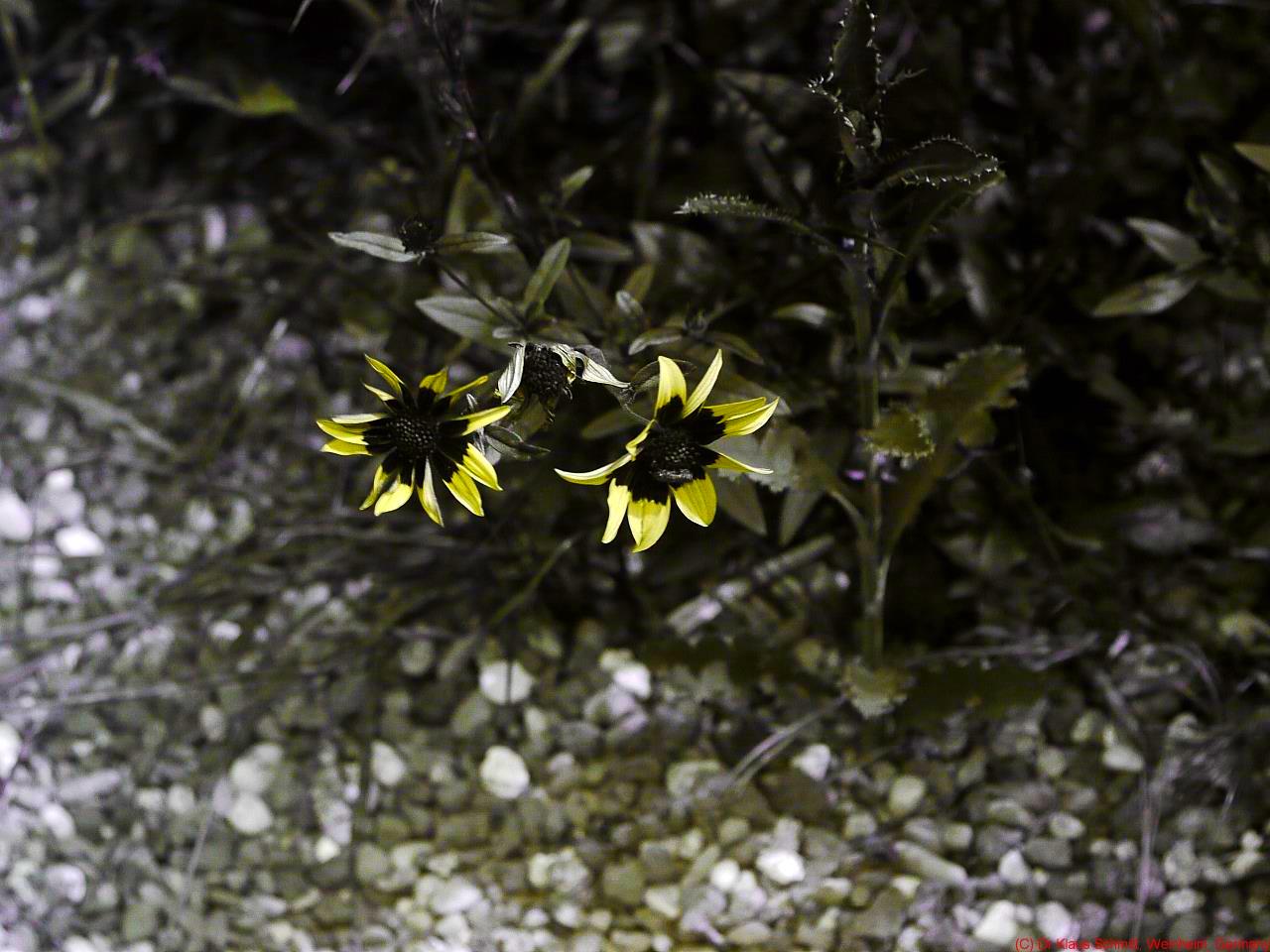
Reflected UV shots in the park today - decoding UV colors

Just preparing and testing for a field trip, so some output here for your - hopefully - viewing pleasure...

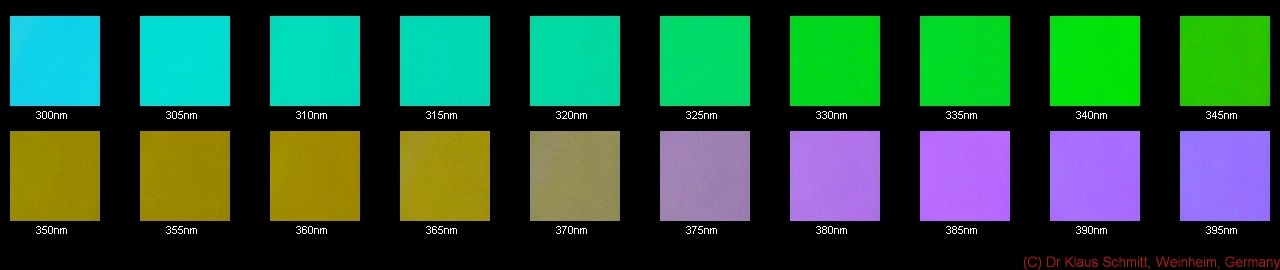
UV camera, Baader-U filter, my ReflectionDisc for in-camera whitebalancind, leading to the following UV "color" palette:


[click on image to see a larger one]

The 375-390nm group (violet UV reflection):


The 350-370nm group (yellow UV reflection):


That last shot, a Helianthus tuberosus (in female state) image is quite interesting, as the full blooming flower shows a 350-370nm reflection, whereas the younger buds show some in the 375-390nm range. Obviously there are development stages in UV reflections, I would assume .

[excuse the little motion blur in some images, it was quite windy today...]

Stay tuned, more will follow on that fascinating subject...

More info on this very interesting field may be found on my site http://www.pbase.com/kds315/uv_photos
Wednesday, May 25, 2011

UVIR camera relative channel sensitivity for UV

(currently being reworked)

Full spectrum camera spectral response; simple test

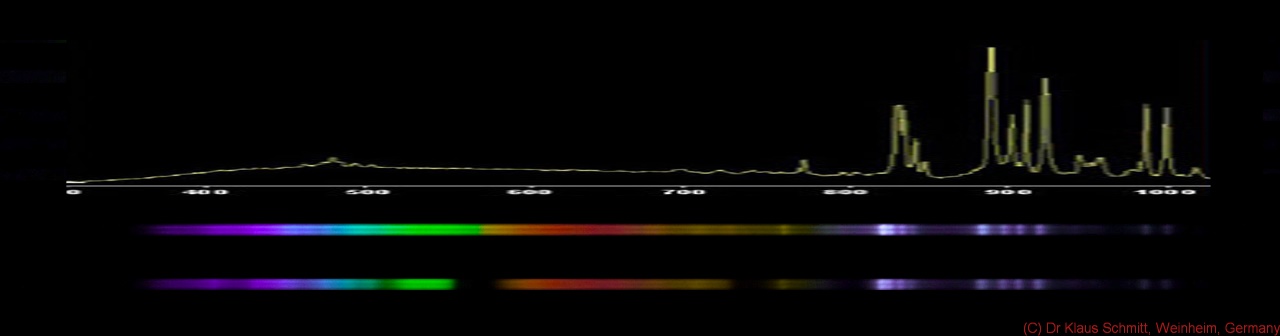
To figure out the approximate spectral response of my full spectrum converted camera, I played around a bit with some gratings and my stabilized, continuous Xenon light source. I also found a linear spectra of my Xenon lamp, so with its help an approximate calibration of the recorded spectra is possible.

The first line is the Xenon spectra, the second the unfiltered spectra as recorded by the UV sensitive camera, the third line filtered through a Didymium calibration filter.

[click on image to see a larger one]


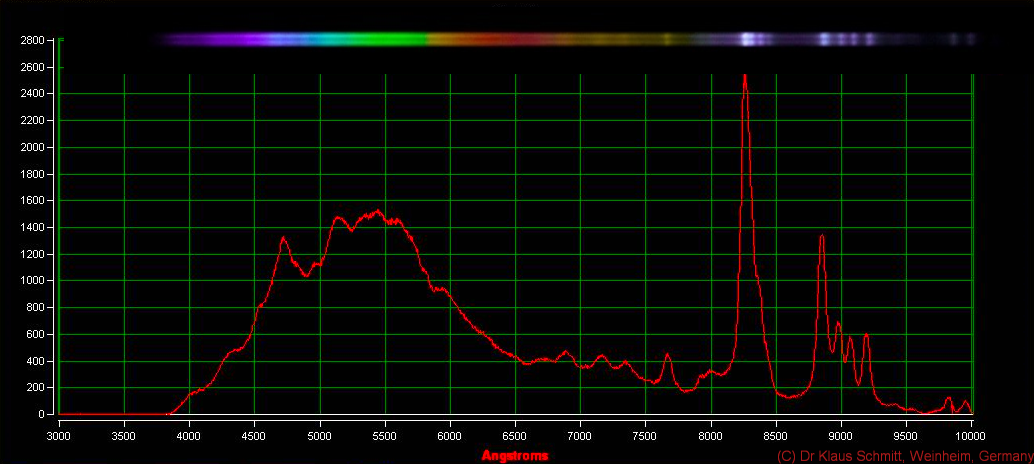
So from that and the color tests I published before, I would estimate that this full spectrum camera has a 320nm - 1000nm UV-VIS-NIR response. Actually I think it is more, as in such an image the exposure range limits the recording of fainter responses at the ends of the spectrum.

Found some better software which allows to read out such optical spectra. Here the results of using such:


On top the spectra as taken by photo, underneath the read out and calibrated spectra using known data high pressure Xenon spectra. The x-axis is in Angstroms, so knowing that 10A equals 1nm, it is easy to understand.

Again, please remember that the grating used was not really made for UV, but for VIS + NIR, so no wonder the spectra ends around 380nm. The real sensitivity to UV of that converted camera is quite higher, but I haven't found its limits yet.


Stay tuned, more will follow on that fascinating subject...

More info on this very interesting field may be found on my site http://www.pbase.com/kds315/uv_photos