Saturday, July 1, 2017

UV-Nikkor 105mm vs Coastal Optical systems 105mm lens for reflected ultraviolet (UV) photography

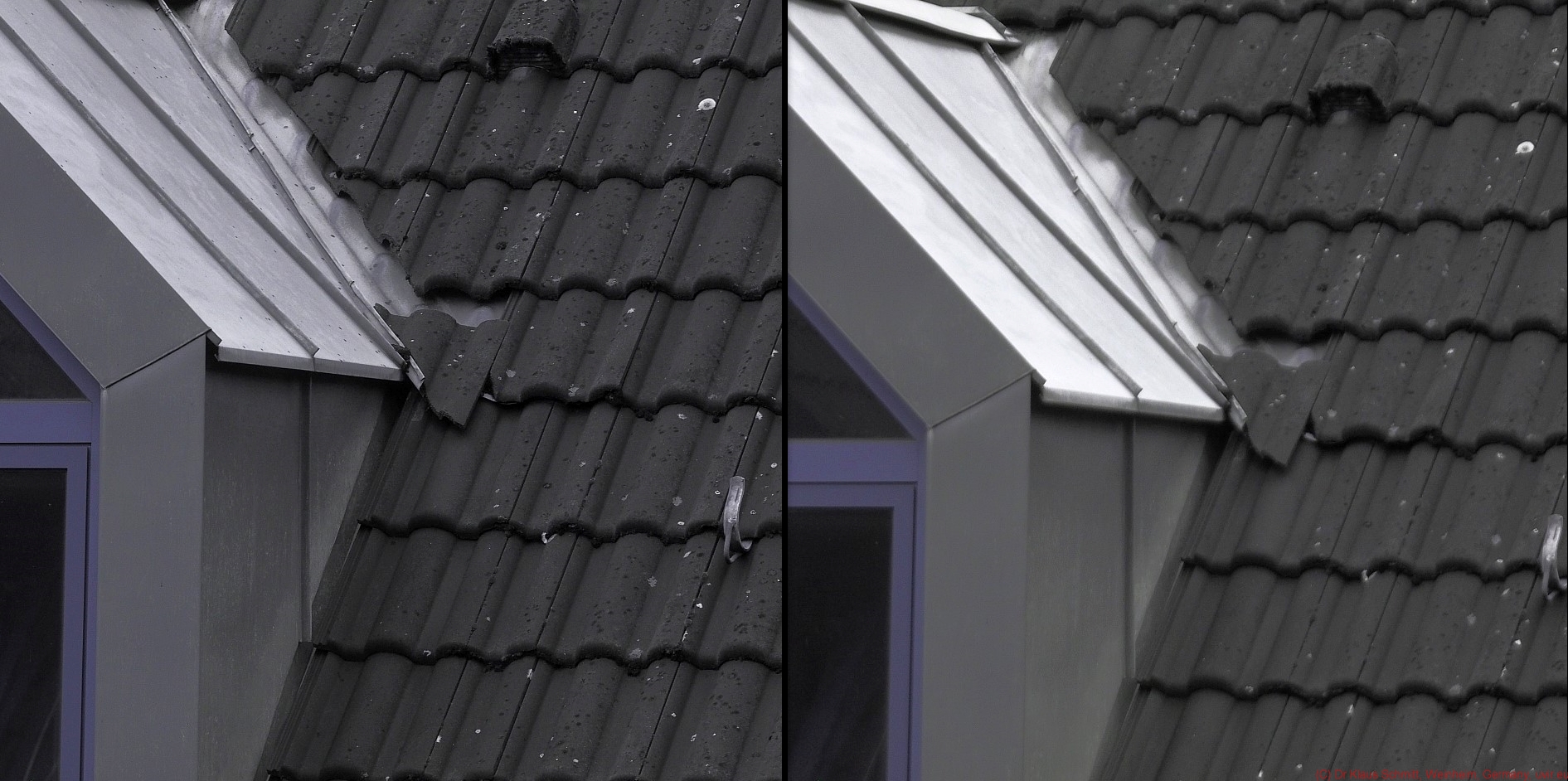
Today about shooting with two dedicated UV lenses, the Coastal Optical Systems / Jenoptik UV-Micro-Apo f4 / 105mm and the classic UV lens, the UV-Nikkor f4.5 / 105mm in a non-scientific photographic comparision at shooting in reflected UV, using the Baader-U filter at natural light. Both lenses were used with a long 80mm sunshade, to avoid diminished contrast, which may happen if shot without.

[click on image to see a larger one]

reflected UV images taken at f4.5:

reflected UV images taken at f8:


The UV-Nikkor 105mm image is shown on the left side, the Coastal Optical Systems 105mm on the right side. First batch was shot at f4.5, second batch at f8. White balance was done for the UV-Nikkor 105mm.

The UV-Nikkor 105mm seems to have an edge over the Coastal Optics 105mm in terms of sharpness and contrast, especially when used fully open at f4.5, but stopped down to f8 the difference gets significantly smaller, as the Coastal gains quite a bit of sharpness and also contrast.

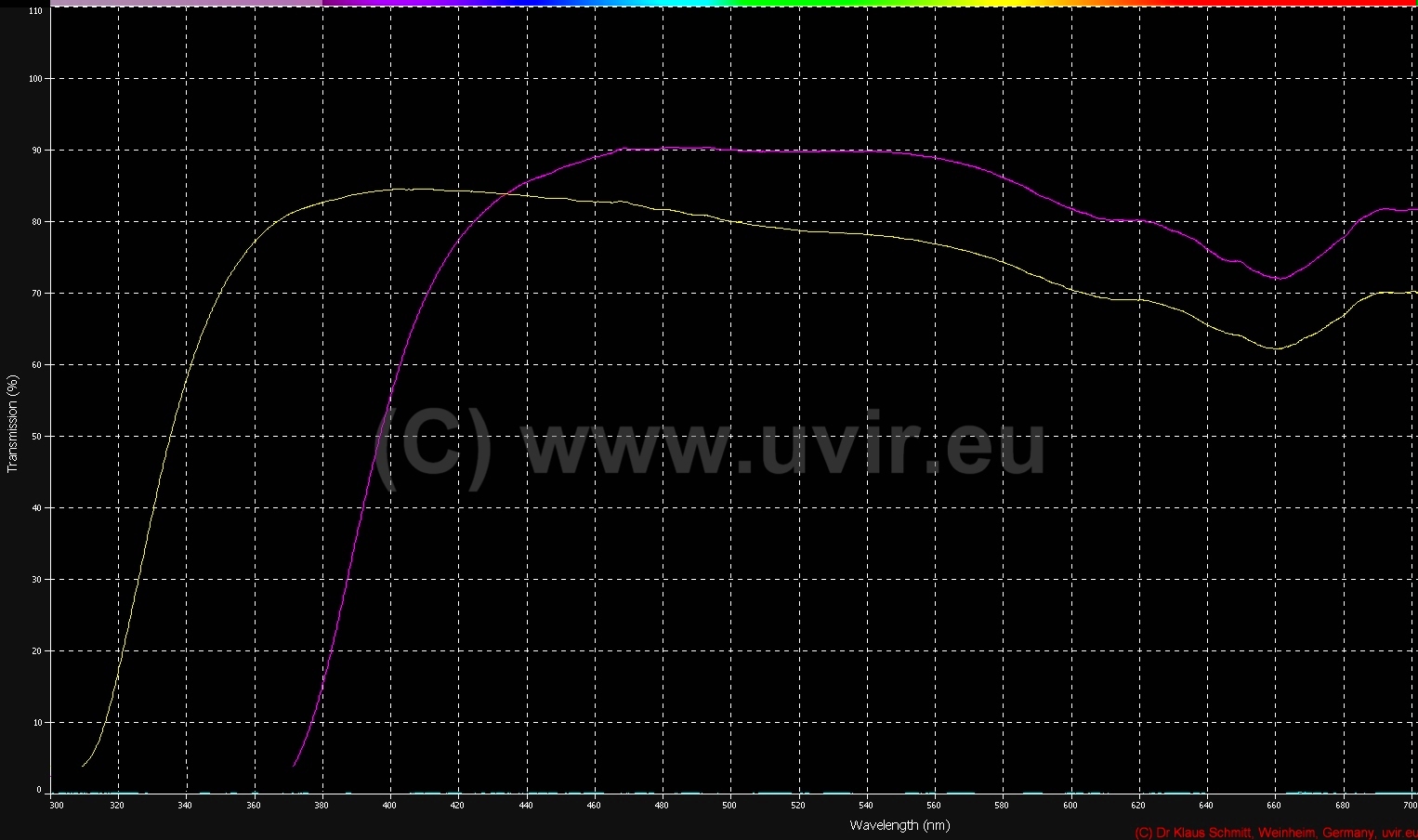
Both lenses require about the same white balance, due to their flat UV transmission (more about that later) and show about identical exposure, with exposure times having a slight nod towards the Coastal Optics lens (1/3 stop less), which in practice is insignificant.

Stay tuned, more will follow on that fascinating subject...

More info on this very interesting field may be found on my site http://www.pbase.com/kds315/uv_photos

Using a proper sunshade for best UV results using a Coastal Optical Systems / Jenoptik f4 / 105mm

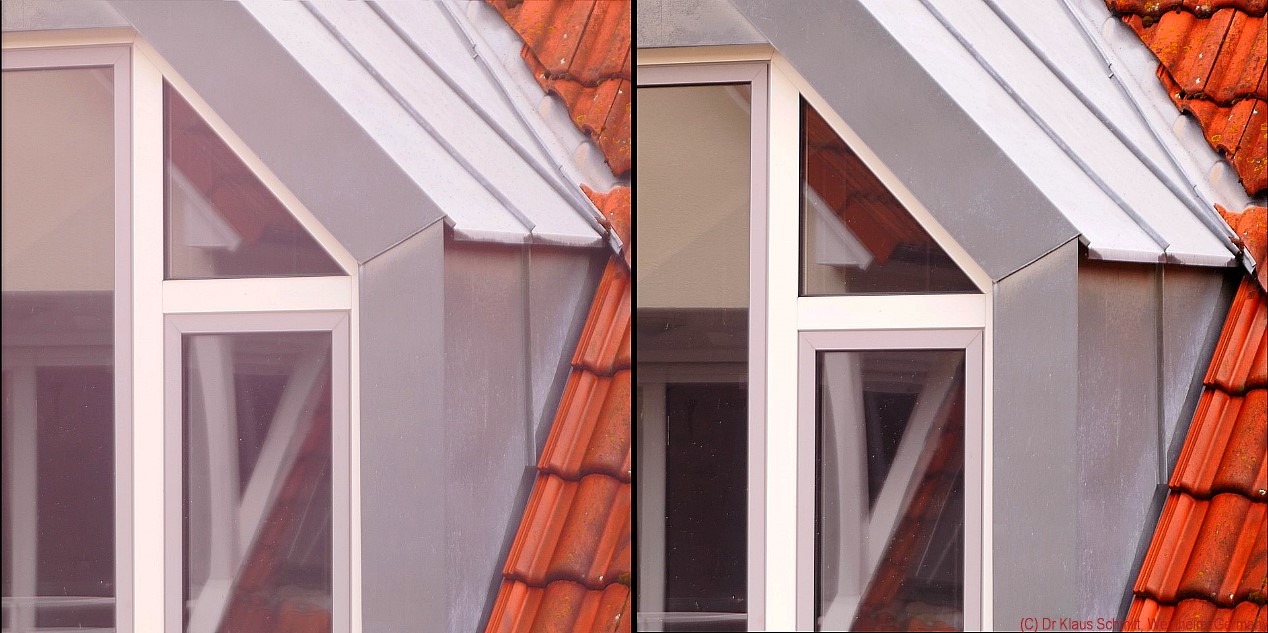
Today about shooting with an UV lens (Coastal Optical Systems / Jenoptik UV-Micro-Apo f4 / 105mm) and considering how delicate those beasts can be to handle; here about using the right sunshade. Sounds rather boring actually, as we all rely on modern multicoated lenses and on my excursions I hardly ever see a photographer using his sunshade. But well, UV photography is a rather tricky subject anyway, and all aspects need consideration...

[click on image to see a larger one]


These are first normal visible light images, second reflected UV images and as one clearly sees here, using a sunshade (right side) can be rather critical, as the left image proves, showing very low contrast. In my case here, I used an 80mm deep shade for maximum effect, but w/o causing vignetting.

Stay tuned, more will follow on that fascinating subject...

More info on this very interesting field may be found on my site http://www.pbase.com/kds315/uv_photos
Friday, June 30, 2017

Petri Kuribayashi 35mm vs Kyoei E-Acall 50mm lens for reflected UV photography VII

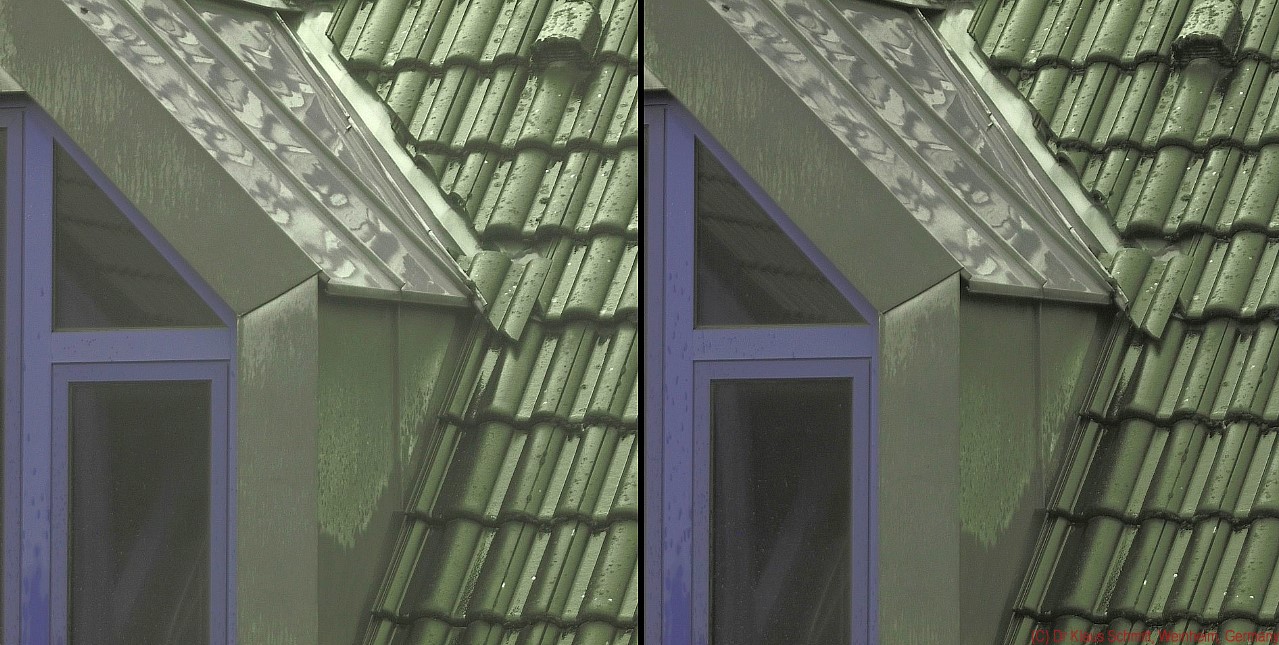
Today a spectrometric test using that previously mentioned Petri Kuribayashi f3.5/35mm lens, compared to a recently found Kyoei E-Acall f3.5/50mm enlarger lens, as a proof that both actually have a very useful lens transmission, especially in UV.

[click on image to see a larger one]


The Kuribayashi 35mm still reaches deep into UV, even a bit below 320nm and shows a rather high UV at 365nm transmission of over 80%. However the Kyoei E-Acall f3.5/50mm enlarger lens seems to be quite similar, reaches beyond 320nm too and has a tad above 70% UV transmission at 365nm, so another useful addition to the rather short list of UV capable lenses. It has a different blueish coating, compared to the golden coating the 35mm Kuri has, hence suppressing a bit the blue and UV area.

I will test how it performs as a UV taking lens soon, time permitting.

I have written about those lenses before HERE

Stay tuned, more will follow on that fascinating subject...

More info on this very interesting field may be found on my site http://www.pbase.com/kds315/uv_photos
Monday, June 12, 2017

White balancing options: SPECTRALON (R) versus sintered PTFE versus virgin white PTFE / Teflon (R)

Today a spectrometric test of materials used for white balancing of reflected UV photography: SPECTRALON (R) calibrated reflection standard made and sold by company LABSPHERE, sintered porous PTFE (porous filter discs, as used in filters for chemical processes and medicine) and virgin white PTFE (white extruded industrial material for various purposes sold as plates, cut discs etc.) to see which of these materials would be suitable for the UV-VIS range of 300 - 700nm. Many years ago I had proposed to use virgin white Teflon (R) / PTFE as a cheap and easy to get material.

[click on image to see a larger one]


The 100% (green, hard to see) line is the reflection of the SPECTRALON (R) reflection standart as sold by LABSPHERE and is used as a refence. The yellow line indicates the reflection of some seemingly sintered PTFE, now sold as white balance filter mounted into filters rings (52mm in this case), originally made and sold as 50mm porous filter material for chemical and medical purposes. This latter material reflects rather evenly between 80-83%. The virgin PTFE in comparision has a more uneven reflection of 72-75% (>320nm), down to 68% below 320nm. For amateur photographic purposes the two cheaper materials provide sufficient evenness, with an edge in favour of the sintered PTFE. For professional applications, both are however no alternative to the industry standard SPECTRALON (R) which shows outstanding evenness.

Remark: all such materials are extremely sensitive to dirt, fingerprints etc. which reduces the UV reflection massively, so have to be kept clean at all times and need to be cleaned asap if so contaminated. Best to clean is to brush with purified water, a detergent and ethanol, then rinse with purified water, then let dry in a dust and lint free environment or dry with pressured clean air.

Stay tuned, more will follow on that fascinating subject...

More info on this very interesting field may be found on my site http://www.pbase.com/kds315/uv_photos

Monday, May 8, 2017

Petri Kuribayashi 35mm vs Kyoei Acall 80mm lens for reflected UV photography VI

Today a spectrometric test using that previously mentioned Petri Kuribayashi f3.5/35mm lens, compared to a Kyoei Acall f3.5/80mm lens in M44 thread mount, as a proof that both actually have a very useful lens transmission, especially in UV.

[click on image to see a larger one]


The Kuribayashi 35mm still reaches deeper into UV, even a bit below 320nm and shows a rather high UV at 365nm transmission of over 80%. However the Kyoei Acall f3.5/80mm short tele lens seems to be quite similar, reaches beyond 340nm and has a 70% UV transmission at 365nm, just 10% lower!

I have written about that lens before HERE

Stay tuned, more will follow on that fascinating subject...

More info on this very interesting field may be found on my site http://www.pbase.com/kds315/uv_photos

Thursday, April 6, 2017

Petri Kuribayashi 35mm vs Kyoei Acall 180mm lens for reflected UV photography V

Today a spectrometric test using that previously mentioned Petri Kuribayashi f3.5/35mm lens, compared to a Kyoei Acall f3.5/180mm lens in M42 thread mount, as a proof that both actually have a very different lens transmission, especially in UV.

[click on image to see a larger one]


The Kuribayashi 35mm reaches much deeper into UV, even a bit below 320nm and shows a rather high UV at 365nm transmission of over 80%. However the Kyoei Acall f3.5/180mm tele lens seems to be a very different beast, as it has no useful at all UV transmission!

I have written about that lens before HERE

Stay tuned, more will follow on that fascinating subject...

More info on this very interesting field may be found on my site http://www.pbase.com/kds315/uv_photos
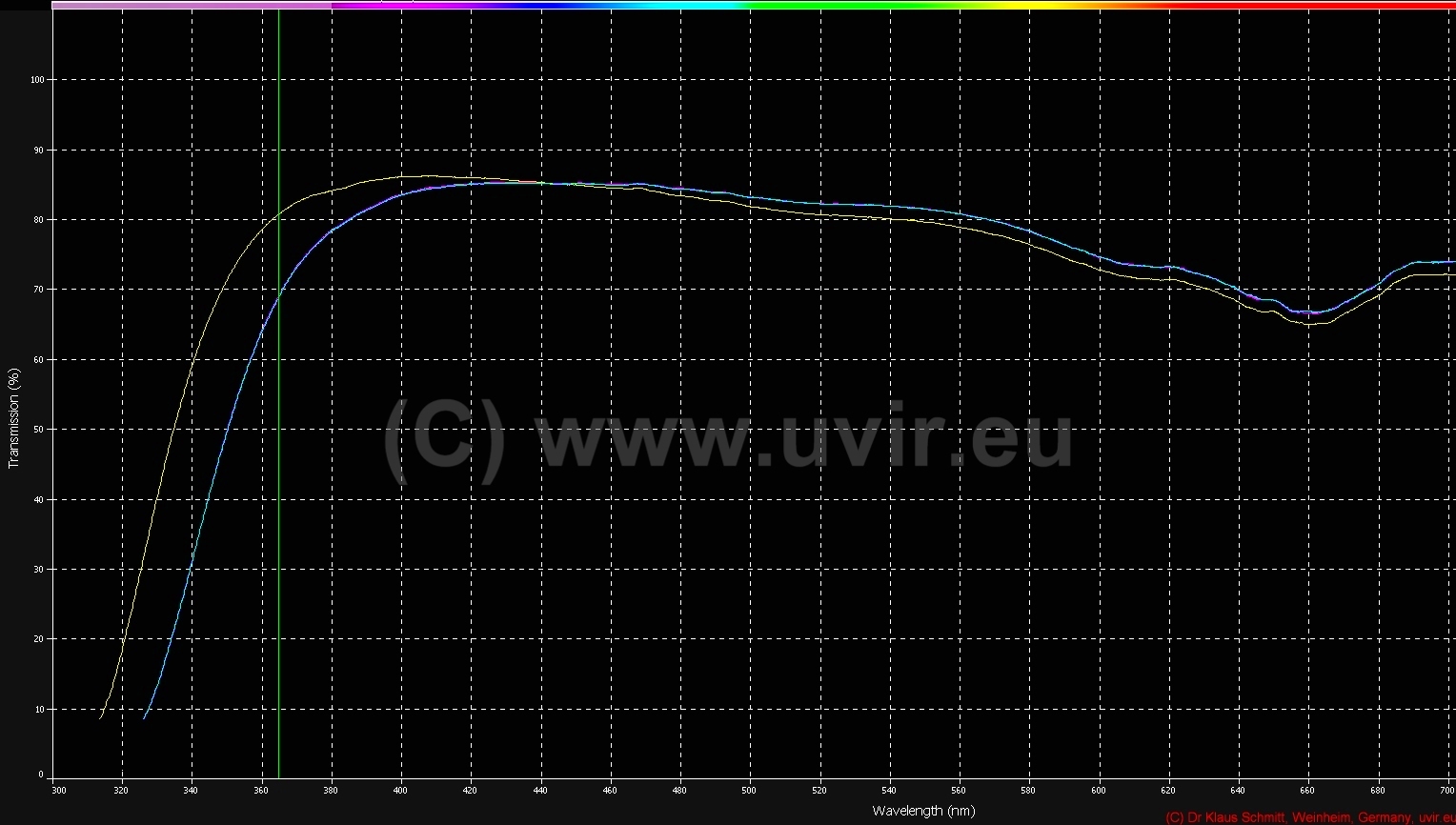
Petri Kuribayashi 35mm vs Kyoei W. Acall 35mm lens for reflected UV photography IV

Today a spectrometric test using that previously mentioned Petri Kuribayashi f3.5/35mm lens, compared to the W. Acall f3.5/35mm lens in Leica Thread Mount (LTM), as a proof that both actually have a very different lens transmission, especially in UV.

[click on image to see a larger one]


The Kuribayashi 35mm reaches much deeper into UV, even a bit below 320nm and shows a rather high UV at 365nm transmission of over 80%. However the similar looking W. Acall 35mm seems to be a very different beast, as it has at 365nm only approx 5% UV transmission, so basically none useful at all!

I have written about that lens before HERE

Stay tuned, more will follow on that fascinating subject...

More info on this very interesting field may be found on my site http://www.pbase.com/kds315/uv_photos