Friday, February 11, 2011

Filter glass requirements for camera modification

Modification of a camera dedicated to IR or UV needs the replacement of the internal cut filter in front of the camera sensor by a suitable glass filter of similar quality but different spectral transmission.

The challenge with a filter in front of a sensor is, that it has to meet high requirements:

- optically exactly parallel polished
- bubble and inclusion free
- streak and striae free

This very hard to meet since off the shelf filter glass does not provide that usually, as it does not matter in front of a lens - but in front of a sensor (i.e. about in focus), all that gets visible in your image.

A good converter checks his filter glass under a microscope, locates the needed size which fulfills the a.m. requirements and then cuts that small out from a larger piece.

Personally I would rather buy such a filter precut from a professional camera converter, as he would be liable for the quality and not try risky experiments since "cheap is way to expensive" in the end.

An example borrowed, showing a bubble in SCHOTT IR filter glass:


(c)MaxMax

Example for striae in glass:


(c) glassphotonics


Stay tuned, more will follow on that fascinating subject...

More info on this very interesting field may be found on my site http://www.pbase.com/kds315/uv_photos

Wednesday, February 9, 2011

New shutter control unit seems to spoil UV + IR images for modified cameras

Bad news for us UV or IR shooters: It seems that Nikon has introduced for their newest DSLRs (D3, D3x, D3s, D700, D7000) an intelligent "shutter control unit" using an IR emitting LED / photodiode which tells the camera exactly the time a shutter needs to open an close, regulates that if necessary and if to far outside that permissable zone, sends an error message to the camera display asking for service. A very good idea to extend the lifespan of these shutters which are supposed to live longer than 150.000 actuations. Here now how the D700 shutter and control unit looks like (red arrow points to that shutter control unit)    If now the internal cut filter (which usually cuts from 400-700nm and certainly perfectly blocks such IR radiation emitted by that internal control unit) is being replaced by a clear quartz glass window for UV and/or IR photography, which usually allows a 300-1100nm transmission, this internal IR radiation seems to lead at higher ISO settings to fogging of the resulting images, rendering them virtually useless. At base ISO this effect is not noticeable, but for instance at ISO800 and 4 sec exposure, it gets quite noticeable, as this image shows (shots without lens, lens, camera cap on, viewfinder closed) : (c) Andrea G Blum

Further tests which have been performed by carefully masking the sensor with black tape and shooting again at identical as above and other higher ISO / longer exposure settings yields a perfectly black image without any signs of such IR fogging/contamination, proving the assumptions. All this has been investigated, tested extensively and is still being discussed at nikongear.com also looking for a possible remedy, which has not been found yet. The first reaction of professional camera converters to these findings came from lifepixel.com which since a few days (Feb 2011) now have a warning on their site (quote):

* Nikon D700, D7000, D3, D3x, D3s - These models make use of Nikon's new infrared self-diagnostic shutter monitor circuitry. This function involved an internal infrared LED emitter/detector chip that could fog images. In most cases it will not be an issue unless you shoot in overcast weather using higher ISO and/or longer exposures. We are working on a workaround solution but in the mean time it may be best to choose a different model or maintain base ISO and faster shutter speeds when shooting. (c) lifepixel.com

Optik Makario in Germany also has a warning on his site now.

It can only be hoped that other camera converters will pick up the news and appropriately inform their clientele about that, so as to avoid disappointments.

TO MAKE THINGS VERY CLEAR: A normal off-the-shelf such mentioned camera, unaltered, WILL NOT SHOW THIS BEHAVIOUR and will give perfect images for normal light photography! Only if the internal cut filter is removed or replaced (which also leads to loss of warranty) AND ONLY IF YOU SHOOT HIGH ISO AND LONGER EXPOSURE TIMES the above mentioned effect might show up!

All this is only given to prevent possible disappointments of UV / IR shooters, but the author does not take on any liability for the information presented here - please make your own tests to confirm these findings for yourself!

UPDATE as of 2011-02-22:

I got the info today that Optic MAKARIO in Germany found a way to modify a Nikon D7000 in such a way, that the spoiling of the image through that built in shutter control IR LED system at high ISO / long exposure times will be suppressed. ISO 800 and 1600 are now possible to use with very good results. The effect still exists but in much lower amounts, so at very long exposure times and very high ISO settings it will still be visible though. This was tested out good for shooting IR and my personal assumption would be, that this can be applied for UV work, too.

Stay tuned, more will follow on that fascinating subject... More info on this very interesting field may be found on my site http://www.pbase.com/kds315/uv_photos

Tuesday, February 1, 2011

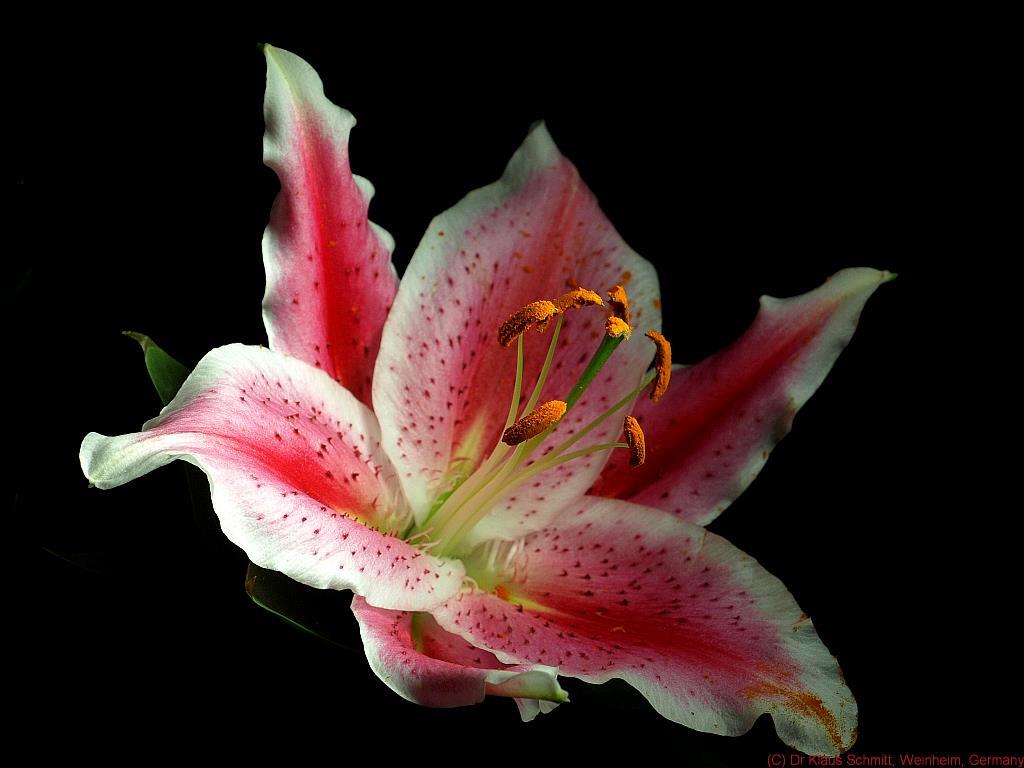
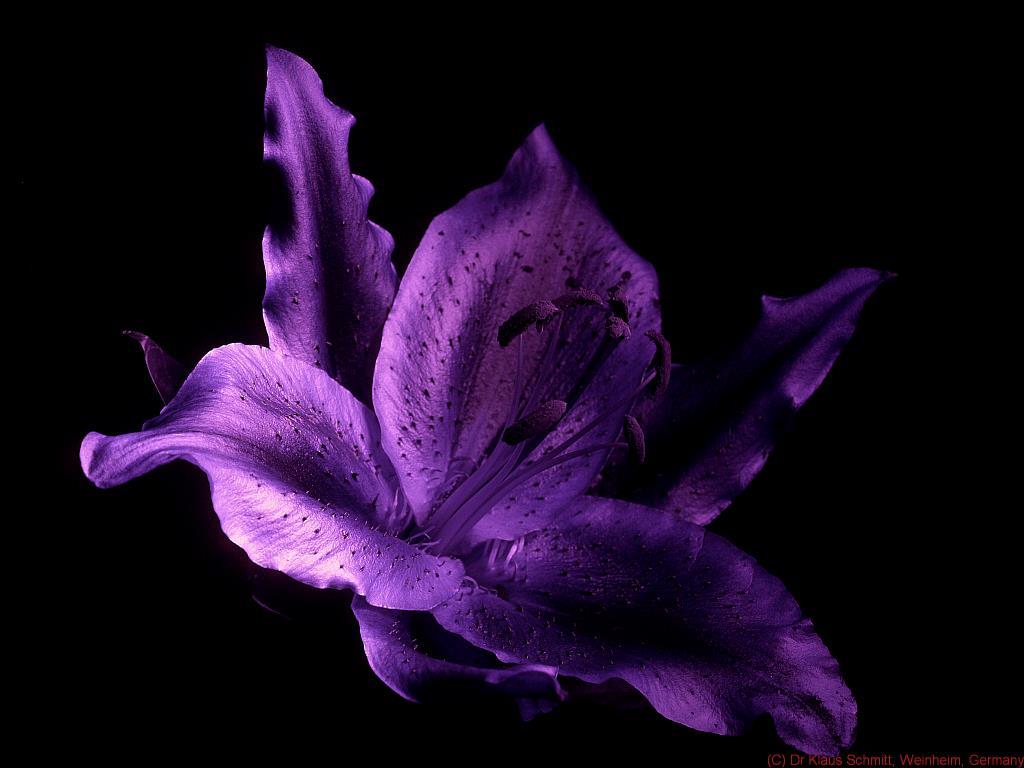
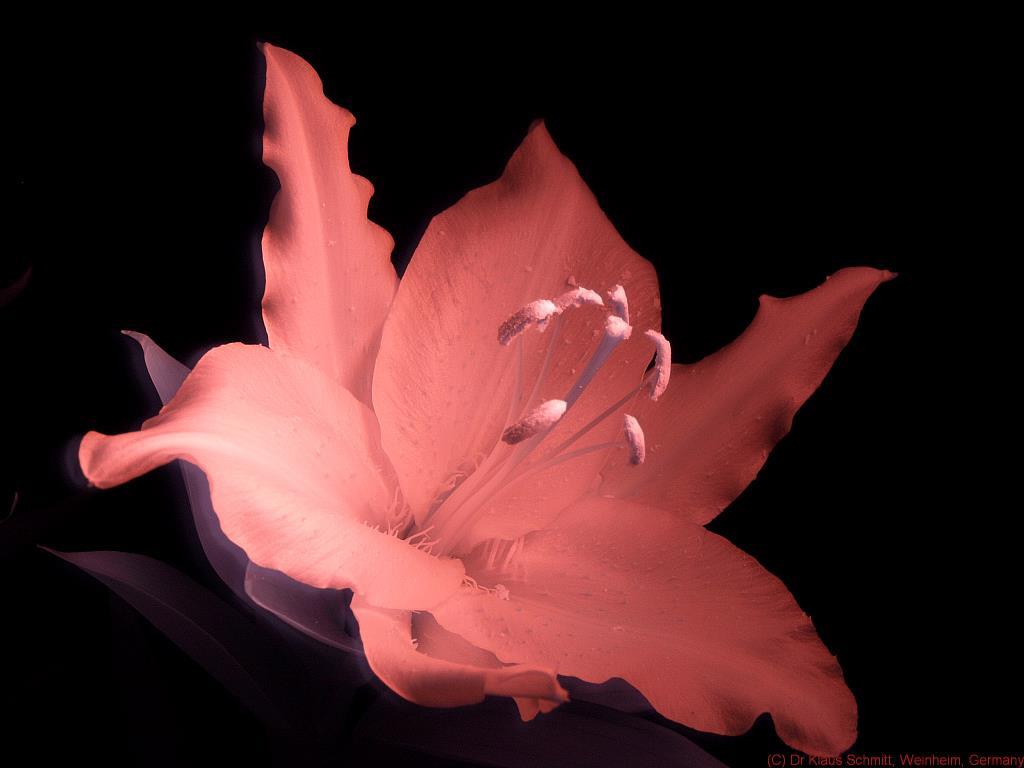
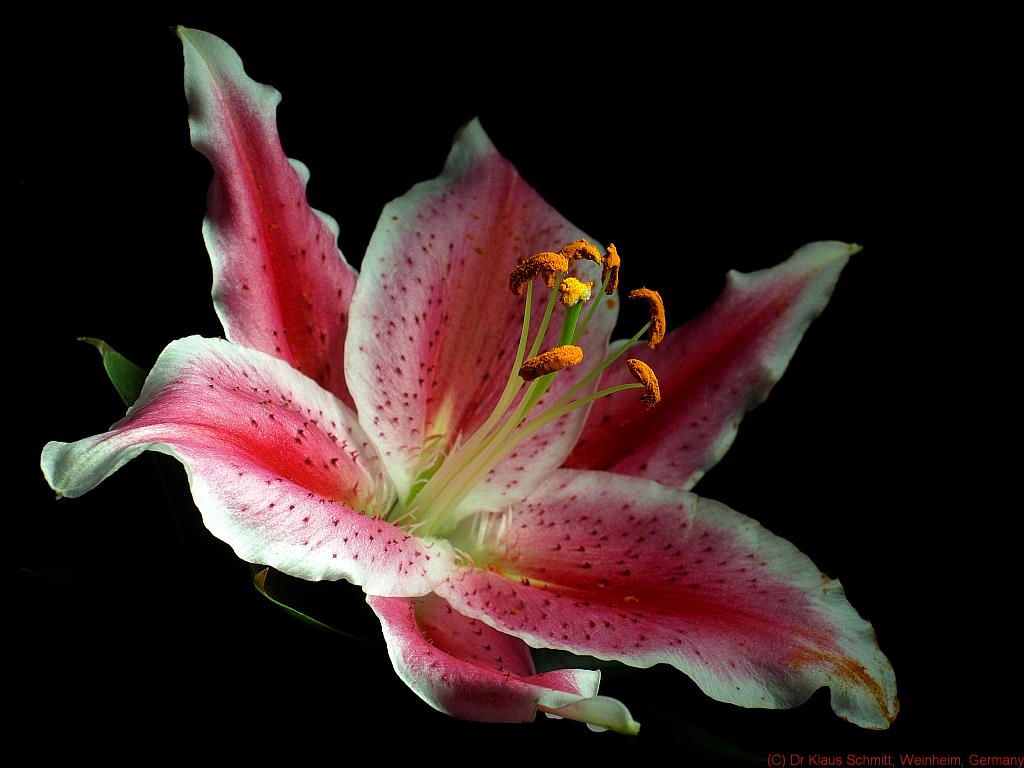
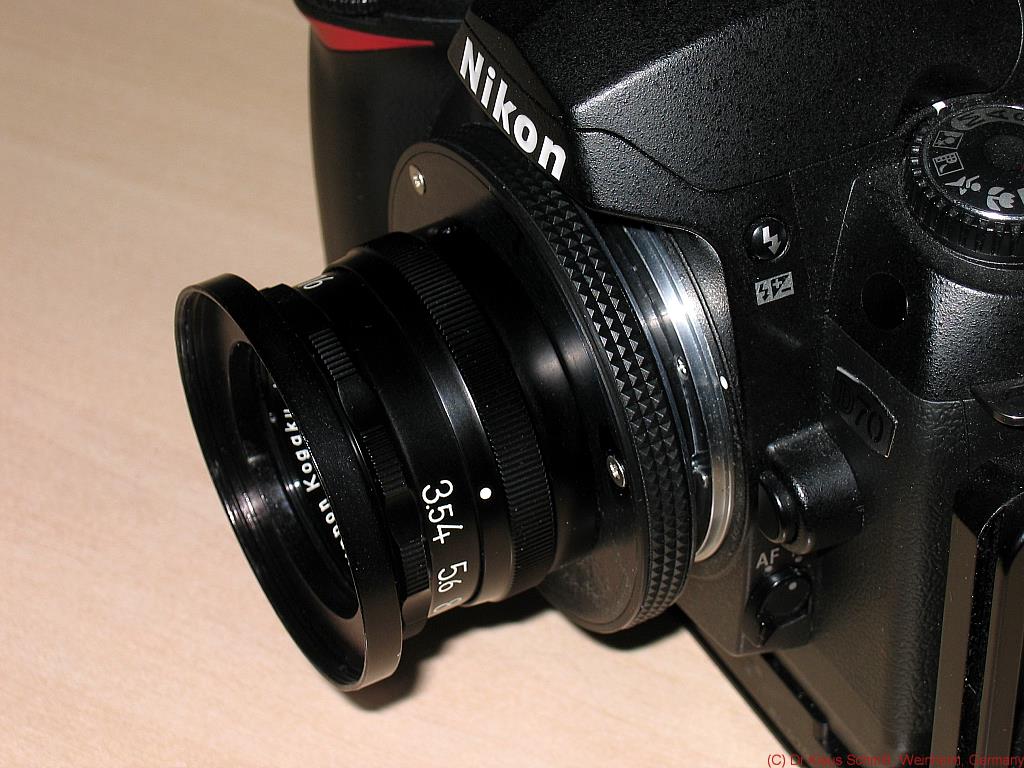
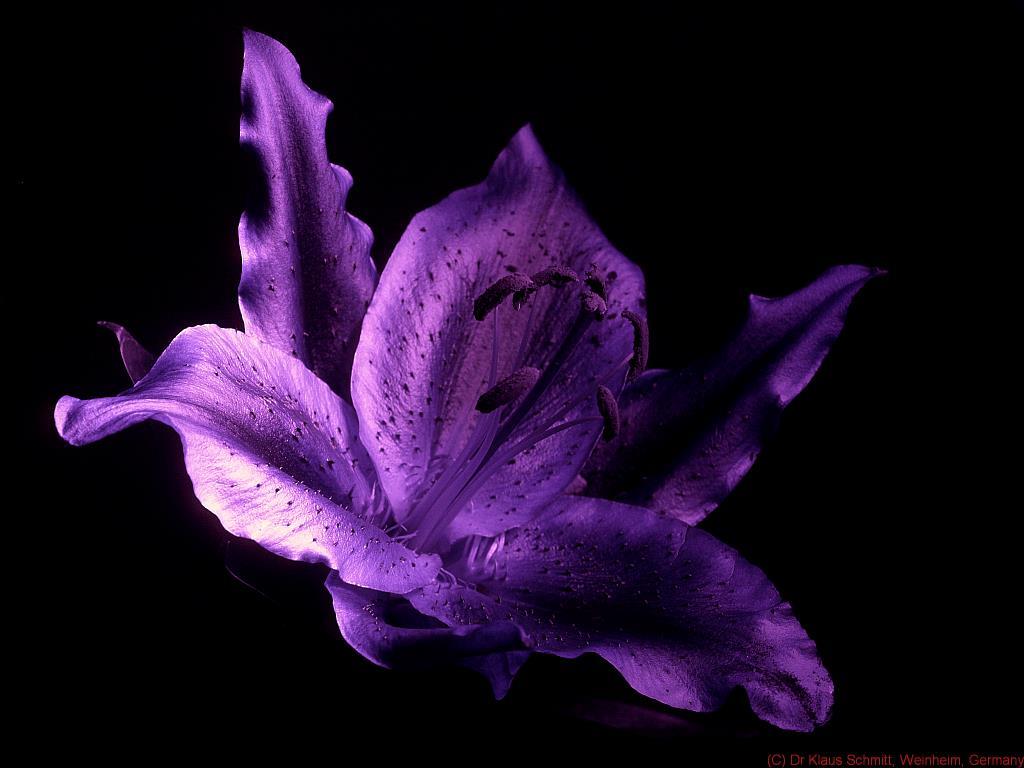
Psychedelic Lilly - a surprising lens find for UV and VIS w/o focus shift

Well, while I was doing these "Psychedelic Lilly" test shots here and here with quite a few lenses (the winners being the Noflexar 3.5/35mm and the EL-Nikkor 5.6/80mm), I remembered having sitting around a box with some lenses made by a famous, but overlooked lens maker, I got a few years ago from a friend whom I used to do lens testing with. So I took the same setup I had in place with that nice "Stargazer Lilly" and also tested these lenses in visible light, but also in invisible UV. Prior to that I has already taken UV transmission tests, which turned out to be very promising, reaching down to about 320nm (-3EV) - see the following results.

[click on image to see a larger one]

These macro shots were done at f8, ISO400, 1/160s using Xenon flash, exposure adjusted using flash power control and ND filters. UV shots were done using the Baader-U filter. The shots further away were done at sunny winter daylight.
Here now a VIS-UV differential using the best of these lenses:


and yes, quite a nice sharp lens with quite good UV transmission and hardly any focus shift as the two overlaid images nearly perfectly match!

Additionally here the VIS shot:


Now the UV shot:


And finally the IR shot:


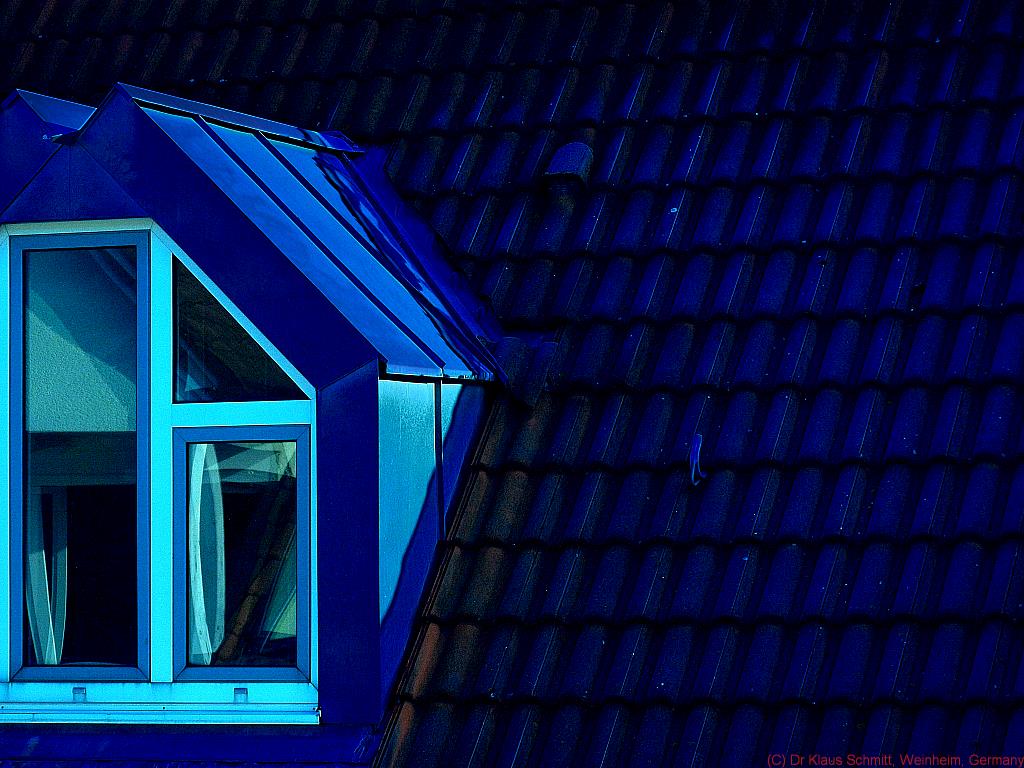
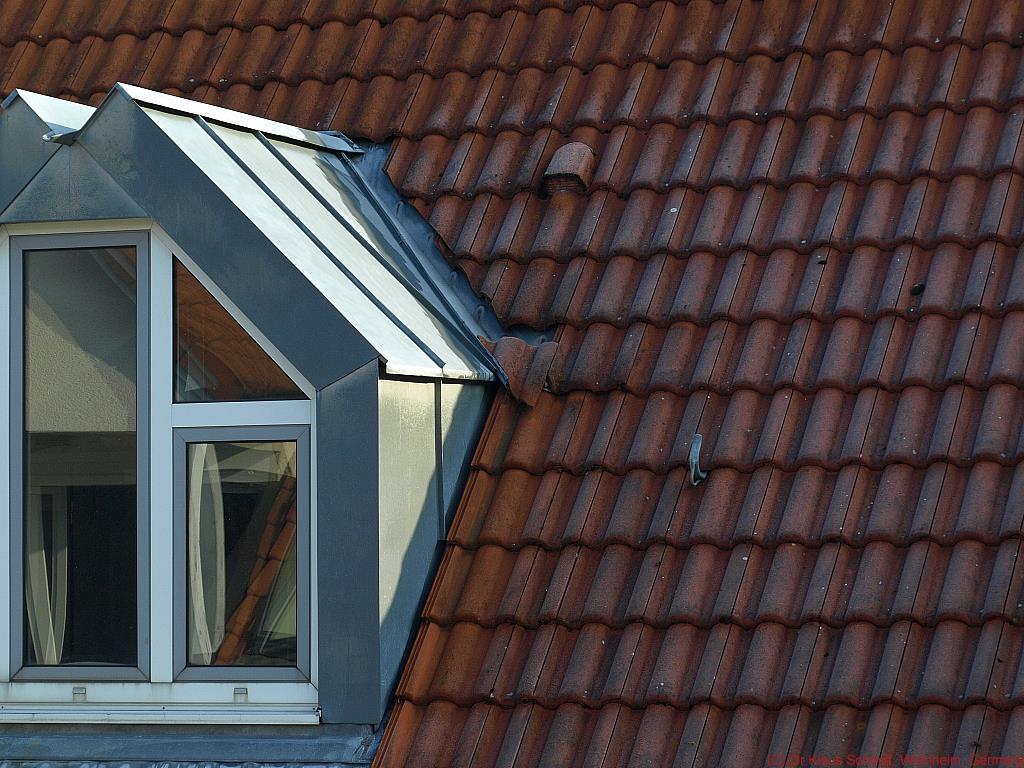
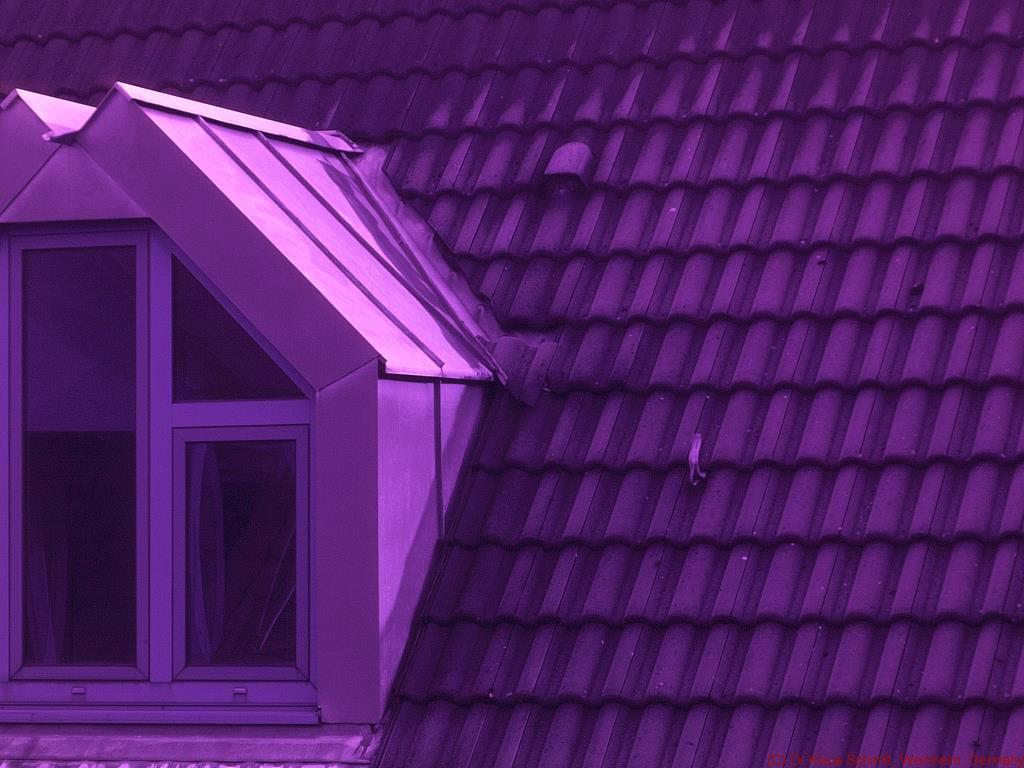
Now let's see how that very same lens performs for targets further away. Shots of the roof about 15 meters away on a sunny but cold winter day (ice reflects UV very well).

VIS-UV differential (UV is blue):


Which clearly shows, that also at that distance this lens has hardly any focus shift!
VIS shot:


UV shot:


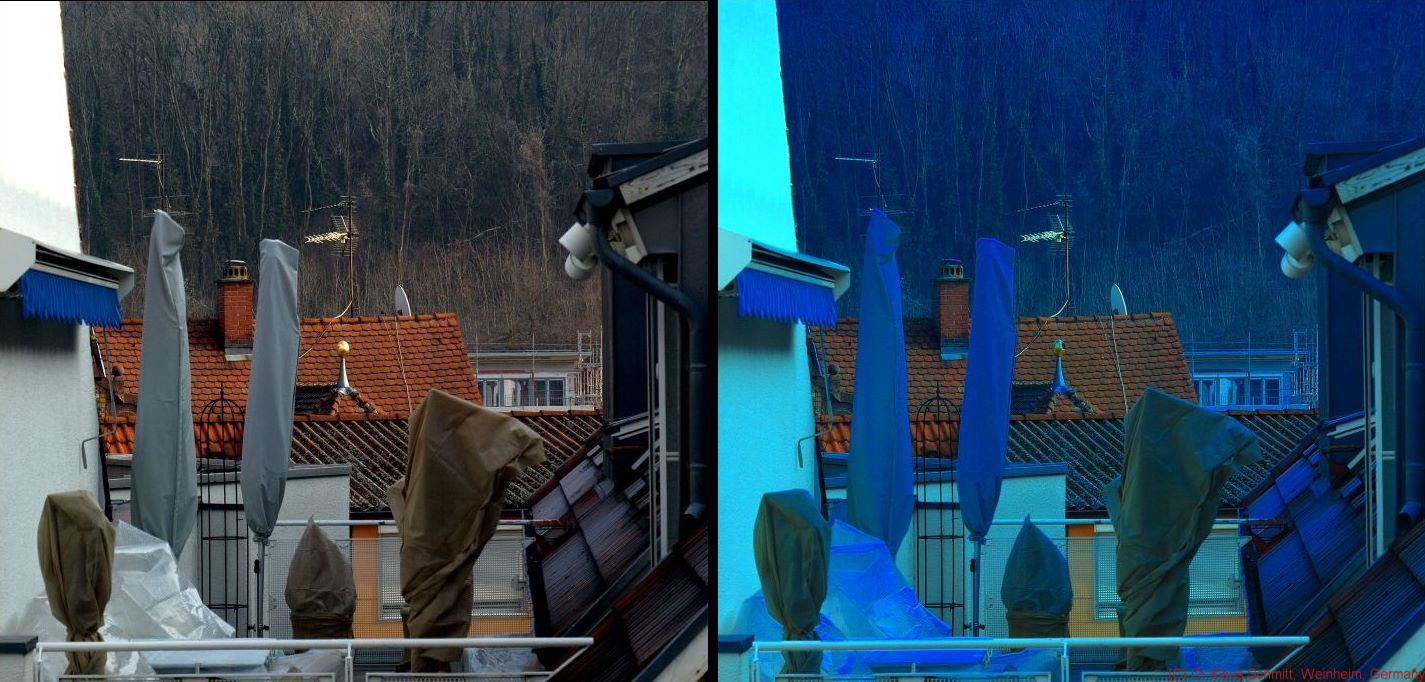
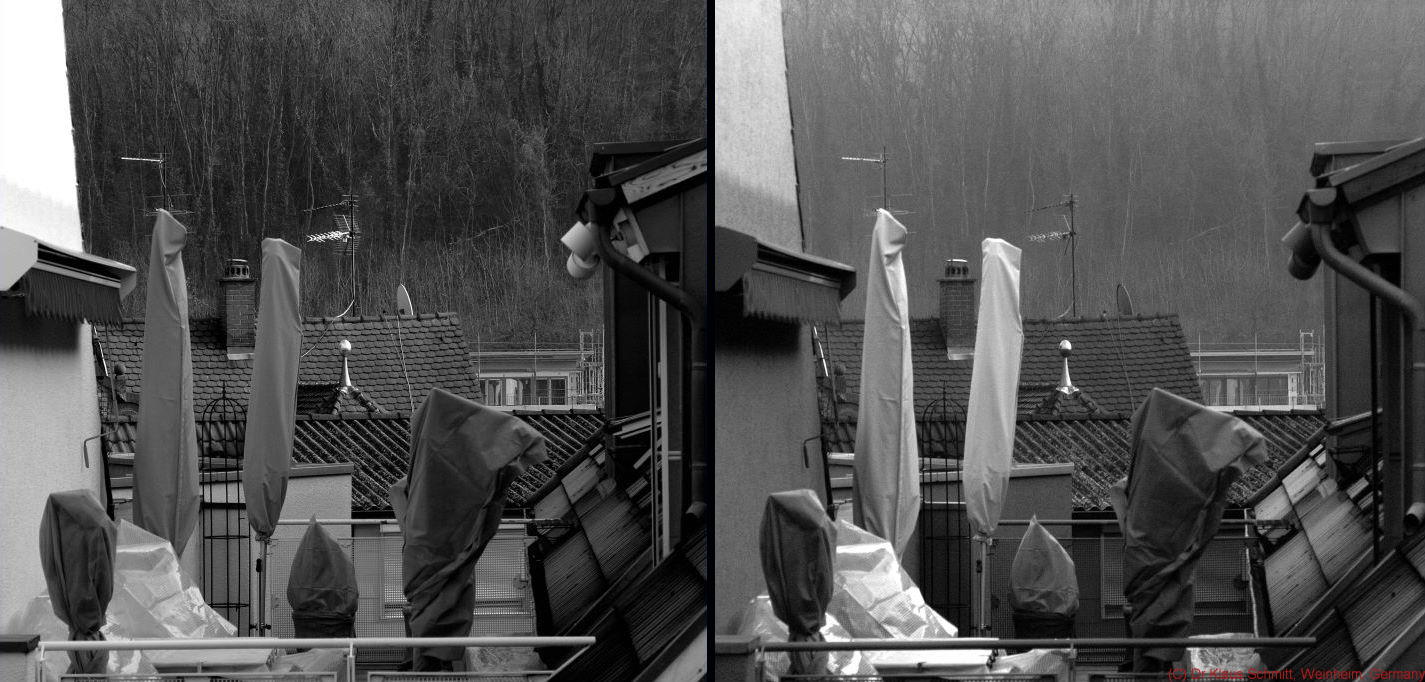
And here now some quasi infinity shots. Target was that golden globe in the center of the image.

VIS left, right VIS-UV differential (UV is blue):


Here a comparison of VIS (left) and UV (right) in black/white:


Hardly any noticeable focus shift also at that distance! I had feared about a hotspot, but none was visible in my tests so far.
CONCLUSION:
• hardly any UV - VIS focus shift in close up (macro), mid and far distance
• very sharp and contrasty in all tested ranges in UV and VIS
• no hotspot in any ranges in UV and VIS
• [also tested good for IR in close up (macro), but that was no prime interest]
Well, the surprise was a big one, as I also shot comparison shots using my UV-Nikkor and the difference was of course there, but that sharpness, contrast and nearly total lack of focus shift still amazes me, as this lens under test did beat both the Noflexar 3.5/35mm and the 5.6/80mm EL-Nikkor!
I have to research more on that lens, so more will follow on that one here...

Stay tuned, more will follow on that fascinating subject...

More info on this very interesting field may be found on my site http://www.pbase.com/kds315/uv_photos

Sunday, January 30, 2011

Psychedelic Lilly - a UV and VIS comparison Noflexar 35mm vs EL-Nikkor 80mm

A really nice flower, a "Stargazer Lilly", so let's see how the beauty of that flower will look like through the well known Novoflex Noflexar 3.5/35mm versus the newly rediscovered older (chrome/black) 5.6/80mm EL-Nikkor enlarger lens in visible light, but also in invisible UV.

All shots were done at f8, ISO400, 1/160s using Xenon flash, exposure adjusted using flash power control and ND filters. UV shots were done using the Baader-U filter.

[click on image to see a larger one]

Here now a VIS-UV differential using the Noflexar 3.5/35mm:


and yes, quite a nice sharp lens with quite good UV transmission and some little focus shift.

and here using the 5.6/80mm EL-Nikkor:


Quite a sharp lens, even less focus shift and also quite good UV transmission.

For comparison here the VIS shot using the Noflexar 3.5/35mm:


and using the 5.6/80mm EL-Nikkor:


Finally now the UV shot using the Noflexar 3.5/35mm:


and using the 5.6/80mm EL-Nikkor:


Well, I am surprised to see, that the Noflexar gets slightly outperformed by the EL-Nikkor 80mm!
BUT: I tried the 5.6/80mm EL-Nikkor outside for infinity tests and unfortunately it seems to have a very prominent large UV hotspot which renders it unuseable for that...

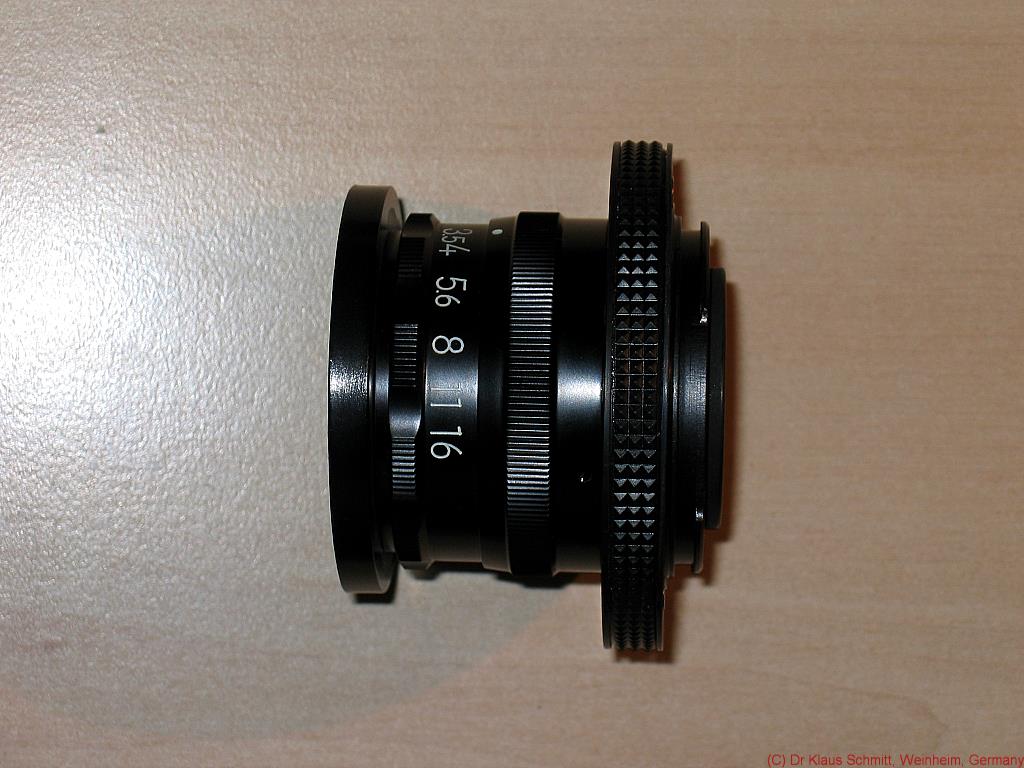
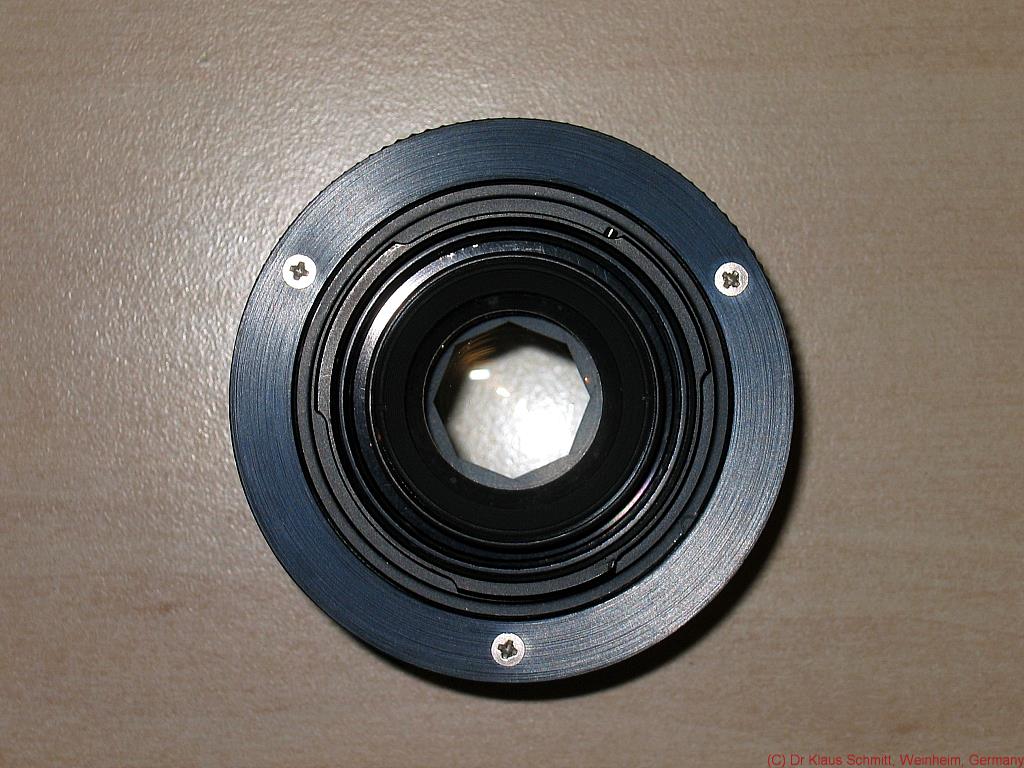
P.S.: the 80mm EL-Nikkor (the older, chrome black full metal type) has an adapter ring on its base with outer M39x26tpi screw mount (Leica enlarger mount). Beneath it is a M25 thread for older #00 shutters. Company Schneider Optics offers adapter rings, if that one should be missing (oder code 92-013251).

P.P.S.: the filter thread of that older EL-Nikkor 80mm is 34.5mm, which is pretty uncommon, as me if you need an adapter ring.

Stay tuned, more will follow on that fascinating subject...

More info on this very interesting field may be found on my site http://www.pbase.com/kds315/uv_photos

Saturday, January 29, 2011

[UV] Lenses tested good for UV

This is simply a collection of links to tests I have done for various lenses in terms of UV transmission and UV focus shift. Some also contain IR tests. No specific order and no ranking implied. Only lenses tested I own; if one seems to miss, I simply don't have it.

• True Lenses for UV: UV-Nikkor 105mm, Coastal Optics 105mm
• Lens Comparison: UV Nikkor 105mm, COSI 105mm, B&L 9"
• Carl Zeiss UV-Planar 4/60mm
• Schneider Componon lenses for UV
• Rodenstock (now LINOS) Rodagon lenses for UV
• Steinheil lenses for UV
• EL-Nikkor enlarger lenses for UV
• EL-Nikkor 3.5/63mm vs 5.6/80mm
• EL-Nikkor 75mm - 80mm - 105mm for UV?
• On EL Nikkors for UV Photography and a Myth
• EL-Nikkor 5.6/80mm lens without UV + IR focus shift
• EL-Nikkor 80mm vs 105mm UV and VIS comparison
• EL-Nikkor 80mm - old vs new
• Micro-Nikkor 105mm for UV photography? Not...
• Novoflex Noflexar 35mm vs EL-Nikkor 80mm UV - VIS comparison
• Wide angle lenses for UV
• Eight 35mm wide angle lenses tested for UV
• Petri Kuribayashi f3.5/35mm for reflected UV
• A comparative, subjective shootout of lenses for reflected UV photography
• A comparative, subjective shootout of Lenses for UV Photography ... Fluorescence
• Rudbeckia - a study of lenses for UV photography
• Transmittance of some Bellows Lens Heads
• Old Achromatic Quartz Fluorite Lens for Ultraviolet Photography
• Old Achromatic Quartz Fluorite Lens for Ultraviolet Photography (ff.)
• Hamamatsu A4869 UV lens f3.5/50mm for reflected UV photography
 
Stay tuned, more will follow on that fascinating subject...

More info on this very interesting field may be found on my site http://www.pbase.com/kds315/uv_photos

How to determine the length of a focusing helicoid

I have been asked, if there is a way to simply determine the needed length of a focusing helicoid to reach infinity focus [when mounting for instance an enlarger lens, or lens without own focusing mount to a camera}.

Yes, it can be determined, if you have the register length ("Auflagemass" in German) for a given length. If not, measurements or an approximation have to be used.

Denote:

RLL = Register Length of a Lens
RLC = Register Length of a camera (Nikon, Canon EOS, 4/3 - you name it)
HLI = Helicoid Length at Infinity
AL = Adaptor Length (usually a few millimeters thickness only)

then:

HLI = RLL - RLC - AL

that also means that HLI cannot be negative and has to be at least some 15mm or so (shortest Helicoid I know of; but there is an exception). This also explains why with some lenses infinity focus cannot be reached.

If RLL is not known, the following procedure allows to measure it approximately:

Take a white sheet of paper, a ruler and your lens, hold the lens in front of the white paper in a darkened room and point the lens front with fully open aperture to the outside to a far away bright and contrasty object (can be the sun, but be careful not to burn the paper, or a hill against the sky) at least 100x further away then the focal length of that lens until you get a sharp image on that paper. Now measure the distance from that paper to the flange of the lens (end of the thread or mount (could be bajonet etc.) - not just the physical end of the lens!). This is approximately RLL.

If you want to use that lens for macro shooting, say at 1:1 magnification, then point the lens using the same procedure to a bright lamp (desktop tungsten works well) until you see an projected image which has the same size as the original lamp (us the visible lamp filament for instance (stepping down helps if the image is too bright). Keep that position and repeat the measurement at mentioned above). That gives you the approximation for RLL(1x) at magnification 1x.

Now we get

HL(1x) = RLL(1x) - RLC - AL

where HL(1x) denotes the needed maximum extension of your helicoid and

HR = HL(1x) - HLI is the range your helicoid has to cover when turning from infinity to 1x magnification (you can replace 1x with any wished factor of course). If HR is too long, it has to be replaced with a shorter helicoid and a tube of fixed length (say to reach only 0.5x for instance). [Example, if you would need HR = 50mm and the longest helicoid you can find is 25mm, then add a 25mm tube to reach 50mm]

I hope that was not too complicated...

Here a few images that explain that in a few images when mounting an enlarger lens (here a EL-Nikkor 3.5/63mm to a Nikon D200 camera for infinity).

[click on image to see a larger one]

First let me show how different long helicoids look like (from a astronomer shop):


Enlarger lens (with filter adapter ring to 52mm) with Leica thread mount M39 (also called LTM and is precisely M39 x 26tpi), M39-M42 adapter ring, M42 helicoid (that helicoid has Nikon mount on the rear, usually a M42-Nikon non-infinity adapter ring would have to be added):


all parts assembled (screwed into each other):


Front view (filter side):


Rear view (camera side):


Mounted on camera:


Take that indicative, it may need a much longer helicoid, if the lens has a much longer focal length, like 105mm or 135mm for instance or you don't need it for infinity but for close-up or macro shots.

Stay tuned, more will follow on that fascinating subject...

More info on this very interesting field may be found on my site http://www.pbase.com/kds315/uv_photos

Psychedelic Lilly - a UV and VIS comparison EL-Nikkor 80mm vs 105mm

Today I found a nice flower, a "Stargazer Lilly", so I thought that would be wonderful to show the beauty of that flower using the newly rediscovered use of older (chrome/black) EL-Nikkor enlarger lenses in visible light, but also in invisible UV.

All shots were done at f8, ISO400, 1/160s using Xenon flash, exposure adjusted using flash power control and ND filters. UV shots were done using the Baader-U filter.

[click on image to see a larger one]

Here now a VIS-UV differential using the EL-Nikkor 5.6/80mm:


and yes, quite a nice lens with quite good UV transmission and very little focus shift.

and here using the 5.6/105mm EL-Nikkor:


Quite more focus shift, but also quite good UV transmission.

For comparison here the VIS shot using the EL-Nikkor 5.6/80mm:


and using the 5.6/105mm EL-Nikkor:


Finally now the UV shot using the EL-Nikkor 5.6/80mm:


and using the 5.6/105mm EL-Nikkor:


So, if you look for a cheap lens, have an eye on these pretty good enlarger lenses!

P.S.: the 80mm EL-Nikkor (the older, chrome black full metal type) has an adapter ring on its base with outer M39x26tpi screw mount (Leica enlarger mount). Beneath it is a M25 thread for older #00 shutters. Company Schneider Optics offers adapter rings, if that one should be missing (oder code 92-013251).

P.P.S.: the filter thread of that older EL-Nikkor 80mm is 34.5mm, which is pretty uncommon, ask me if you need an adapter ring.

[A remark on the 80mm EL-Nikkor, I tried outside and infinity tests with it and unfortunately it seems to have a prominent large UV hotspot which renders it unuseable for that...]

Stay tuned, more will follow on that fascinating subject...

More info on this very interesting field may be found on my site http://www.pbase.com/kds315/uv_photos